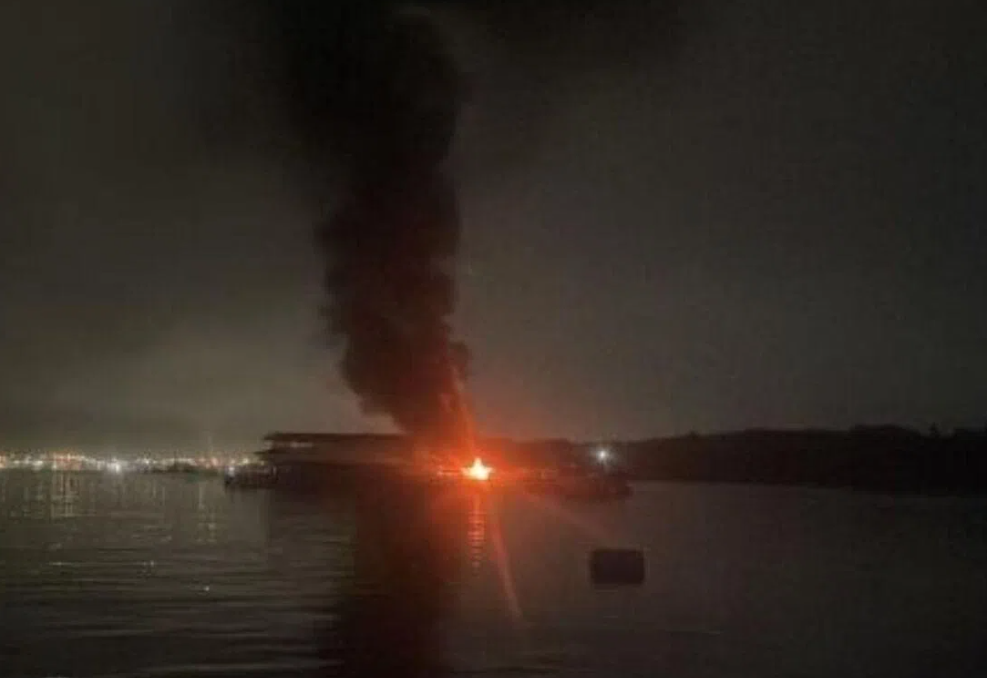
A lightning strike triggered a significant fire at floating aquaculture operations near Pulau Ubin on June 24, prompting hours of firefighting efforts and raising fresh concerns about the vulnerability of offshore farming installations to extreme weather. The blaze consumed at least two fish farm structures positioned off the Lorong Halus jetty in Pasir Ris, close to the islands of Pulau Ubin and Pulau Ketam, before emergency crews managed to extinguish the flames.
The Singapore Civil Defence Force (SCDF) received the emergency alert at approximately 8.10pm and mobilised multiple assets to combat the spreading fire. Marine vessels operated by the Maritime and Port Authority of Singapore and Airport Emergency Service were deployed to the scene, while operators from neighbouring farms contributed their own efforts to contain and suppress the flames. The coordinated response prevented further escalation, though not before substantial damage had already been sustained across the affected installations.
According to Lianhe Zaobao and subsequent inquiries, investigators have identified the most probable cause as a direct lightning strike on the solar panel systems installed at one of the farms. The electrical surge from the strike appears to have ignited materials on or near the panels, with fire then propagating to adjacent farm structures. This theory gained credibility from comments made by one farm operator, who noted that solar panels at the location have previously sustained lightning-related damage, though prior incidents occurred when personnel were present to immediately address the problem and prevent larger fires from developing.
The timing and absence of workers on-site proved crucial to the fire's severity. Had experienced staff been monitoring the farms when the lightning struck, they would likely have detected the initial ignition and taken immediate suppression measures. On this occasion, no personnel were present to observe the strike's impact or respond to the early stages of the fire, allowing flames to spread unchecked between structures. The owner subsequently attributed the scale of destruction partly to this operational gap, emphasising that rapid human intervention would have been the most effective damage limitation strategy.
One farm owner publicly disclosed estimated financial losses exceeding S$120,000, a figure encompassing extensive damage to critical infrastructure and stock. Destroyed or severely compromised equipment included fish feed supplies, diesel generators essential for farm operations, the solar panel array itself, a fishing vessel, and a minimum of three fish traps used for harvesting and containment. Beyond infrastructure damage, significant quantities of fishing nets were consumed or rendered unusable in the fire.
The loss extended beyond physical assets to the live stock held at the facility. The destruction of containment systems and netting allowed at least half of the farm's fish population to escape into surrounding waters, representing a substantial economic loss compounded by the permanent disappearance of those animals. This secondary loss was particularly frustrating for the operator given that the initial fire damage was arguably preventable through better weather preparedness or lightning protection infrastructure.
A particularly galling aspect of the disaster, from the operator's perspective, was the apparent inability to pursue an insurance claim for the losses sustained. The circumstances surrounding the fire—whether related to policy exclusions, the nature of the installation, or other underwriting considerations—created a situation where the farm would need to absorb the full financial impact internally. This situation underscores an emerging challenge for Singapore's aquaculture sector: whether existing insurance frameworks adequately cover offshore farming operations exposed to extreme weather phenomena, particularly lightning strikes that may become more frequent or severe as regional climate patterns shift.
The incident highlights broader vulnerabilities within Southeast Asia's growing offshore aquaculture industry, which has expanded rapidly to meet regional protein demand. Floating fish farms, while innovative and space-efficient solutions to land constraints, operate in environments where weather protection remains limited and emergency response coordination is complex. The reliance on solar power systems to supplement or replace grid electricity, while environmentally desirable, introduces an additional vulnerability to atmospheric electrical phenomena that can have catastrophic consequences for unattended installations.
For Malaysian stakeholders in aquaculture, the Singapore incident carries instructive lessons about operational preparedness and infrastructure resilience. The region's monsoon seasons and tropical climate patterns produce significant thunderstorm activity, suggesting that floating farms across Malaysia, Thailand, Vietnam and Indonesia face similar meteorological risks. The fire demonstrates that even basic protective measures—such as ensuring on-site personnel availability during high-risk weather periods or installing specialized lightning arrestor systems—can prove decisive in preventing major losses.
The Singapore Civil Defence Force has indicated that investigations into the incident remain ongoing, with authorities likely to examine both the immediate cause and systemic factors contributing to the fire's severity and spread. Findings from this inquiry may inform regulatory guidance for maritime farming operations across Singapore and potentially inform safety standards adopted by other jurisdictions managing similar installations.
The incident also draws attention to coordination mechanisms between agriculture authorities, maritime regulators, and emergency services. The Fish Farmers Association of Singapore and Singapore Food Agency are expected to weigh in with observations and recommendations, potentially using this incident as a catalyst for reviewing safety protocols, insurance adequacy, and emergency response procedures affecting the aquaculture sector more broadly.
As climate impacts intensify across the region and offshore food production expands to support growing populations, incidents like the Pulau Ubin fire serve as cautionary reminders that technological solutions must be paired with appropriate safeguards, operational discipline, and institutional frameworks designed to manage the realities of farming in exposed maritime environments.

