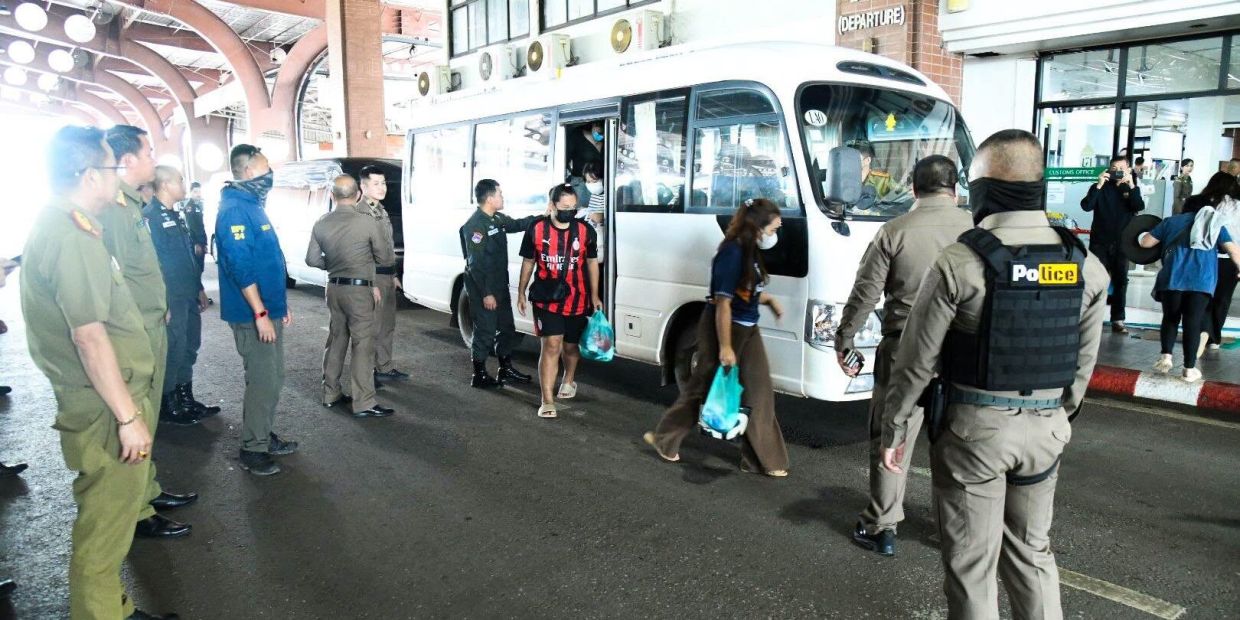
Laos has moved swiftly to remove foreign nationals implicated in a sprawling online fraud operation, deporting 32 Thai citizens following a significant law enforcement action against the ST Vegas complex in Vientiane. The Lao Public Security Ministry handed the group over to Thai counterparts on 6 August at the First Lao-Thai Friendship Bridge connecting Vientiane Capital with Nong Khai in Thailand, marking a concrete step in regional cooperation against transnational cybercrime.
The deportation came after a major raid on 18 July targeting the ST Vegas complex, situated in Dongphosy village within Hatxayfong district of the capital. That operation resulted in the detention of 589 individuals representing four different nationalities—373 Thai nationals, 199 Lao citizens, 15 Vietnamese nationals, and two Cambodian nationals. The scale of the operation underscores how pervasive these operations have become within Vientiane and the significant international dimensions of the criminal networks involved.
For Malaysia and other Southeast Asian nations, the ST Vegas raid illuminates a pressing regional vulnerability. Laos has emerged in recent years as a jurisdiction where transnational crime syndicates exploit relatively porous law enforcement capacity and geographic proximity to neighbouring countries to establish major fraud and gambling hubs. These operations frequently target victims across Southeast Asia and beyond, including Malaysian citizens who may fall prey to scam calls and investment fraud schemes originating from such facilities.
The raid represents merely one component of a broader enforcement campaign that Lao authorities have intensified throughout 2026. Beyond the ST Vegas operation, police have conducted coordinated operations in multiple districts of Vientiane. On 1 August alone, law enforcement detained 63 individuals during raids across Sikhottabong and Hadxayfong districts, apprehending Chinese, Lao, Cambodian, and Thai nationals suspected of orchestrating call-centre fraud schemes specifically targeting victims within China. The pattern suggests these networks are highly mobile and opportunistic, shifting targets depending on market demand and enforcement pressure.
Prime Minister Sonexay Siphandone acknowledged the scale of the problem during a National Assembly session in July, revealing that authorities had arrested more than 4,400 individuals during the first half of 2026 alone in cases connected to cybercrime, online fraud, and illegal gambling. These figures represent an enormous enforcement burden for a country with limited resources and highlight how cybercriminal activity has overwhelmed judicial and correctional systems throughout Laos. The arrest tally expanded dramatically following the July raids, with authorities detaining more than 1,000 additional individuals during that month, though independent verification of these latest figures remains unavailable.
The crackdown reflects intensifying international and internal pressure on the Lao government to address its reputation as a haven for organised online crime. Over the past several years, multiple reports from international law enforcement bodies and media investigations have documented how large-scale scam operations, many targeting neighbouring countries including Thailand, China, and Vietnam, have flourished within Vientiane and other Lao urban centres. The government faces mounting diplomatic pressure from trading partners and regional allies demanding concrete action against these networks.
For regional observers, the significance of this enforcement campaign extends beyond headline arrests figures. The cooperation demonstrated in the deportation of Thai nationals—handled through formal channels at a border crossing—suggests that Lao authorities are moving beyond symbolic gestures toward structured international collaboration. This approach aligns with broader Southeast Asian diplomatic initiatives aimed at combating transnational crime, though implementation remains inconsistent across the region.
However, the sustainability of these operations raises critical questions. Laos lacks the financial resources and technical capacity that would enable comprehensive disruption of these criminal networks in the long term. Many detainees may eventually face light sentences or release due to prison overcrowding, potentially enabling their re-engagement in criminal activity. The sophisticated nature of these operations—involving coordination across multiple countries, encrypted communications, and financial laundering through multiple jurisdictions—demands sustained, well-resourced investigation and prosecution that Lao institutions struggle to maintain.
Malaysian authorities and counterparts throughout Southeast Asia should regard the ST Vegas raid and associated operations as both a warning and an opportunity. The existence of such massive fraud centres targeting regional populations demonstrates the urgent need for enhanced information-sharing mechanisms among national law enforcement agencies, greater investment in cybercrime investigation capabilities, and coordinated regional prosecution strategies. Citizens and businesses across Malaysia and the region remain vulnerable so long as these operations continue to flourish in neighbouring jurisdictions with limited regulatory oversight.
Looking forward, the trajectory of Lao enforcement efforts will reveal whether these raids represent a genuine policy shift or merely tactical responses to international pressure. Sustained action would require investment in institutional capacity, judicial reform, and sustained political commitment from Vientiane—challenges that constrain the government's ability to address this issue comprehensively. Regional partners including Malaysia must consider whether additional technical assistance, training, and resources could strengthen Lao capabilities and thereby enhance security for citizens across Southeast Asia.

