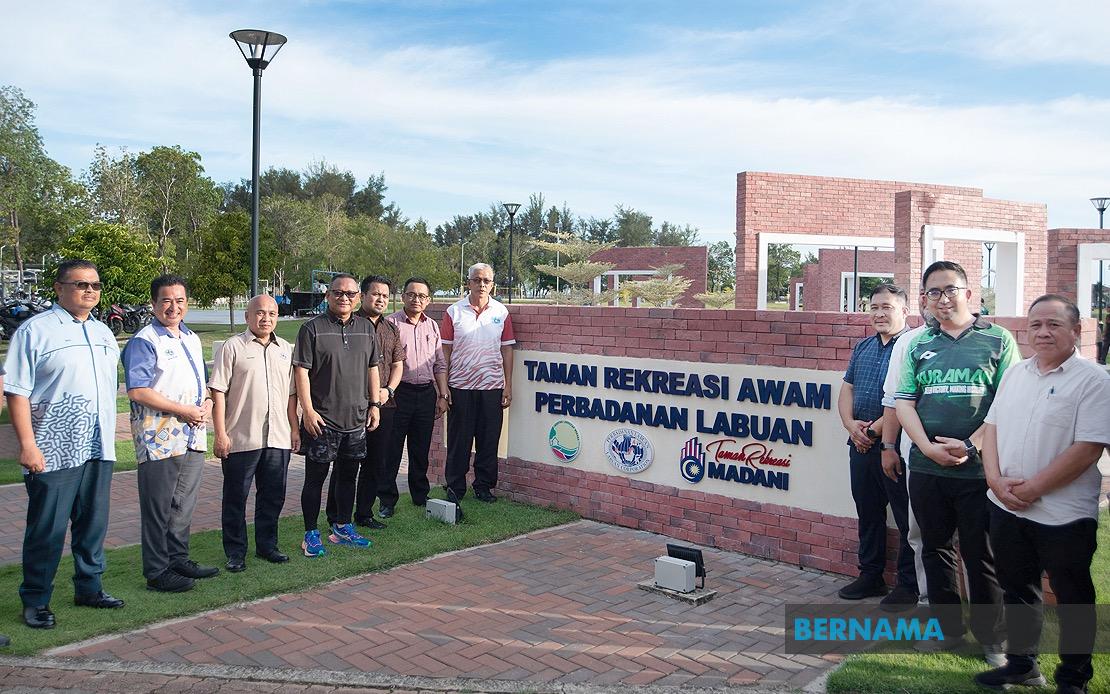
Labuan marked a significant step forward in its community development agenda on June 24 with the official opening of the Labuan Public Recreation Park at Tanjung Purun, a refurbished public space designed to encourage residents to lead more active and engaged lifestyles. The RM495,382 upgrade, undertaken as part of the Madani Recreation Park initiative and funded by the National Landscape Department under the Ministry of Housing and Local Government, represents a strategic investment in improving the island's recreational infrastructure and quality of public amenities.
Rithuan Ismail, chief executive officer of Labuan Corporation, outlined the vision behind the project during the opening ceremony, emphasising that the park serves as an inclusive gathering space welcoming residents of all ages. The facility aims to catalyse a cultural shift towards healthier living practices while simultaneously strengthening community bonds and providing a focal point for social interaction across different demographic groups. This multifaceted approach aligns with Malaysia's broader public health objectives and the Madani Framework's emphasis on inclusive community development.
The transformation began with the conversion of the former LDA Field, a downtown location that had fallen into disrepair despite its inherent strategic advantages. The site's selection reflected careful consideration of multiple factors, including its prominent position in the town centre, excellent accessibility for residents across Labuan, adequate land dimensions suitable for recreational activities, and crucially, the absence of complicated land ownership disputes that might have delayed the project. These practical considerations underscore how successful urban renewal projects require both vision and pragmatic execution.
Previously, the area had suffered from compounding neglect that severely limited its utility. Inadequate lighting made evening use unsafe, recreational facilities were either absent or obsolete, and ageing casuarina trees created hazardous conditions for visitors. This combination of factors had effectively rendered the location a missed opportunity in an otherwise prime downtown setting, where foot traffic and accessibility should have made it a natural hub for community activity. The Corporation recognised that revitalising this underperforming asset would generate substantial returns in terms of public health and community engagement.
The renovated park now provides residents with a modern recreational environment centred on active pursuits. An 800-metre jogging track forms the centrepiece, offering residents a dedicated running and walking path suitable for fitness enthusiasts of varying abilities. The installation of concrete benches creates numerous rest and observation points throughout the facility, while a suite of outdoor fitness gym equipment enables visitors to conduct strength and cardiovascular training without requiring expensive gym membership. These amenities transform the space into a genuinely functional facility rather than merely decorative landscaping.
The welcoming garden component adds aesthetic value while supporting the broader wellness objectives. For Malaysian communities, outdoor spaces that combine beauty with functionality have proven particularly effective in encouraging consistent participation, as they provide motivating environments that feel less intimidating than formal sports facilities. The evening accessibility highlighted by Labuan Corporation is particularly significant in the Malaysian context, where temperature and climate considerations often push active pursuits toward cooler parts of the day.
Looking beyond the current facilities, Labuan Corporation has committed to further enhancement through the construction of three open courts specifically designed for pickleball and sepak takraw. These additions, scheduled for completion by the end of 2024, reflect responsiveness to community sporting interests and recognise the enduring popularity of sepak takraw as a culturally significant activity across Southeast Asia. The inclusion of pickleball courts signals awareness of evolving recreational trends among both younger residents and expatriate communities increasingly present in Labuan.
For Malaysian readers, this development carries particular relevance given the ongoing national emphasis on combating lifestyle diseases and promoting preventive health measures. As urbanisation continues across Malaysia and living spaces become more compact, public recreation facilities serve as critical infrastructure. Labuan's experience demonstrates how strategic investment in downtown amenities can simultaneously address health concerns, improve urban aesthetics, and strengthen social cohesion. The project's success may provide a replicable model for other Malaysian municipalities seeking to maximise underutilised public spaces.
The project also illustrates the importance of integrated funding mechanisms, with the National Landscape Department's contribution demonstrating how federal resources can support local implementation when aligned with broader policy objectives. This coordination between national and local authorities represents an effective governance approach that other states might emulate in their own recreational development initiatives.
Rithuan's appeal to the public regarding stewardship of the facilities touches on a persistent challenge in maintaining public infrastructure across Malaysia. The longevity and effectiveness of such amenities depend substantially on community ownership and responsible usage. This appeal implicitly acknowledges that even well-designed facilities require ongoing commitment from users to remain functional and attractive over time, shifting some responsibility for maintenance from purely professional management to collective community action.
The Labuan Public Recreation Park ultimately represents more than bricks, concrete, and equipment. It embodies a commitment to creating urban environments that prioritise resident wellbeing and foster inclusive community spaces. As Labuan continues expanding these recreational offerings into 2024 and beyond, the initiative positions the island as a model for practical, accessible urban development that enhances daily life for ordinary residents while supporting national health and social cohesion objectives.

