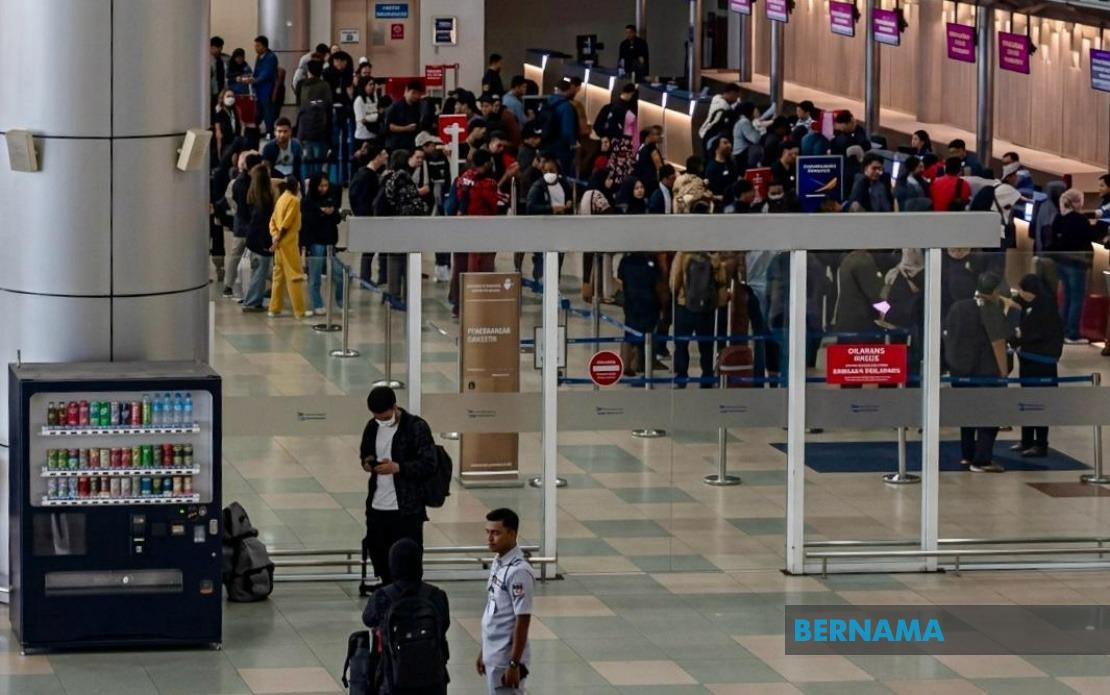
Labuan Airport halted all runway operations on Wednesday afternoon following the discovery of bombs located approximately 150 metres away from the active airfield. The Royal Malaysian Air Force issued a Notice to Airmen at 5pm, effectively closing the runway until authorities complete comprehensive safety assessments and provide clearance for resumed operations. The discovery prompted immediate action from both military and civilian airport management, who launched a joint inspection protocol to evaluate potential threats and ensure passenger safety.
The temporary closure triggered significant disruption to regional air traffic. Multiple scheduled services operating between Labuan and major Sabah hubs were immediately affected, with flights to Kota Kinabalu and Miri cancelled outright. Additional departures bound for Kuala Lumpur scheduled at 4.05pm, 5.15pm, 6.05pm, 6.15pm and 7.25pm were either diverted to alternative airfields, postponed indefinitely, or subjected to operational modifications. Airlines scrambled to adjust their flight plans while coordinating with ground staff to manage passenger expectations during the unfolding security incident.
For travellers with bookings through Labuan Airport, the situation created immediate uncertainty about journey continuity. The airport authority issued guidance urging all passengers to contact their respective carriers directly rather than proceeding to the terminal, emphasizing that airlines would provide the most current information regarding rebooking options and alternative routing. This instruction reflected the fluid nature of the security response, with authorities indicating that the runway would remain closed indefinitely pending completion of the safety inspection and formal clearance procedures.
The discovery near Labuan, a federal territory located off the coast of Sabah, underscores ongoing security challenges across Malaysian aviation infrastructure. While Labuan Airport typically handles regional traffic connecting the offshore financial centre to major population and economic centres, the incident demonstrates the vigilance required to maintain safety standards at smaller regional hubs. The airport serves as a crucial gateway for both commercial passengers and workers accessing the Labuan Federal Territory, making any prolonged closure economically significant for local stakeholders.
The Royal Malaysian Air Force's direct involvement in the inspection process reflects the seriousness with which authorities treated the discovery. Military personnel working alongside civilian airport safety teams would conduct systematic assessment of the discovered ordnance and surrounding areas, determining whether additional threats existed nearby. This methodical approach, while essential for public safety, necessarily extended the timeline for runway reopening, creating cascading impacts across the regional aviation network.
For Malaysian Airlines and other carriers operating services from Labuan, the closure forced rapid reallocation of aircraft and crew resources. Flights diverted to alternative airfields such as Kota Kinabalu would add flight time and operational complexity, potentially affecting subsequent scheduled services from those congested hubs. The ripple effects extended beyond Labuan itself, potentially creating capacity constraints at receiving airports as diverted traffic concentrated on limited alternatives.
The incident highlights the constant balancing act facing aviation authorities between maintaining operational efficiency and ensuring passenger security. Even as economic pressures drive demand for increased flight frequencies at regional airports, security imperatives sometimes necessitate temporary service suspensions. Authorities must weigh the inconvenience and economic cost of closures against the imperative to thoroughly investigate potential threats and prevent tragic incidents.
Passengers with planned travel through Labuan over the coming hours faced substantial uncertainty regarding whether their flights would operate as scheduled or require rerouting. Airlines typically waive change fees during security-related disruptions, allowing passengers to rebook on alternative flights without penalty, though the limited capacity of regional routes meant alternative options might not be immediately available. Business travellers with time-sensitive commitments faced particular pressure, potentially requiring costly alternative transport arrangements.
The discovery mechanism—how authorities identified the bombs' location—remained undisclosed in initial reporting, though such discoveries typically result from systematic security patrols, intelligence information, or reports from the public or airport workers. Regardless of the detection method, the prompt response by authorities prevented the potential for far more serious consequences had the devices been encountered in a different context or discovered too late for preventive action.
Authorities indicated that further updates would follow as the inspection progressed, suggesting a fluid situation with outcomes dependent on the scope and complexity of the safety assessment. The commitment to withhold formal clearance until comprehensive checks concluded reflected lessons learned from aviation security incidents globally, prioritizing thoroughness over speed in circumstances where public safety hangs in balance. For Labuan Airport users and the regional aviation sector, resumption of normal operations remained contingent on authorities completing their investigative work and confirming the runway's safety status.

