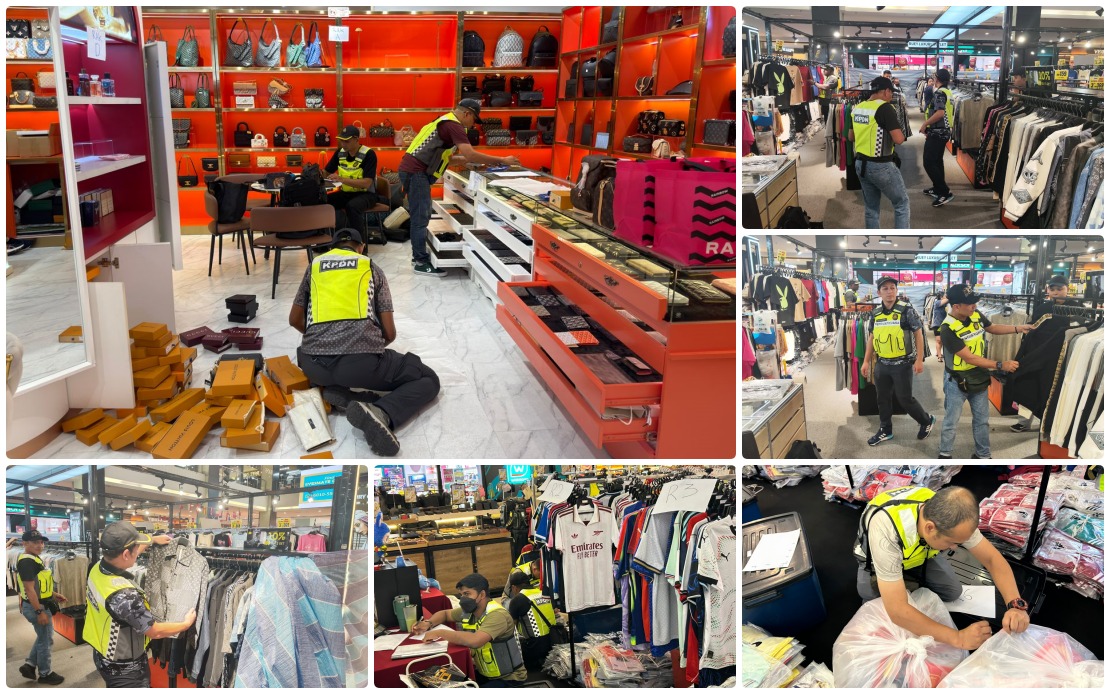
The Ministry of Domestic Trade and Cost of Living (KPDN) has dismantled a significant counterfeit goods operation in Johor Bahru, confiscating merchandise valued at RM600,000 across three separate premises during enforcement raids conducted on June 15. The coordinated action, carried out by KPDN's Putrajaya Enforcement Division, represents a substantial blow against intellectual property infringement in the state and underscores escalating efforts to combat the illicit trade of fake branded merchandise that continues to undermine legitimate retailers and consumer trust.
Enforcement director-general Datuk Azman Adam outlined the scope of the operation, revealing that investigators had conducted surveillance for an entire month before executing the raids. The intelligence-gathering phase uncovered a distribution network that operated across multiple channels, supplying counterfeit goods not only through established supermarket chains but also to individual traders operating across the broader commercial ecosystem. This multi-tiered distribution approach suggests a sophistication beyond typical street-level counterfeit operations, indicating organised involvement in an activity that generates significant illicit profits.
The seized merchandise encompassed a diverse array of consumer goods bearing fraudulent trademark applications, including branded clothing, designer handbags, wallets, leather belts, and perfume products. Beyond the physical items themselves, enforcement teams also confiscated business documentation related to the operations, which will prove instrumental in tracing supplier networks and identifying downstream distribution partners. The comprehensive nature of the seizure—encompassing both inventory and operational records—demonstrates KPDN's intent to dismantle not just individual sales points but the underlying infrastructure supporting the counterfeit trade.
Initial verification conducted with representatives from the trademark owners confirmed sufficient evidence to establish probable cause for violations under Section 102(1)(c) of the Trademark Act 2019. This specific provision addresses the illegal possession, custody, or control of goods bearing incorrectly applied trademarks with intent to trade them commercially. The legal framework governing such offences carries substantial penalties designed to deter participation in counterfeit operations, reflecting the seriousness with which Malaysian law treats intellectual property violations.
Four individuals connected to the operation, including the premise owners and caretakers, remain in KPDN custody assisting with ongoing investigations. Their involvement in business management capacities suggests direct knowledge of the counterfeit nature of the merchandise being distributed, which will likely influence severity of charges and sentencing recommendations. For individuals convicted under the relevant trademark legislation, penalties escalate based on offence history, with first-time offenders facing maximum fines of RM10,000 per item or three-year imprisonment, while repeat offenders confront fines reaching RM20,000 per item coupled with potential five-year sentences.
Corporate entities implicated in counterfeit operations face even more severe financial consequences, with initial convictions attracting maximum fines of RM15,000 per item that double to RM30,000 for subsequent violations. These substantial penalties reflect legislative recognition that company-level participation in trademark infringement causes greater market disruption and consumer deception than individual offences. The financial exposure facing corporate defendants serves as a deterrent against institutional involvement in counterfeit distribution networks.
For Malaysian consumers and legitimate retailers, counterfeit operations represent more than merely criminal activity—they constitute a direct threat to product authenticity, consumer safety, and market integrity. Fake cosmetics and perfumes, in particular, may contain undisclosed chemical compositions presenting genuine health risks to users, while counterfeit clothing and accessories often involve substandard materials and manufacturing processes. The presence of such goods undermines consumer confidence in established retail channels and creates unfair competitive pressure on businesses maintaining authentic supply chains.
The operation's success resulted from systematic intelligence work rather than reactive enforcement, suggesting that KPDN has developed enhanced capabilities for identifying emerging counterfeit networks. The month-long investigation phase indicates willingness to invest substantial resources in building comprehensive cases rather than pursuing quick arrests with limited evidentiary foundation. This methodical approach generates stronger legal cases while simultaneously mapping distribution networks that extend beyond immediate sale points to identify upstream suppliers and downstream retailers.
Regional implications of such enforcement operations extend beyond Johor's borders, as counterfeit goods frequently move across Southeast Asian markets through shared supply chains and informal trading networks. Malaysian enforcement success creates ripple effects throughout the region by disrupting distribution nodes and increasing operational costs for counterfeit networks. As neighbouring countries observe Malaysian enforcement capability and legislative penalties, transnational criminal enterprises must recalculate risk-return calculations for targeting Malaysian markets.
Datuk Azman Adam reaffirmed KPDN's commitment to sustained enforcement operations, emphasising that the ministry would maintain uncompromising positions against trademark infringement regardless of economic scale or trader status. This declarative stance signals that Johor's operation represents not an isolated enforcement action but part of broader strategic intensification. The ministry's framing positions intellectual property protection as essential to consumer welfare and legitimate business preservation rather than merely technical regulatory compliance.
Looking forward, this operation likely signals increased scrutiny of major retail venues and wholesale distribution points where counterfeit goods achieve highest market penetration. KPDN's focus on supermarket-based distribution suggests recognition that organised counterfeiting has evolved beyond informal street markets to penetrate conventional retail infrastructure. Legitimate retailers and mall operators operating in Johor and other jurisdictions may face heightened expectations for trademark verification protocols and supplier authentication procedures to avoid inadvertent participation in counterfeit distribution networks.
The RM600,000 valuation attached to seized merchandise reflects the substantial economic scale underlying Malaysian counterfeit operations, providing perspective on market size and profit potential driving criminal participation. When annualised and extrapolated across Johor's retail sector, such operations likely generate millions in illicit revenue annually. KPDN's enforcement capability, while commendable, represents only partial coverage of counterfeit activity, suggesting continued need for enhanced resources, cross-border coordination, and consumer reporting mechanisms to address the full scope of trademark infringement affecting Malaysian commerce.

