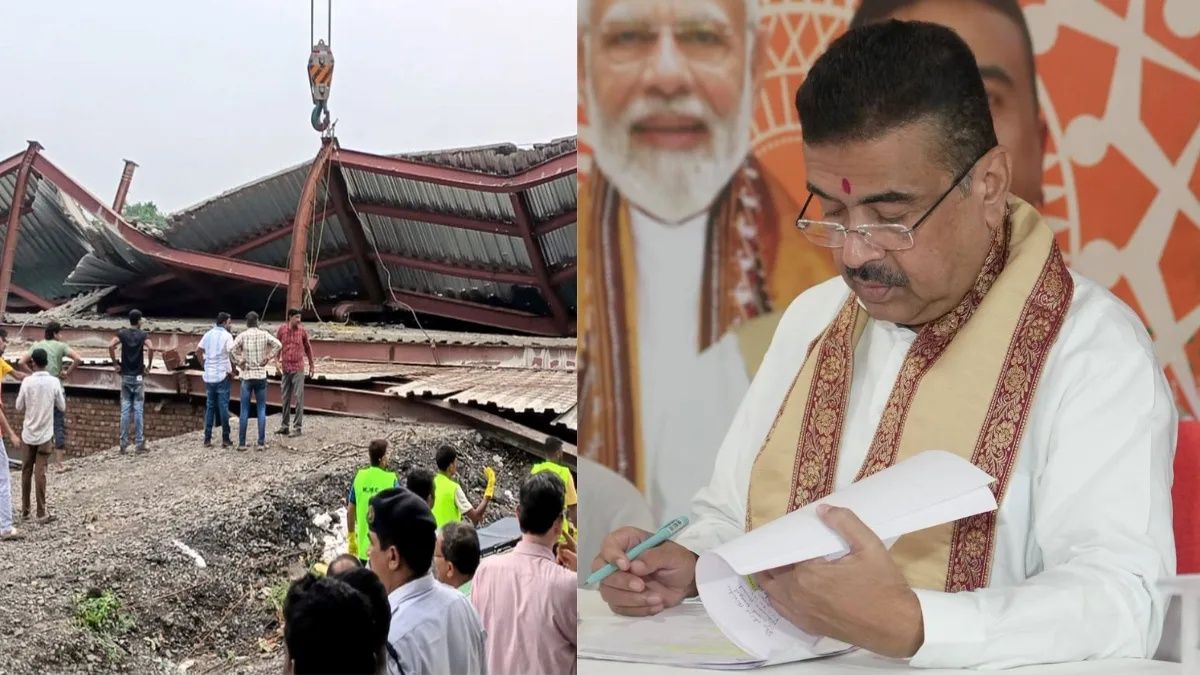
A warehouse collapse in Kolkata's Taratala neighbourhood has claimed 11 lives as rescue teams work through the second day of recovery efforts, with authorities concerned that additional bodies may remain buried beneath the rubble. The latest victim was recovered on Thursday afternoon at SSKM Hospital's Trauma Care Centre, though identification procedures remain ongoing. Military personnel, the National Disaster Response Force (NDRF), and other emergency services continue coordinating at the site in what officials describe as an effective partnership between federal and state authorities.
West Bengal Chief Minister Suvendu Adhikari responded to the tragedy by launching a scathing parliamentary critique of the building approval process that enabled the warehouse's construction. Presenting documentation to the assembly, he alleged that the Kolkata Municipal Corporation (KMC)—then governed by the Trinamool Congress (TMC)—had approved the warehouse plan despite significant structural deficiencies in its design. The Chief Minister specifically highlighted the involvement of former Mayor Firhad Hakim, whose signature appeared on approval documents, and questioned the competence and integrity of engineers and officials responsible for sanctioning the project.
Adhikari's remarks went beyond technical failures, characterizing the broader governance failures as symptomatic of systemic corruption under the previous administration. He contended that "cut money"—a colloquial reference to illicit payments and bribes—had permeated the municipal approval system, transforming Kolkata into what he termed a "city of death." These accusations carry particular weight given that they directly implicate the TMC, which previously controlled both the state and municipal governments, suggesting that regulatory shortcuts and financial impropriety may have compromised building safety standards across the metropolitan area.
The investigation has already resulted in five arrests, including the construction company's site supervisor, the iron fabricator, the land lessee, a labour contractor associated with Trimex, and a broker who facilitated the KMC approval. However, the primary accused individual, Azgar, remains at large. The Chief Minister assured the assembly that investigations would proceed without compromise and that full accountability would be pursued regardless of political considerations.
In response to these systemic concerns, Adhikari announced an unprecedented four-week moratorium on all non-essential construction activity across Kolkata's municipal zone and eight adjacent areas including Rajarhat-New Town, Maheshtala, Budge Budge, Pujali, Bishnupur, Sonarpur, and Baruipur. During this suspension period, authorities will conduct a comprehensive audit of all previously approved building plans within these jurisdictions. The decision reflects recognition that the Taratala collapse may represent not an isolated incident but rather evidence of broader regulatory dysfunction.
The auditing process will be overseen by a high-level committee chaired by Additional Chief Secretary Rajesh Pandey, assembling expertise from multiple sectors. The committee's composition reveals the government's approach to ensuring rigorous technical assessment: it incorporates senior bureaucrats alongside specialists from IIT Kharagpur, the Rail India Technical and Economic Service (RITES), Indian Railway Construction Limited (IRCON), the Fire Services Department, the Public Works Department, and KMC representatives. This multi-disciplinary configuration suggests authorities are treating building safety as a complex technical and administrative challenge requiring input from diverse engineering and construction expertise.
For Malaysian readers and regional observers, the Kolkata incident illustrates vulnerabilities that extend across South Asia's rapidly urbanizing centres. Southeast Asian cities facing comparable construction booms—from Bangkok to Jakarta to Manila—operate under similar pressures where regulatory agencies struggle to keep pace with development velocity. The convergence of political patronage, insufficient oversight resources, and competitive pressures on construction firms creates conditions where corners are cut and approvals accelerated without adequate structural scrutiny. The warehouse's collapse, whatever its specific technical cause, represents a cautionary tale about the human costs of governance lapses in the construction sector.
Chief Minister Adhikari emphasized that convicted individuals would face not only imprisonment but potential property confiscation, with seized assets directed toward victim compensation. This approach signals governmental resolve to impose consequences extending beyond criminal penalties, attempting to create financial deterrents against future regulatory violations. Whether such measures prove effective depends substantially on sustained political will and the independence of investigative and judicial processes—factors that have historically proven inconsistent across Indian states.
The broader implications for urban safety in the region extend beyond immediate accountability mechanisms. The Taratala collapse underscores how structural engineering deficiencies often reflect institutional rather than purely technical failures. When municipal officials approve compromised designs, when inspection regimes lack teeth, and when financial incentives reward expedited rather than rigorous approvals, building collapses become predictable consequences rather than aberrations. The four-week audit suspension represents a necessary pause for remediation, though longer-term safety improvements require sustained institutional reform including adequate inspector training, transparent approval processes, and whistleblower protections for engineers encountering pressure to certify unsafe structures.
For Malaysia specifically, where rapid urban development characterizes major metropolitan areas, the Kolkata situation offers relevant lessons. Malaysia's Building Industry Development Board (BIBD) and municipal authorities operate under different institutional frameworks than India's, yet face comparable pressures balancing developmental speed against safety rigor. The sophistication of Malaysia's building code and enforcement mechanisms generally exceeds Indian counterparts, yet localized corruption, inadequate inspection capacity in rapidly developing areas, and political pressure for quick project approvals remain persistent challenges requiring vigilance.
The NDRF and army's continued presence at the Taratala site underscores how natural and structural disasters transcend normal administrative boundaries, requiring military-grade mobilization and coordination. The Chief Minister's acknowledgment of these agencies' contributions reflects awareness that rescue and recovery operations demand resources and expertise beyond civilian disaster management systems. This recognition carries implications for how South Asian nations approach disaster preparedness and inter-agency coordination frameworks more broadly.

