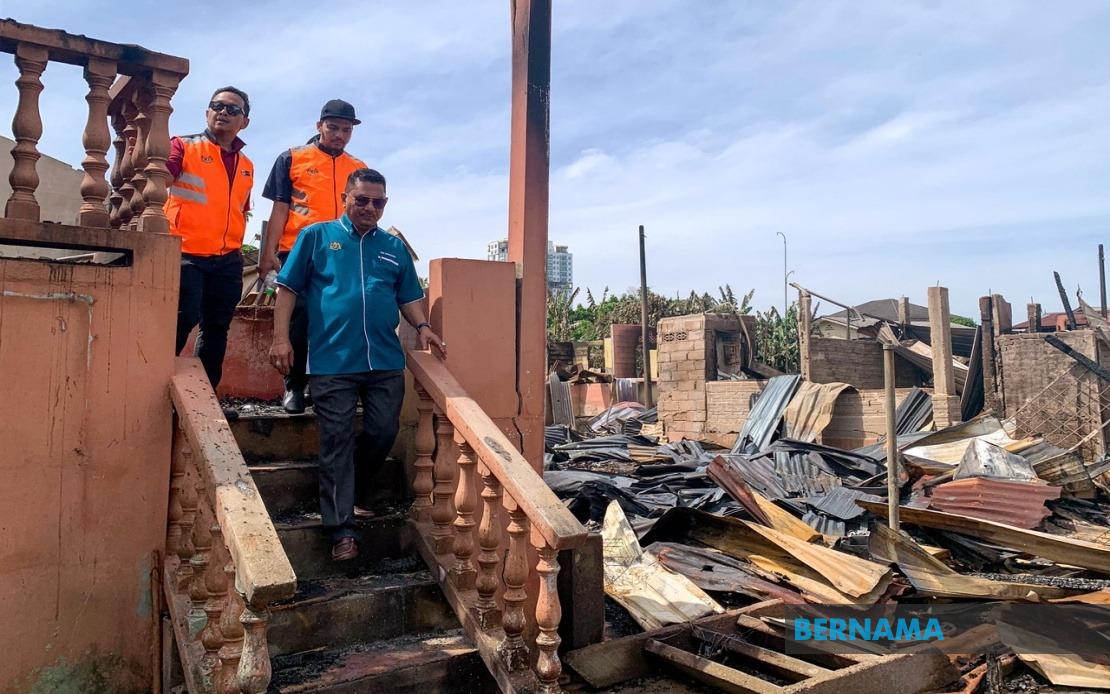
The devastating fire that razed 27 houses in Kampung Gok Kapur, Kota Bharu on June 8 has been definitively traced to a dangerous indoor burning practice, according to findings released by the Kelantan Fire and Rescue Department (JBPM). The incident, which displaced more than a hundred residents, underscores the serious risks posed by open-flame activities conducted within domestic spaces, a common but hazardous practice in some Malaysian households.
Kelantan JBPM director Farhan Sufyan Borhan unveiled the investigation conclusions after the department's Fire Investigation Forensic Unit completed its detailed analysis of the blaze. The forensic examination revealed that the fire originated when someone used a gas lighter to directly ignite a pile of papers in the kitchen of one of the affected properties. This seemingly isolated act of document disposal became the catalyst for a conflagration that would eventually consume dozens of structures and render more than a century of residents without shelter.
The mechanics of how the fire spread illustrate the unpredictable nature of uncontrolled flames in residential environments. Once the papers caught light, nearby combustible materials in the kitchen area rapidly ignited, creating an expanding zone of intense heat and flame. This initial outbreak then breached the boundaries of the originating house, jumping to adjacent dwellings and propagating through the densely populated village neighbourhood. What began as a single household incident escalated into a full-scale community disaster within minutes.
Investigators determined that human negligence was the primary factor behind the incident. The physical evidence gathered at the scene, combined with witness statements collected during the inquiry, conclusively established that the fire resulted from careless handling of an open flame source in an inappropriate location. The decision to burn papers using direct flame within a kitchen—surrounded by furniture, textiles, cooking materials, and other flammable household items—represented a fundamental breach of fire safety protocols that Malaysian authorities consistently warn against.
The broader implications of this incident reflect ongoing challenges in fire prevention across Malaysian communities. While urban areas benefit from concentrated fire safety messaging and enforcement, rural and semi-rural villages such as Kampung Gok Kapur sometimes fall outside the most intensive awareness campaigns. Traditional practices, including indoor burning of waste materials and documents, persist in some households despite the considerable risks they present. The Kelantan case demonstrates how quickly such practices can transform a localized mishap into a regional emergency affecting hundreds of people.
The humanitarian toll of the fire extended far beyond structural damage. A total of 110 villagers lost their homes and were forced to relocate to a temporary evacuation centre established at the nearby Mukim Banggol Mosque. While the absence of fatalities represents a measure of good fortune, the displacement of entire families underscores the profound disruption caused by residential fires in close-knit communities. Residents faced the immediate challenges of securing shelter, replacing belongings, and managing the psychological trauma associated with losing their homes.
Looking forward, JBPM intends to escalate the matter beyond its own jurisdiction. The fire investigation report will be handed to police and other relevant authorities for potential further action. This referral suggests that investigators may recommend criminal negligence charges or other legal consequences for the individual whose actions triggered the blaze, signalling a more rigorous approach to accountability in serious fire incidents. Such prosecutions can serve as powerful deterrents to similar reckless behaviour elsewhere in the state.
The Fire and Rescue Department has seized upon the incident as an opportunity to reissue public safety guidance. Officials emphasized the critical importance of exercising extreme caution when handling any open flame sources, particularly in proximity to residential structures. The department's explicit warning against conducting burning activities inside homes or in areas immediately adjacent to residential properties reflects the fundamental dangers demonstrated by the Kampung Gok Kapur fire. Even activities that residents might consider routine or harmless can, under the right circumstances, escalate into catastrophic events.
For Malaysian households and communities, the Kelantan incident offers a stark reminder of fire prevention fundamentals often overlooked in the course of daily life. Safe document disposal—whether through commercial waste services, designated disposal facilities, or outdoor burning conducted at appropriate distances from structures and with proper supervision—represents a basic responsibility for householders. The alternative, as Kampung Gok Kapur residents have learned through tragic experience, carries consequences measured not only in property loss but in the upheaval of entire family lives and the collective trauma experienced by affected communities.

