The Ministry of Human Resources (KESUMA) is mobilising a comprehensive intervention strategy to cushion the impact of the global supply chain crisis on Malaysian workers facing redundancy and job loss. At an event in Johor Bahru on June 23, Human Resources Minister Datuk Seri R. Ramanan unveiled the government's dual approach: offering upskilling and reskilling through Technical and Vocational Education and Training (TVET) programmes while simultaneously facilitating rapid labour market reintegration through employment matching services. This coordinated response reflects growing government concern about the ripple effects of international supply chain disruptions on Malaysia's three most vulnerable employment sectors—services, manufacturing and construction—where informal employment and contract work predominate.
Workers displaced by supply chain volatility will gain access to the Social Security Organisation's (PERKESO) MYFutureJobs platform, a dedicated labour exchange mechanism designed to connect jobseekers with available positions. The emphasis on job matching underscores a shift from passive income support towards active labour market policies, ensuring that workers transitioning out of disrupted sectors find placements aligned with their skills and circumstances. For Malaysia's economy, this represents an important acknowledgment that supply chain disruptions are not temporary shocks but potentially structural challenges requiring sustained workforce adaptation. The manufacturing sector, which remains central to Malaysia's export economy, has experienced particular vulnerability to international supply chain fragmentation, making such reskilling initiatives increasingly critical for maintaining competitiveness and employment stability.
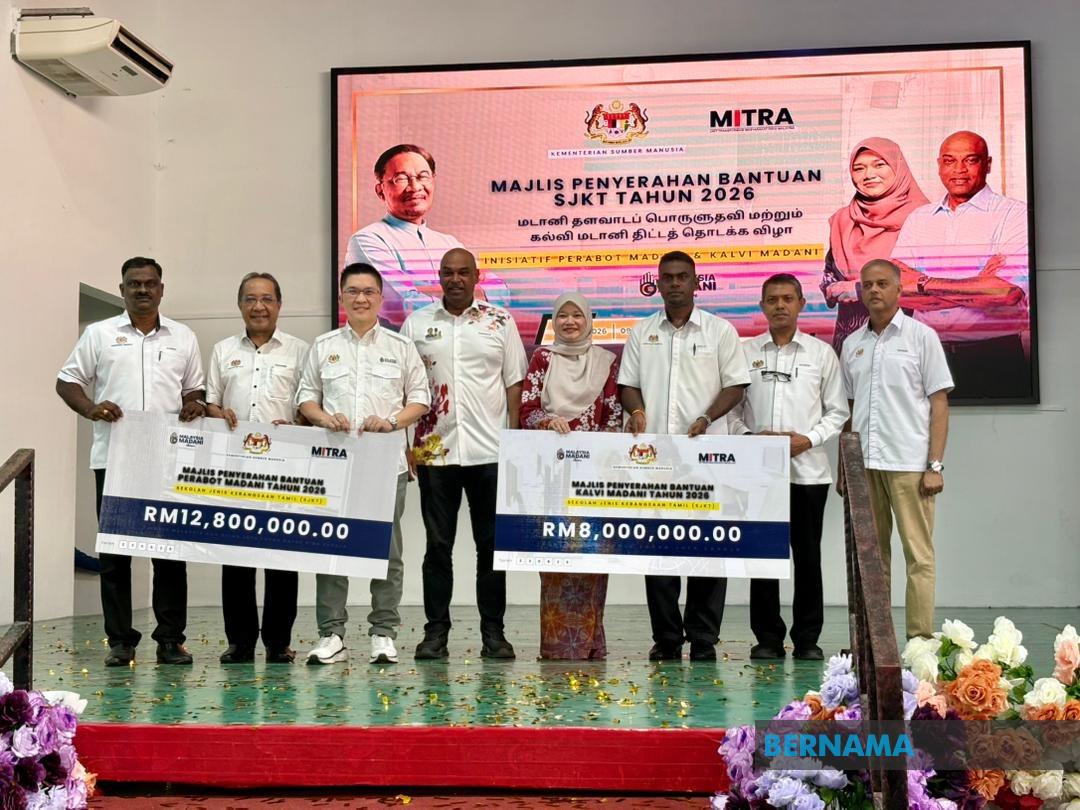
Beyond the immediate supply chain crisis response, Ramanan also announced significant investments in Tamil vernacular education infrastructure through the MADANI Furniture Initiative. This programme will allocate RM12.8 million to equip schools across Malaysia's 361 government-aided Tamil vernacular institutions (SJKT). The initiative targets 39,692 pupils and 5,290 teachers, providing fourteen varieties of quality furniture and equipment—including tables, chairs, storage cabinets and ceiling fans—delivered progressively from June through August. While ostensibly an infrastructure enhancement, the timing and scale of this investment suggest deliberate policy sequencing, pairing immediate adult labour market interventions with longer-term human capital development in underserved education segments.
The complementary KALVI MADANI Programme carries an RM8 million budget dedicated specifically to educational enrichment at selected Tamil vernacular schools. Nearly 10,410 Indian pupils across 315 participating institutions will benefit from free tuition classes, nutritional assistance, learning materials and technological devices, alongside dedicated teacher welfare initiatives. This multi-dimensional approach—combining academic support, nutrition, equipment provision and educator compensation—reflects recognition that educational disadvantage often compounds employment vulnerability across generations. For Malaysia's ethnic Indian community, which has historically experienced lower educational attainment and labour market participation rates compared to other demographic groups, such targeted programmes carry meaningful consequences for intergenerational mobility and economic inclusion.
The convergence of these policy initiatives at a single launch event in Johor Bahru, attended by Education Minister Fadhlina Sidek and Deputy Education Minister Wong Kah Woh, indicates strategic coordination across multiple government ministries. This multi-agency approach suggests that policymakers increasingly view supply chain resilience and workforce development as integrated challenges requiring coherent responses spanning adult reskilling, school-level infrastructure, nutrition programmes and teacher capacity building. The emphasis on Tamil vernacular education—historically underfunded relative to Malay and English-medium institutions—also signals movement toward more equitable educational resourcing, though questions remain about whether current allocations sufficiently address historical disparities.
The global supply chain crisis itself has exposed Malaysia's structural vulnerabilities as a manufacturing-dependent economy. Semiconductor supply disruptions, shipping delays and demand volatility have cascaded through Malaysian factories, forcing production slowdowns and workforce adjustments. Workers in affected plants have experienced reduced hours, temporary layoffs and, in some cases, permanent redundancies. The government's TVET response recognises that traditional manufacturing skills may not transfer directly to emerging sectors, necessitating comprehensive retraining rather than simple job matching. By linking PERKESO's employment platform with vocational education, the Ministry aims to create a seamless transition pathway from job loss to skill acquisition to new employment.
Technical and Vocational Education and Training programmes themselves have become increasingly critical in Malaysia's transition toward higher-value manufacturing and advanced services. Rather than competing with university education, TVET now occupies a complementary niche offering practical skills aligned with real employer demand. For workers displaced from lower-skilled manufacturing roles, TVET pathways in areas like industrial maintenance, renewable energy installation, or digital logistics can provide genuine income stability. However, success depends on programme design quality, instructor expertise, employer coordination and credentialing systems that labour markets genuinely recognise. Malaysia's TVET expansion over recent years has produced mixed results—while enrolment has grown, employer feedback regarding graduate preparedness remains inconsistent across sectors.
The spatial concentration of this announcement in Johor Bahru—Malaysia's manufacturing heartland and a region particularly exposed to supply chain volatility—carries symbolic weight. Johor hosts substantial electronics, automotive and petrochemical manufacturing clusters historically dependent on stable international supply networks. The state has also experienced notable manufacturing facility relocations and consolidations driven by recent supply chain pressures. By launching these interventions in Johor, KESUMA signals particular attention to this economically critical but currently vulnerable region. The presence of Tamil vernacular school initiatives acknowledges that Johor's Indian workforce, particularly in manual and semi-skilled manufacturing roles, faces disproportionate disruption risk.
The broader policy context matters considerably here. Malaysia's government has committed to reducing unemployment and underemployment while simultaneously pursuing industrial upgrading away from low-cost manufacturing toward higher-value activities. These objectives sometimes tension with one another—upgrading potentially accelerates job losses among lower-skilled workers even as it generates new opportunities for those with advanced capabilities. The KESUMA initiatives attempt to navigate this tension by simultaneously supporting immediate livelihood security through job matching while investing in long-term skill development through TVET. Whether this dual approach achieves its aims depends on programme implementation quality, worker participation rates and, critically, whether reskilling adequately prepares workers for available employment opportunities at comparable wage levels.
Looking forward, the sustainability of Malaysia's response to supply chain disruptions will depend on whether these initiatives evolve beyond crisis-response measures. Permanent workforce capability enhancements require consistent funding, instructor development, equipment investment and labour market coordination extending well beyond current crisis periods. The allocation of RM12.8 million for school furniture and RM8 million for educational support, while meaningful, remains modest compared to the scale of potential manufacturing sector disruption affecting hundreds of thousands of workers. Scaling such interventions without overwhelming government budgets will require sustained political commitment and potentially greater employer engagement in both funding and curriculum design for vocational programmes.

