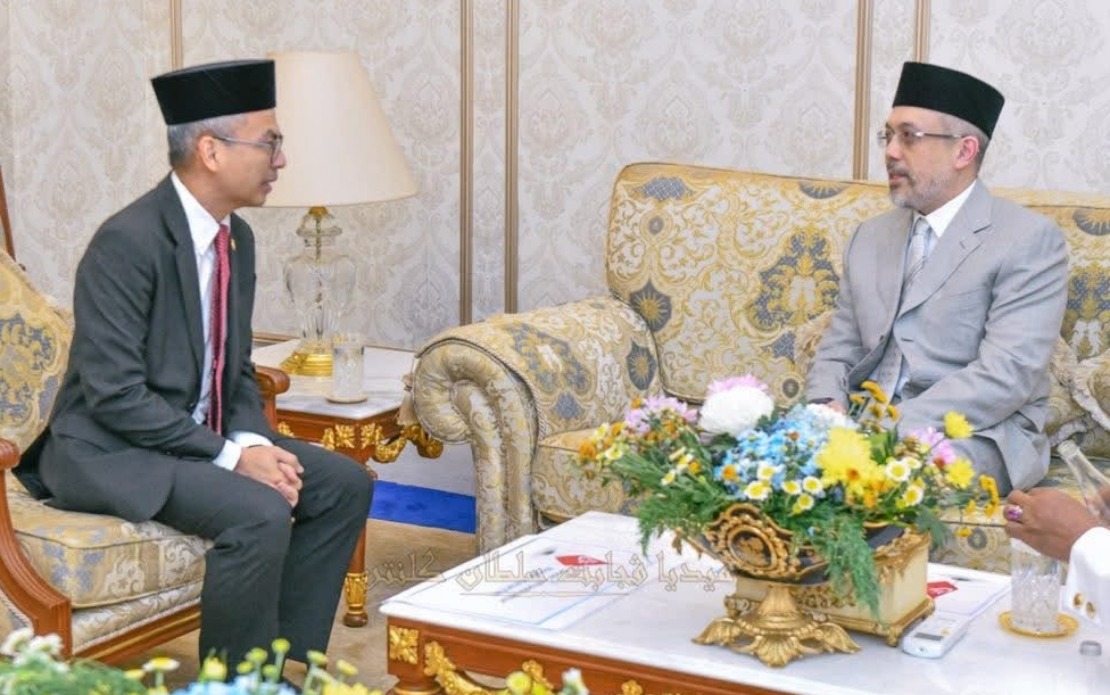
In a formal audience at the Kota Lama Palace in Kota Bharu yesterday, the Regent of Kelantan Tengku Muhammad Fakhry Petra received Communications Minister Datuk Fahmi Fadzil to discuss pressing challenges facing Malaysia's digital landscape. The one-hour meeting, which commenced at 5 pm, brought together senior officials from both the Communications Ministry and the Kelantan Sultan's Office to address contemporary governance matters within the minister's portfolio.
The primary purpose of the engagement centred on briefing the regent about recent developments and strategic updates concerning the Ministry of Communications' operational mandate and initiatives. Rather than a ceremonial courtesy call, the session provided an opportunity for formal dialogue on issues affecting Malaysia's digital communications environment, particularly matters requiring awareness at the state level of governance.
Among the substantive topics addressed during the discussion was the proliferation of fraudulent online accounts across social media platforms. This challenge has intensified across Southeast Asia as digital literacy gaps and platform vulnerabilities create openings for coordinated inauthentic behaviour. The rise of fake accounts represents a dual threat: they facilitate the circulation of demonstrably false information while simultaneously enabling the dissemination of content deliberately crafted to damage reputations and undermine public institutions.
Of particular concern to Malaysian authorities is the targeting of the country's Royal Institution through negative content amplified via networks of inauthentic accounts. Such campaigns, whether domestically or internationally coordinated, pose constitutional and diplomatic dimensions beyond simple misinformation. The Royal Institution holds constitutional significance in Malaysia's federal system, and content attacking its integrity or legitimacy carries implications for national cohesion and institutional respect. The regent's participation in this discussion reflects the heightened attention state-level leadership now accords to digital threats against foundational national institutions.
The problem of false news disseminated through coordinated fake accounts has emerged as a critical governance challenge across the region. Unlike organic misinformation that spreads through individual sharing, campaigns orchestrated through networks of fraudulent profiles operate with greater sophistication and scale. Malaysian authorities, alongside counterparts in Singapore, Indonesia, and Thailand, have increasingly recognised that conventional fact-checking and public education alone prove insufficient without addressing the infrastructural abuse enabling rapid amplification. Fake accounts function as force multipliers, allowing limited resources to achieve disproportionate reach and impact before verification mechanisms activate.
The Communications Ministry's engagement with the Kelantan royal household reflects a strategic approach to addressing digital challenges through consultation with state-level leadership. Malaysia's constitutional framework vests considerable authority in the state sultans, and securing their understanding of contemporary digital threats ensures alignment between federal communications policy and state-level governance perspectives. The regent's receptiveness to the minister's briefing signals recognition among the sultanates that social media governance requires proactive institutional response.
From a regional perspective, Malaysia's focus on fake accounts and misinformation aligns with broader Southeast Asian trends. Thailand, Indonesia, and the Philippines have similarly documented campaigns targeting national symbols, political processes, and public institutions through coordinated inauthentic networks. The sophistication of such operations has escalated, employing deepfakes, AI-generated content, and coordinated timing across multiple platforms to maximise disruptive potential. Malaysia's engagement with this issue places it within a cohort of nations developing responses to what digital security specialists now characterise as a persistent threat vector.
The memento exchange during the audience—a customary diplomatic gesture accompanying substantive discussions—underscored the formal character of the engagement. The presence of senior officials from both sides, including the minister's private secretariat and accompanying officers, further reflected the protocol weight accorded to the discussion. Such structured engagement between federal ministers and state royalty, particularly involving contemporary governance challenges, provides institutional channels for addressing issues that transcend traditional administrative boundaries.
The practical implications of the ministry's focus on fake accounts extend beyond ceremonial acknowledgement. Malaysian communications regulators and law enforcement agencies increasingly coordinate with platform companies to identify and suspend inauthentic networks, though their enforcement capacity remains constrained by platform algorithms and jurisdictional limitations. International cooperation through mechanisms like INTERPOL and bilateral arrangements with regional partners has become necessary, yet proves cumbersome when political actors themselves deploy similar tactics.
For Malaysian citizens and businesses, the escalation of coordinated fake account campaigns carries tangible consequences. Commercial fraud, electoral interference, and reputational attacks through inauthentic networks have affected private individuals, corporations, and government agencies. The uncertainty surrounding the authenticity of online accounts and content sources undermines trust in digital platforms as reliable information channels, with spillover effects on e-commerce adoption and digital financial services—sectors where Malaysia has invested significantly to achieve digital economy growth targets.
The Kelantan regent's reception of the communications minister demonstrates institutional responsiveness to evolving governance challenges in the digital sphere. As social media platforms continue reshaping communication patterns and information flows, Malaysian leadership across federal and state levels increasingly recognises the necessity for coordinated approaches. The audience represented not merely a courtesy exchange but a substantive engagement reflecting the gravity with which Malaysia's institutional leadership now views the intersection of digital communications, misinformation, and national security.
Looking forward, the communications ministry faces mounting pressure to develop comprehensive strategies addressing fake accounts, coordinated inauthentic behaviour, and the institutional vulnerabilities these phenomena exploit. The engagement with the Kelantan regent signals that such efforts now extend beyond technical policy implementation to encompass dialogue with state-level leadership and the Royal Institution itself. As Southeast Asia's digital landscape continues evolving, Malaysia's demonstrated commitment to institutional dialogue on these matters may serve as a model for regional cooperation on shared digital governance challenges.