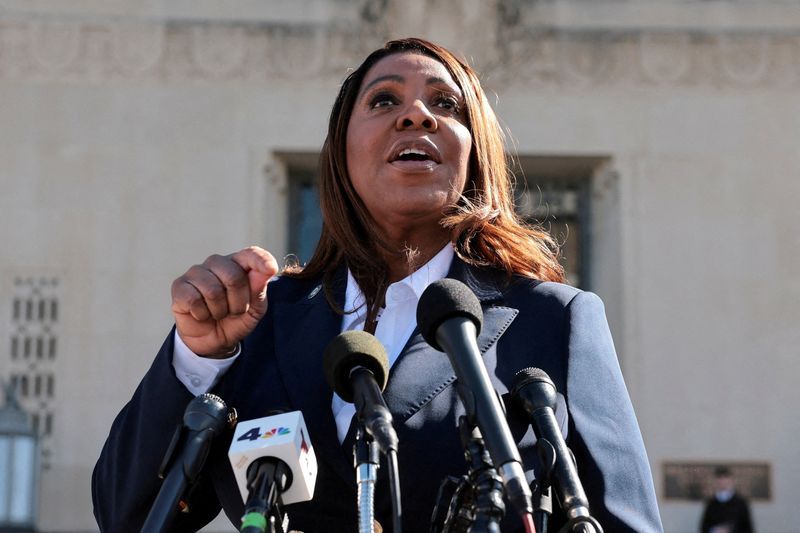
A New York court has moved forward with New York Attorney General Letitia James's case against Zelle, the electronic payment platform owned by seven major U.S. banks, after Justice Phaedra Perry-Bond rejected the company's motion to dismiss the lawsuit on Tuesday. The decision clears the way for litigation over allegations that Zelle's operators knowingly sacrificed consumer safety measures to accelerate market adoption and achieve competitive dominance, resulting in cumulative fraud losses exceeding $1 billion.
The judge found sufficient grounds in James's complaint to suggest that Early Warning Services, Zelle's parent company jointly owned by Bank of America, Capital One, JPMorgan Chase, PNC, Truist, US Bank and Wells Fargo, had consciously chosen accessibility and rapid consumer adoption over robust fraud prevention systems. Perry-Bond's ruling highlights a critical tension that has emerged in the financial technology sector: the pressure to move quickly to capture market share against the obligation to protect users from criminal activity.
Zelle launched in 2017 as a peer-to-peer payment application designed to compete with established players such as PayPal's Venmo and Block's Cash App. The platform gained significant traction among American consumers seeking a convenient method to transfer funds between accounts at different banks. However, its rapid expansion appears to have occurred without corresponding investment in security infrastructure that the company's banking partners had flagged as essential from the outset.
James's complaint documents a pattern of fraudulent activity that evolved across multiple schemes. Users reported unauthorized access to their accounts followed by transfers to unknown recipients, falling victim to sophisticated social engineering tactics that convinced them to send payments for goods and services that never existed, and encountering impersonators fraudulently claiming to represent banks, government agencies, and utility companies. The diversity and scale of these scams suggests organized criminal networks had identified vulnerabilities in Zelle's operational framework that they could exploit repeatedly.
A particularly damaging aspect of the case involves Zelle's continued collection of transaction fees from fraudulent transfers. Perry-Bond noted that the company's acknowledgment of this practice raises uncomfortable questions about whether Zelle had tacitly approved the fraudulent activity, given that it maintained revenue streams flowing from compromised transactions. This detail transforms the case from one simply about negligent security into one potentially implicating the company's financial incentives in maintaining the status quo.
The marketing claims Zelle deployed to attract consumers added another layer to the attorney general's allegations. Advertising language promising "peace of mind" and asserting that Zelle was "backed by the banks, so you know it's secure" created explicit representations about safety that James contended were misleading given the company's documented reluctance to implement necessary protective measures. These messages created consumer expectations that the platform had implemented appropriate safeguards when evidence suggested otherwise.
Zelle's legal defence centered on the argument that promoting the platform as safe and secure represented standard commercial speech rather than actionable misrepresentation, and that the company bore no liability for what it characterized as "passive nonfeasance"—essentially inaction rather than active wrongdoing. The company further maintained through spokesperson Eric Blankenbaker that fraud rates on the platform had "always been exceptionally low," challenging the attorney general's framing of the problem's severity. Blankenbaker also accused James of pursuing politically motivated enforcement, suggesting courts across the country had previously rejected comparable arguments as lacking merit.
The timeline of Zelle's security evolution reveals the core dispute. James's office documented that the company had proposed adopting "basic" safeguards in 2019 but did not implement them until 2023, only after external pressure mounted from the U.S. Consumer Financial Protection Bureau and several members of Congress initiated separate investigations. This four-year lag between identifying necessary protections and deploying them undercuts Zelle's characterization of fraud risks as unavoidable or unexpected.
James's decision to pursue the lawsuit gained added significance in March 2025 when the CFPB dropped its own similar case. That agency subsequently curtailed most enforcement activity following the beginning of U.S. President Donald Trump's second term, leaving James's office as the primary government authority actively pursuing accountability on this issue. The New York attorney general's willingness to proceed contrasts sharply with the federal retreat from consumer protection enforcement in this domain.
For Malaysian and Southeast Asian readers, this case carries broader implications for how digital payment platforms operating regionally should balance innovation with security. As fintech companies continue expanding across the region, offering convenient money transfer solutions, regulators face similar pressures to decide whether to permit rapid deployment with reactive safety measures or insist on comprehensive protections before launch. The Zelle litigation suggests that courts may increasingly hold companies accountable for choosing convenience over security, particularly when evidence shows decision-makers understood the risks they were creating.
The judge's decision to let the case proceed also signals that courts are becoming less sympathetic to corporate arguments that fraud represents an inevitable cost of digital innovation. This development could reshape how technology companies approach product development in Malaysia and the broader region, potentially encouraging more substantial upfront investment in security infrastructure rather than deploying platforms and adding protections reactively when complaints and regulatory pressure accumulate.
Zelle and Early Warning Services now face the prospect of full litigation regarding their conduct, with potential financial liability and reputational consequences that could extend to the seven banking institutions maintaining ownership stakes. The case will likely generate detailed discovery regarding internal communications about security trade-offs, engineering decisions that prioritized speed over safety, and knowledge of fraud patterns that went unaddressed despite available solutions.

