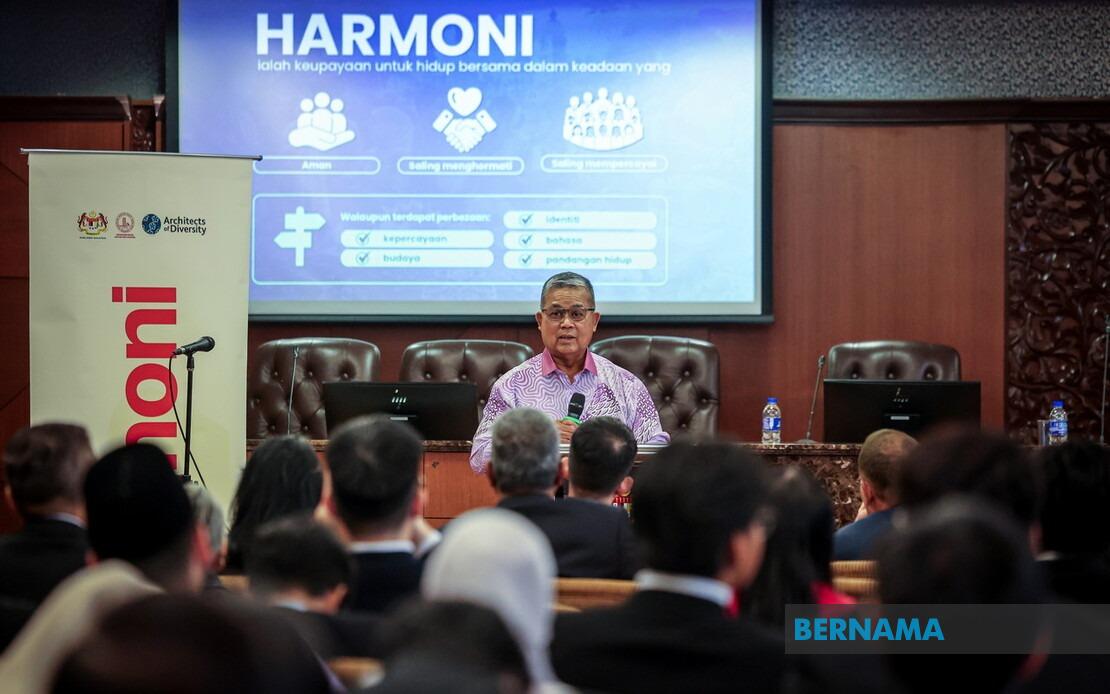
Malaysia's Department of National Unity and National Integration (JPNIN) has embarked on developing a Community Tension Index, a measurement framework designed to assess levels of social cohesion while simultaneously tracking emerging tensions around sensitive national issues. The initiative, announced by Minister Datuk Aaron Ago Dagang, represents a proactive government response to mounting concerns about community fragmentation in an increasingly digital society. The index is intended to provide policymakers with real-time data on the health of intercommunal relations, enabling faster identification of friction points before they escalate into broader social conflicts.
The research effort comes at a moment when digital spaces have become the primary venue for divisive discourse in Malaysia. Between January 2025 and January 2026, the Malaysian Communications and Multimedia Commission (MCMC) took action against 1,493 pieces of online content breaching guidelines on religion, royalty and race matters—commonly referred to as 3R issues. This substantial volume of problematic postings underscores how swiftly inflammatory material can spread across social platforms, reaching far larger audiences than traditional media channels ever could. The sheer scale of MCMC interventions suggests that digital polarisation has become a significant policy concern, warranting systematic monitoring and strategic response frameworks.
Minister Aaron Ago Dagang highlighted a particular structural challenge inherent to modern social media ecosystems: the creation of algorithmic "filter bubbles" and "echo chambers" that reinforce existing beliefs while screening out contrary perspectives. These mechanisms, embedded in how social platforms function, naturally segment audiences into self-reinforcing communities. Within each bubble, users encounter predominantly content aligned with their pre-existing worldviews, creating what amounts to parallel information universes where cross-community understanding becomes progressively more difficult. The cumulative effect is a narrowing of common ground and a widening of interpretive gaps between different segments of Malaysian society—precisely the conditions that undermine social cohesion.
The proposed Community Tension Index would function as a diagnostic instrument, translating qualitative concerns about polarisation into quantifiable metrics. By establishing measurable indicators of community sentiment, intergroup trust, and perceptions of fairness and inclusion, the index could serve as an early warning system. Government strategists could then use such data to calibrate preventive interventions before tensions crystallise into open conflict. The index would likely track variables such as public discourse patterns, sentiment analysis across digital platforms, reported incidents of communal friction, and survey-based measures of social trust—creating a comprehensive picture of Malaysia's unity landscape.
Beyond the index itself, JPNIN has simultaneously launched consultations with diverse stakeholders regarding a more ambitious institutional proposal: the establishment of a National Harmony Commission (SKN). This proposed body would function as a specialised agency dedicated to early prevention, mediation and conflict resolution. Rather than waiting for crises to emerge, the commission would actively engage communities, facilitate dialogue between groups with diverging perspectives, and investigate matters that pose potential threats to national harmony. The commission model reflects recognition that managing diversity in a plural democracy requires dedicated institutional infrastructure, not merely reactive crisis response.
The timing of these initiatives reflects broader regional trends affecting Southeast Asia. Across the region, governments have grappled with how digital platforms amplify sectarian tensions, spread misinformation, and circumvent traditional media gatekeeping. Malaysia's approach—combining measurement, institutional innovation, and stakeholder engagement—offers a model that balances security concerns with democratic principles. The focus on early intervention and prevention, rather than punitive enforcement alone, suggests a more nuanced understanding of how polarisation operates and spreads.
For Malaysian readers, the implications are multifaceted. The Community Tension Index represents an acknowledgment that social cohesion cannot be taken for granted in diverse societies; it must be actively monitored and managed. The framework tacitly accepts that government cannot simply regulate content through removal; understanding underlying tensions is equally important. For businesses, civil society organisations, and community leaders, the index may eventually provide useful data for their own engagement strategies. For ordinary citizens, it signals government commitment to understanding the health of intercommunal relations beyond headline incidents.
The proposed National Harmony Commission raises important questions about institutional design and accountability. How independent would such a body be? What enforcement powers would it possess? How would it balance investigation with confidentiality? These details matter enormously for how effective the commission could become. A body perceived as partisan or opaque would struggle to command the trust of all communities, potentially undermining its mediation role. Conversely, a well-designed, credible institution could become a valuable forum for addressing grievances before they metastasise into broader social ruptures.
The emphasis on 3R sensitivity reflects Malaysia's specific constitutional and social context. Article 153 of the Federal Constitution grants special provisions regarding Islam, Bumiputera rights, and the Malay language, creating a constitutional framework that demands careful management. Digital spaces, however, operate at a speed and scale that traditional governance structures struggle to address. When inflammatory content can reach millions instantly, institutional response mechanisms must be equally rapid and sophisticated—a challenge that the Community Tension Index and proposed harmony commission both attempt to address.
Looking forward, the success of these initiatives will depend on several factors. First, the Community Tension Index must employ rigorous, transparent methodology that commands credibility across all communities. Second, the National Harmony Commission must be resourced adequately and staffed by individuals perceived as having genuine commitment to fairness across communal lines. Third, both mechanisms must operate with sufficient agility to address emerging tensions without bureaucratic delay. Finally, government must genuinely act on findings from the index and recommendations from the commission, rather than allowing them to become symbolic gestures without policy consequence.
Malaysia's challenge, shared with other plural democracies globally, is sustaining social cohesion while respecting digital freedoms and accommodating diverse viewpoints. The Community Tension Index and National Harmony Commission represent serious institutional attempts to navigate this tension. Whether they prove effective will offer important lessons for other Southeast Asian nations wrestling with similar pressures on their plural societies.

