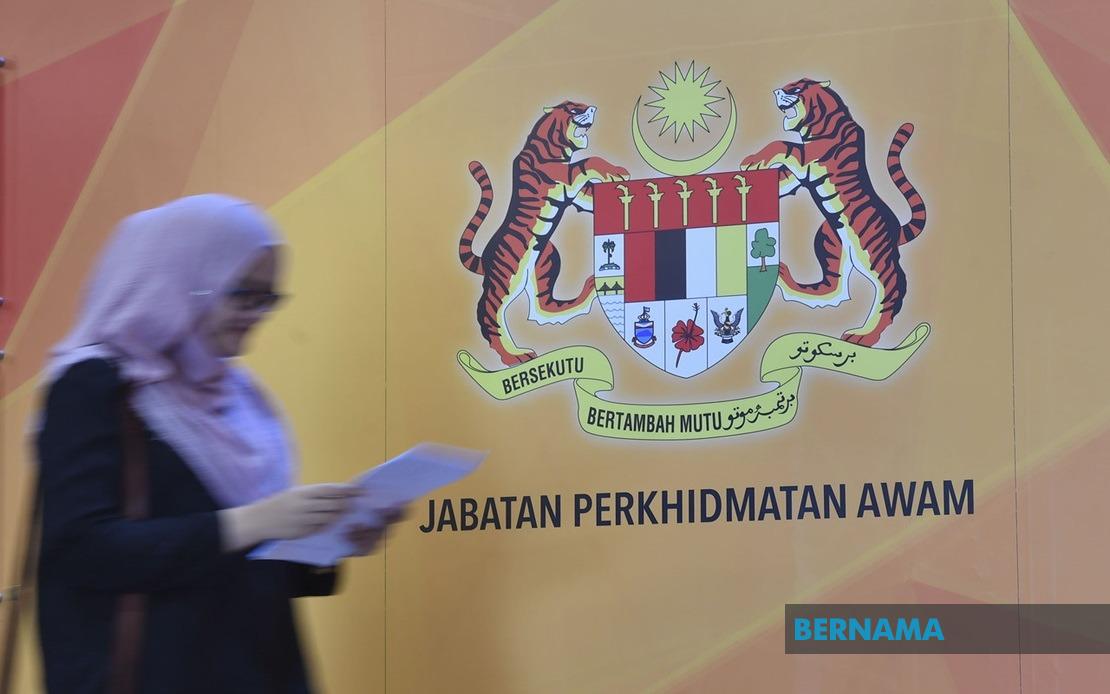
The Public Service Department (JPA) has announced a major scholarship initiative, making available 640 sponsorship slots for students completing their Sijil Pelajaran Malaysia (SPM) examinations in 2026. This offering represents a significant investment in grooming Malaysia's next generation of skilled professionals and aligns with the government's broader agenda under the MADANI framework to cultivate high-quality human capital capable of strengthening the nation's competitive edge on the global stage.
The sponsorship programme is structured around four distinct pathways, each designed to serve different cohorts and academic aspirations. The National Sponsorship Programme provides 30 positions, while the Special Programme targeting Japan, Korea, France and Germany allocation encompasses 140 slots. A further 200 spots are earmarked through the Special Programme for Domestic SPM Graduates, and the JPA-MARA Special Programme (PKJM) rounds out the offerings with 270 available positions. This tiered approach allows JPA to cast a reasonably wide net while maintaining focus on sectors deemed strategically important for national development.
The breadth of academic fields covered by these sponsorships reflects Malaysia's multifaceted development needs. Engineering, science and technology remain prominent, continuing the longstanding emphasis on STEM disciplines that underpin industrial growth and innovation. However, the inclusion of social sciences signals recognition that Malaysia's advancement also depends on expertise in fields such as economics, public administration, international relations and policy analysis. This balanced portfolio suggests a maturing understanding that technological progress alone cannot sustain national progress without corresponding advances in governance, social policy and institutional capacity.
Geographically, the sponsorship opportunities offer considerable scope for global academic exposure. Students may pursue qualifications in the United States, Australia, Japan, South Korea, France, Germany, the United Kingdom and New Zealand, provided they meet the selection criteria for international programmes. For those opting for domestic pathways, Malaysia's own higher education institutions are available as study venues. This combination gives high-performing graduates genuine choice while managing fiscal expenditure—international placements are reserved for the most competitive applicants, particularly through the region-specific Japan, Korea, France and Germany initiative.
The selection and notification process has been streamlined for transparency and accessibility. Applicants who have submitted their sponsorship applications can access results online through JPA's designated system from 10 am on announcement day through 5 pm on 22 June. This digital-first approach reduces bureaucratic friction and allows students to receive outcomes promptly, enabling them to plan subsequent steps in their educational journey without prolonged uncertainty.
A noteworthy feature of the 2026 sponsorship cohort is the introduction of the Academic Merit-Based Convertible Loan (PBUA), a financing mechanism that JPA first rolled out in June 2025. Unlike traditional grants, this structure provides funding while simultaneously establishing an obligation for recipients to maintain rigorous academic standards throughout their studies. The convertible loan aspect suggests that depending on academic performance, portions of the obligation may be forgiven or converted to grants, creating a performance-incentive framework that encourages scholarship holders to remain focused on their studies.
The PBUA represents a shift in how Malaysia's civil service approaches talent development investment. Rather than simply providing free education as a patronage mechanism, it embeds accountability and meritocratic principles into the funding arrangement itself. This approach acknowledges fiscal constraints while signalling to scholarship recipients that their sponsorship is conditional on demonstrated commitment to academic excellence. For students accustomed to highly competitive Malaysian secondary education environments, this expectation is unlikely to prove surprising or discouraging.
From a Malaysian perspective, this initiative carries particular relevance for middle-income families whose children have achieved strong SPM results but lack resources for quality tertiary education. The availability of 640 slots, while modest relative to Malaysia's total secondary school population, represents meaningful opportunity concentration in a selection process that inherently favours the highest achievers. Regional variations in educational infrastructure mean that sponsorship outcomes will likely favour urban and better-resourced states, a pattern consistent with previous cohorts but nonetheless worthy of monitoring for equity implications.
The emphasis on engineering and technical fields reflects ongoing skills gaps in Malaysia's manufacturing and technology sectors, where local universities struggle to produce sufficient numbers of qualified graduates. International placements in technologically advanced nations like South Korea, Germany and Japan provide scholarship recipients with exposure to best practices and innovation ecosystems that extend beyond classroom instruction. Many such scholars eventually return to Malaysia or regional positions, carrying with them professional networks and technical know-how that have broader economic spillover effects.
For Southeast Asian observers beyond Malaysia, the JPA sponsorship model offers instructive parallels and contrasts. While several regional peers operate comparable scholarship programmes, the explicit attention to converting high-achieving secondary graduates into civil service talent pipelines distinguishes Singapore, Malaysia and Brunei from their neighbours. This systematic approach to public sector human capital development contributes to the administrative stability and technical competence that characterise these governments' institutional capacity.
The timing of the announcement reflects Malaysia's medium-term planning horizons. By declaring sponsorship availability now for 2026 SPM graduates, JPA allows secondary school students currently in form five to factor potential sponsorship into their subject choices and exam preparation strategies. This advance notice maximises the opportunity for academically ambitious students to position themselves competitively, particularly those considering international pathways that may require additional language preparation or standardised test performance.
Successful applicants will join a distinguished cohort of JPA scholars spanning decades. Alumni networks of past sponsorship recipients populate senior positions across Malaysia's civil service, judiciary, diplomatic corps and state-owned enterprises. For 2026 awardees, this legacy represents both an honour and an implicit expectation—to eventually contribute meaningfully to national institutions and policy implementation. The scholarship thus functions simultaneously as educational opportunity, talent recruitment mechanism and nation-building investment.

