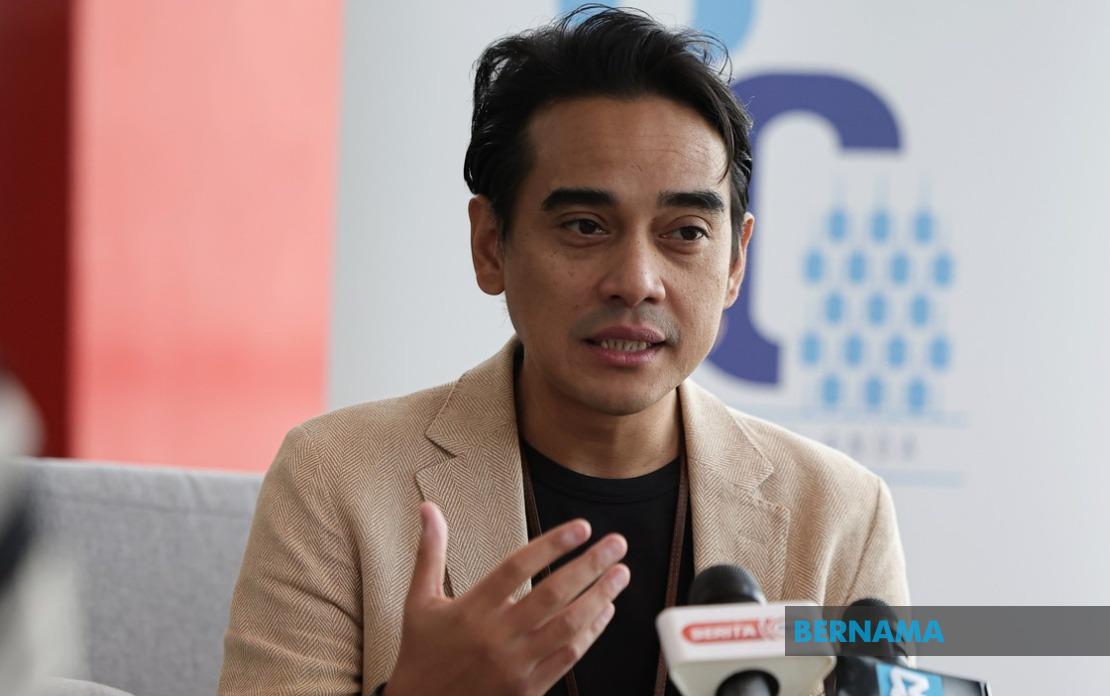
The future of journalism depends not on resistance to technological change but on professionals acquiring the skills to harness emerging tools effectively, Malaysia's Director-General of Broadcasting Ashwad Ismail cautioned recently. Speaking at an industry forum in Kuala Lumpur, Ashwad stressed that media practitioners across the region face a critical juncture where adaptation to artificial intelligence will determine career longevity and institutional survival in an increasingly digital news ecosystem.
The stakes are undeniably high. Ashwad reframed the perennial anxiety surrounding technological disruption by offering a frank assessment: journalists themselves will not become obsolete, but those who fail to master AI tools risk displacement by colleagues who do. This stark observation cuts through the noise of debates about whether machines can or should replace human newsroom staff, redirecting focus instead to individual professional responsibility. The competitive pressure, he suggested, emanates not from autonomous systems but from colleagues who recognise AI's potential and invest in learning its application.
Crucially, Ashwad advocated for a nuanced perspective on artificial intelligence within journalism. Rather than positioning AI as an adversarial force threatening the profession, he characterised it as a complementary instrument that amplifies human capability and elevates journalistic output. This distinction matters significantly for Southeast Asian newsrooms, many of which operate with tight budgets and lean staffing models. AI tools for research, fact-checking, data analysis, and initial drafting could address resource constraints that have long plagued regional media organisations, potentially improving both productivity and reporting quality simultaneously.
The broadcasting chief acknowledged genuine concerns within the industry about technological displacement and workforce instability. He identified the sector's vulnerability to rapid, unpredictable technological shifts and the real possibility of job losses as central challenges that cannot be dismissed or minimised. However, he framed these anxieties as problems requiring strategic institutional responses rather than reasons to reject innovation outright. The question, in his formulation, becomes not whether to adopt AI but how to do so responsibly and equitably.
To navigate this transition thoughtfully, Ashwad advocated for comprehensive guidelines governing AI implementation in newsrooms. He stressed that media organisations cannot deploy these technologies haphazardly or without considered principles. Explicit guardrails are essential to ensure that AI serves journalistic integrity and human welfare rather than eroding either. Such guidelines would ideally address when algorithmic decision-making is appropriate, how to maintain editorial oversight, what transparency obligations exist toward audiences, and how to protect workers during technological transition. Without such frameworks, the risks of algorithmic bias, journalistic distortion, or labour exploitation multiply considerably.
The broader purpose of establishing clear protocols is to keep AI subordinate to distinctly human journalistic values and outcomes. Ashwad emphasised that technology should enhance journalistic products and human professional capacity, not diminish them. This principle proves especially relevant in the Malaysian and broader Southeast Asian context, where trust in media institutions remains fragile in many quarters. Deploying AI in ways perceived as dehumanising journalism or compromising editorial judgment could further erode public confidence, making principled implementation essential not merely as a matter of professional ethics but as practical business necessity.
Addressing the parallel challenge of rebuilding public trust in news media, Ashwad identified a paradoxical remedy: strengthening the human dimensions of journalism precisely when technology offers opportunities to automate and remove humans from news production. He advocated for intensified hyperlocal reporting and deepened community engagement as antidotes to institutional credibility deficits. This prescription aligns with international research suggesting that local news, characterised by visible human presence and responsiveness to community concerns, generates higher audience trust than distant, algorithmic, or remotely-produced content.
The strategic implication for Malaysian and regional newsrooms is that technological advancement and human connection need not be mutually exclusive. AI might handle routine information processing, allowing journalists to devote more time to in-depth investigation, community interaction, and explanatory reporting that builds understanding and trust. This complementarity requires deliberate editorial strategy rather than assuming that efficiency gains automatically translate into journalistic value.
Ashwad's remarks occurred in the context of HAWANA 2026, a major regional broadcasting and media conference scheduled for conclusion in Penang on June 20, with participation from over 1,200 attendees including journalists, ASEAN delegates, and other stakeholders. The conference provides an appropriate platform for discussing how Southeast Asian media can collectively approach technological disruption. Regional cooperation on developing best practices and ethical standards for AI in journalism could strengthen the entire sector's capacity to harness technology responsibly.
For Malaysian journalists specifically, the message is clear: AI literacy is rapidly transitioning from optional professional development to competitive necessity. Those who acquire competence in using these tools thoughtfully will enhance their market value and career prospects. Simultaneously, media institutions and industry bodies bear responsibility for ensuring that technological adoption does not undermine journalistic quality, ethical standards, or worker welfare. The challenge ahead requires neither Luddite resistance nor uncritical embrace, but rather intentional, principle-guided integration of artificial intelligence into journalism's future.