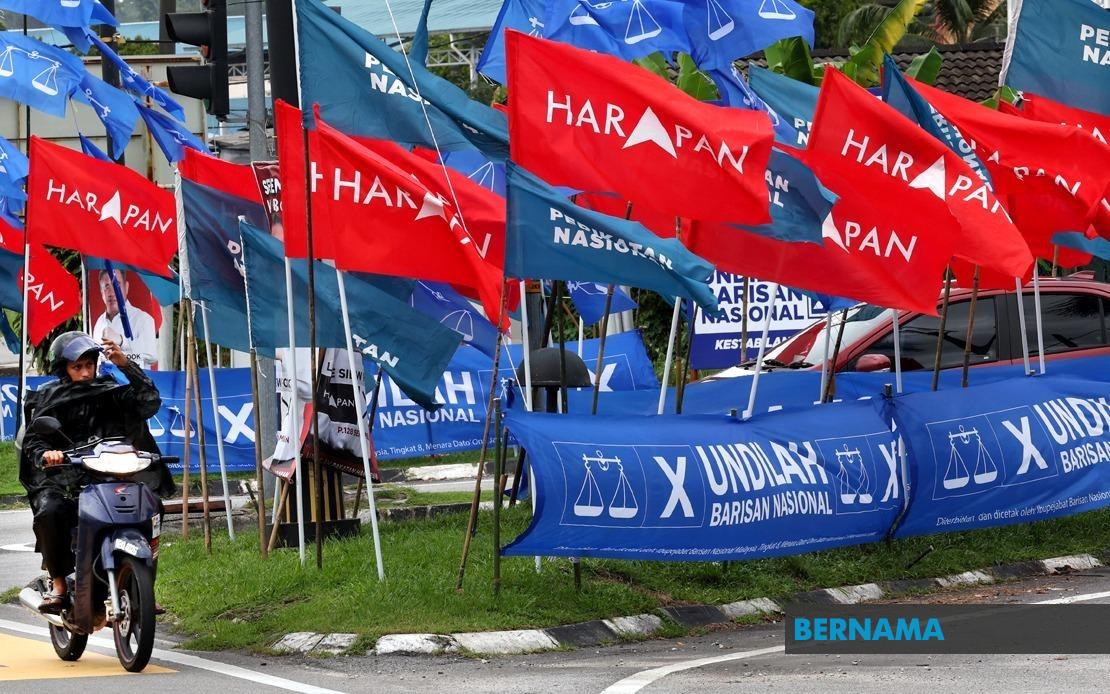
The Johor state election campaign is entering its climactic phase as candidates from all three major coalitions race against the clock to secure voter support in the final 48 hours before campaigning concludes. With polling day set for Saturday, the 16th Johor state election has become a high-stakes battleground where every interaction with voters could prove decisive, prompting an unprecedented flurry of grassroots mobilisation across the state's 56 contested seats.
The intensity of campaign activities has reached fever pitch across Johor, with political parties deploying their full armoury of engagement strategies. Beyond traditional ceramah sessions and town halls, candidates are conducting intensive door-to-door visits, organising motorcycle convoys, and staging elaborate rallies designed to generate excitement among voters. This multifaceted approach reflects the tight competitive nature of the contest, where even minor variations in voter turnout or preference shifts could alter the composition of the state assembly. The scale of ground operations demonstrates how seriously political operatives are treating this election as a potential turning point in Malaysian politics.
Pakatan Harapan has mobilised its highest-profile figures to energise its campaign machinery across Johor. Prime Minister Datuk Seri Anwar Ibrahim is personally conducting campaign appearances at three key constituencies tonight, with particular attention being paid to the Puteri Wangsa state seat, which appears to be emerging as a closely fought microcosm of broader electoral dynamics. The coalition's strategy of deploying national leadership reflects confidence in its prospects while simultaneously acknowledging that certain constituencies require extraordinary efforts to secure victory. PH's Puteri Wangsa candidate Maszlee Malik has issued direct appeals to voters through social media, creating a sense of urgency and encouraging participation in the party's final rally event.
Within PH's campaign operations, individual candidates are managing their own momentum-building activities while integrating into larger coalition efforts. Dr A. Ruban, contesting the Paloh seat, has returned to active campaigning following medical treatment, signalling his determination to see his campaign through to completion. Simultaneously, senior PH operatives such as Johor PKR chairperson Datuk Seri Dr Zaliha Mustafa are orchestrating high-visibility support operations for party candidates in competitive constituencies. The Felda Redong Motorised Convoy involving 120 motorcyclists represents the kind of spectacle-driven campaign activity designed to generate local media coverage and demonstrate organisational capability to voters who might be on the fence about their voting intentions.
Barisan Nasional, operating as the incumbent coalition with significant administrative advantages, is pursuing a parallel strategy emphasising continuity and development achievements. BN coalition chairman Datuk Seri Dr Ahmad Zahid Hamidi has personally campaigned in the Endau and Kempas constituencies, a calculated move to reinforce the party's presence in competitive areas. Johor Menteri Besar Datuk Onn Hafiz Ghazi, contesting from his Machap stronghold, continues to frame the election as a choice between BN's proven track record and opposition alternatives. The coalition's communications strategy through social media platforms, including Instagram video messaging, demonstrates how traditional politics is intersecting with digital engagement tactics to reach younger voters who might otherwise remain disengaged from the electoral process.
BN's campaign operations in constituencies like Larkin show how individual candidates are adapting broader coalition messaging to local contexts. Larkin candidate Mohd Hairi Mad Shah's "Ziarah Kasih" programme emphasises personal connection and constituent service rather than abstract policy arguments, a tested approach in Malaysian electoral politics that prioritises relationship-building over ideological positioning. This granular approach to campaigning, replicated across multiple constituencies, reflects BN's traditional strength in organising ground-level political operations, though it remains to be seen whether such tactics can overcome broader voter sentiment regarding governance and economic management.
Perikatan Nasional has staked its electoral credibility on mobilising its core supporters through dramatic final-week rallies that feature party leadership and allied figures from PAS. The planned mega rally in Endau, combining PN chairman Datuk Seri Ir Dr Ahmad Samsuri Mokhtar and PAS president Tan Sri Abdul Hadi Awang, represents a deliberate attempt to create a compelling visual and political narrative that can drive voter enthusiasm among its target constituencies. PN's strategy appears focused on consolidating its support base in traditional strongholds while making selective pushes in constituencies where recent polling or anecdotal evidence suggests vulnerability for the incumbent coalitions.
Smaller political entities are also participating in what has become an inclusive electoral spectacle. Parti Bersama Malaysia's "Bersama Tour Truck" initiative and ground-level community dialogues pursued by candidates like Kota Iskandar's Sahrudin Omar and Larkin's Norsinah Abu indicate how even minor parties are attempting to carve out distinct campaign identities and communicate directly with voters. These smaller-scale activities often target niche voter demographics or specific community concerns that larger coalitions may overlook, potentially influencing outcomes in closely divided constituencies.
The breadth of campaign activities across Johor's 56 contested seats, involving 172 candidates in total, underscores the scale and complexity of state-level elections in Malaysia. Each constituency presents its own particular political configuration, demographic composition, and voting history, requiring tailored campaign approaches rather than one-size-fits-all messaging. The frenetic final-week campaign activity reflects political parties' understanding that voter preferences remain fluid until polling day itself, and that sustained engagement can move marginal voters who have not yet made firm commitments.
For Malaysian observers and regional analysts, the Johor election carries significance beyond its immediate state-level implications. As one of Malaysia's largest and most populous states, Johor's electoral outcome could influence federal political dynamics, particularly regarding the stability of the PH government at the national level. The apparent competitiveness across multiple constituencies suggests that Saturday's result is far from predetermined, making the intensity of final-week campaigning rational political strategy rather than mere ritual. Voter participation levels and the specific geographic distribution of support across the 56 seats will ultimately determine which coalition emerges victorious, but the exhaustive campaign operations visible in these final hours demonstrate that all three major political blocs view the outcome as genuinely consequential for Malaysia's political trajectory.

