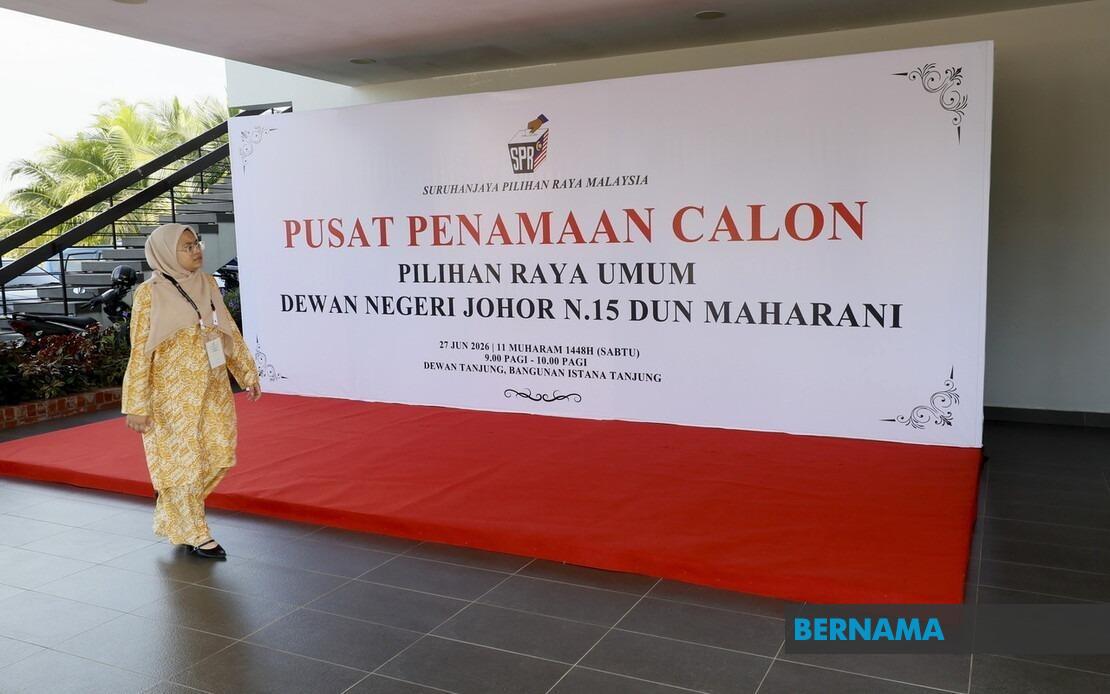
The 16th Johor State Election began in earnest on June 27, with prospective candidates submitting their nomination papers at 56 centres scattered across the state from dawn. The Election Commission allocated a single hour—between 9 am and 10 am—for candidates to lodge their documentation with returning officers, after which the formal announcement of eligible contenders would follow. This traditional opening marked the formal transition from planning to active contestation, setting in motion a two-week campaign sprint that will conclude on July 10 at midnight.
By the time nominations officially opened, the groundwork had already been extensively laid. Election officials reported that 593 nomination forms had been distributed to interested parties, while 133 prospective candidates had already secured their candidacy by paying the mandatory election deposits. These figures suggested a robust level of interest across the political spectrum, indicating that voters could expect a genuine contest with meaningful choices at the ballot box when polling day arrives on July 11.
The electoral landscape encompasses 2,727,926 registered voters across Johor, a substantially diverse electorate that reflects the state's demographic complexity. The voter roll comprises 2,703,175 ordinary citizens, alongside 12,041 military personnel and their families, and 12,710 police officers and their relatives. This comprehensive registration demonstrates the Election Commission's efforts to ensure inclusive representation, though voter turnout and engagement will ultimately determine the election's legitimacy and the winning parties' true mandate.
Malaysia's three major political coalitions are contesting the election with markedly different strategic approaches. Pakatan Harapan fields candidates across all 56 seats through its component parties: PKR (20 seats), Amanah (19 seats), and DAP (17 seats). Barisan Nasional similarly contests comprehensively, fielding UMNO candidates in 36 constituencies, MCA in 16, and MIC in four. This complete slate suggests both coalitions view Johor as pivotal to their broader political fortunes, particularly given the state's historical significance within Malaysian federalism.
Perikatan Nasional's strategy reflects a more fragmented approach, with PAS contesting 11 seats while Bersatu fields 16 candidates. The coalition additionally deploys the Malaysian Indian People's Party in five constituencies and Parti Pejuang Tanah Air in a single seat, suggesting internal negotiations about geographic and demographic positioning rather than a unified frontline. This tactical complexity within PN itself—evidenced by multiple parties representing different ethnic and religious constituencies—could influence how seats distribute if results prove closely contested.
Several newer or smaller parties are also participating, signalling ongoing fragmentation within Malaysia's political ecosystem. Parti Ikatan Demokratik Malaysia contests four seats, while Parti Sosialis Malaysia fields one candidate. Most notably, Parti Bersama Malaysia is making its electoral debut, contesting 15 seats and potentially signalling emerging political realignment. These smaller entrants rarely win seats in Malaysian elections, but their participation indicates attempts by new movements to establish voter presence and organizational infrastructure for future contests.
The sitting composition of the Johor State Assembly before its June 1 dissolution reveals substantial momentum favouring Barisan Nasional. The previous assembly comprised 40 BN seats against Pakatan Harapan's 12, with Perikatan Nasional holding three and MUDA securing one. These numbers provide crucial context: BN enters this election as the clear incumbent favourite, though any gains by opposition coalitions would represent significant momentum shifts in a state that BN has traditionally dominated.
Election logistics have been carefully orchestrated to manage the state-wide process. The 14-day campaign period running until July 10 provides candidates and parties adequate time for door-to-door canvassing, rallies, and media engagement. Early voting on July 7 accommodates voters unable to participate on the main polling date, while the July 11 voting day itself involves substantial security and traffic arrangements. The Election Commission has deployed 4,832 police personnel to maintain order and regulate movement around the 56 nomination centres and throughout the state, with 19 major roads subject to closures and diversions.
Weather conditions presented an initial practical consideration, with the Malaysian Meteorological Department forecasting morning rain in several areas and afternoon thunderstorms. While hardly exceptional for Johor in late June, such conditions affect candidate movements and voter accessibility, potentially influencing turnout patterns. Security arrangements specifically addressed campaign conduct, with election authorities reminding participants that the Election Offences Act 1954 prohibits certain amplified campaign activities, including loudspeaker use on vehicles and unrestricted musical instruments.
The Johor contest carries significance extending beyond the state itself. As Malaysia's second-largest state by population and a manufacturing and economic hub, Johor's political complexion influences national coalitional dynamics. A decisive BN victory would reinforce the coalition's recovery narrative following the 2018 general election setback. Conversely, substantial opposition gains would energize Pakatan Harapan supporters ahead of future national contests. The participation of newer entities like Bersama and the ongoing strength of Perikatan Nasional adds additional layers of uncertainty to traditional electoral calculations.
With nominations now submitted and candidates formally declared, the substantive contest begins. The 14-day campaign period will determine whether the incumbent BN can consolidate its previous dominance or whether opposition coalitions can capitalize on any voter dissatisfaction. The diversity of registered voters—spanning urban professionals, rural communities, and military families—ensures that campaign messaging will need to address multiple constituencies and concerns. By July 11, Johor voters will determine not merely their state representation but also send signals about broader Malaysian political directions.

