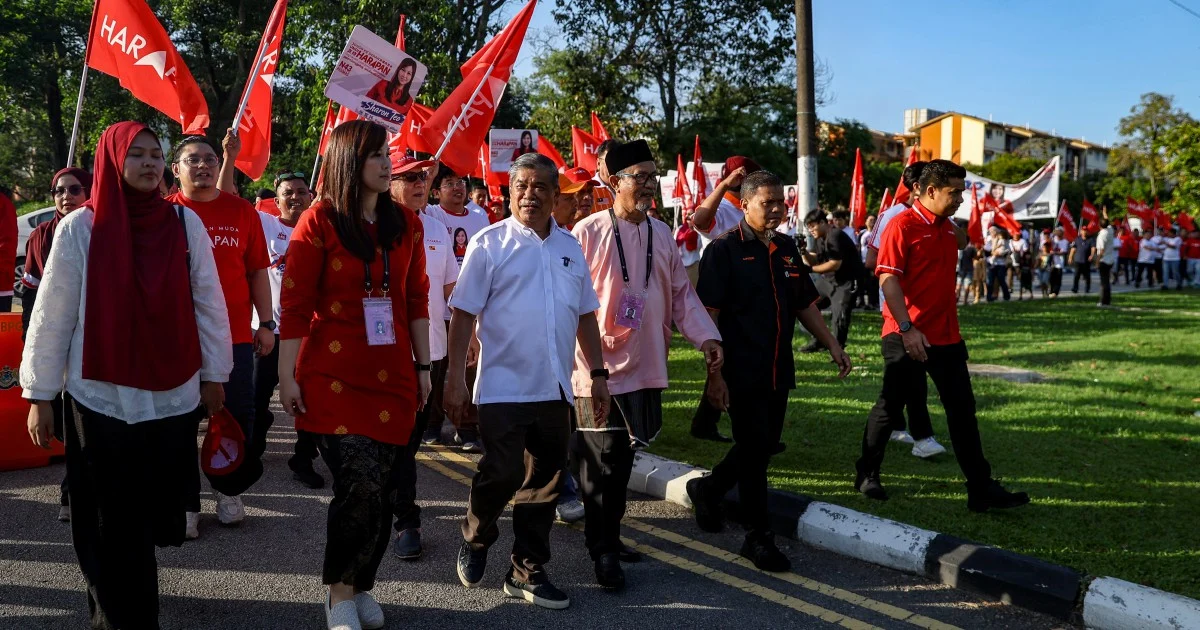
Opposition coalition Pakatan Harapan received a show of grassroots enthusiasm in Johor when candidate Sharon Teo arrived at the Permas state constituency nomination centre in Pasir Gudang. Supporters gathered at Dewan Muafakat Taman Mawar to welcome her, with chants of "Johor undi Pakatan Harapan" reverberating through the venue, reflecting the coalition's push to mobilize voters in one of Malaysia's most politically significant states.
The vocal backing underscores growing attempts by the three-party coalition to strengthen its presence in Johor, a state long dominated by Barisan Nasional and more recently contested by Perikatan Nasional. The energy displayed by supporters at Teo's nomination filing signals the coalition's conviction that momentum exists among certain voter segments, particularly in urban constituencies like Permas where younger demographics and diverse communities have shown receptiveness to opposition messaging in recent electoral cycles.
Permas, located within Pasir Gudang, represents a strategic battleground in Johor politics. The constituency encompasses both established residential areas and newer developments, creating an electorate with mixed socioeconomic profiles and voting patterns. Historical election data indicates the seat has experienced competitive races, making it neither a guaranteed hold for any single coalition nor a clear pickup opportunity. Teo's candidacy suggests Pakatan Harapan believes conditions favour a competitive contest, warranting resource allocation and high-profile campaigning.
The nomination filing ceremony marks the formal commencement of the electoral process for this particular race. By recruiting candidates and conducting public registration events, political coalitions generate media coverage and demonstrate organizational capability. The visible turnout of supporters at Teo's venue sends signals to both party machinery and wider electorates about the relative enthusiasm levels backing different candidates. In Malaysian politics, such displays often reflect the intensity of local organizing efforts and volunteer mobilization preceding the actual polling day.
Johor's political landscape remains complex following the realignment that occurred after the 2022 general elections. Different coalitions have invested substantially in building organizational structures and messaging appeal across the state's various constituencies. Urban areas particularly have witnessed intensified competition between Pakatan Harapan, which emphasizes reform narratives and economic inclusivity, and other competing groups offering alternative visions of governance. The chanting at Teo's nomination suggests the coalition's supporters perceive momentum worth channelling into on-the-ground activism.
Supporters' vocal expressions during nomination ceremonies carry symbolic weight beyond the immediate event. In Malaysian political culture, public demonstrations of backing serve multiple functions: they energize the candidate's team, project strength to competing campaigns, encourage undecided voters to consider the coalition, and provide social proof that backing this political group carries community legitimacy. The decibel level of such chants often reflects genuine grassroots sentiment, though sophisticated campaigns also strategically organize crowd turnout to amplify appearances of popularity.
For Pakatan Harapan, consolidating support in multiple Johor constituencies remains essential to any realistic pathway toward altering the state's political trajectory. Johor contains significant parliamentary representation and state assembly seats, making its electoral performance consequential for national coalition fortunes. Success in urban constituencies like Permas would indicate the coalition has successfully breached Barisan Nasional's traditional strongholds and maintained support levels necessary for genuine electoral competition at the state level.
The nomination process itself involves procedural requirements ensuring only eligible candidates stand for election. Administrative processes during nomination filing—verification of documents, submission deadlines, and formal registration—proceed simultaneously with political theatre. Sharon Teo's presence at the centre fulfilled these technical requirements whilst simultaneously providing a focal point for supporter mobilization. This combination of administrative necessity and political opportunism characterizes Malaysian electoral events, where bureaucratic processes merge with campaign activity.
Looking toward actual polling, Pakatan Harapan will likely invest effort in Permas given the early enthusiasm demonstrated. Campaign strategies in such constituencies typically emphasize bread-and-butter issues affecting residents: economic opportunities, infrastructure development, safety, and public services. The coalition will attempt translating chanting supporters into sustained organizational presence through house visits, grassroots meetings, and targeted messaging reaching specific voter segments identified through demographic analysis.
The chants of "Johor undi Pakatan Harapan" encapsulate the coalition's broader election strategy in Malaysia's southern state. Rather than expecting automatic support, the coalition pursues active persuasion, betting that voters in constituencies like Permas have grievances the coalition can address more effectively than rival coalitions. Whether such optimism translates into electoral victories ultimately depends on factors extending far beyond nomination-day demonstrations, including economic conditions, national political developments, and individual candidate appeal.
As the electoral campaign intensifies across Johor, nomination ceremonies will continue throughout the state, each revealing information about different coalitions' relative organization and supporter morale. These early indicators provide both observers and campaign strategists intelligence about probable competitive intensity in various constituencies. The enthusiasm witnessed at Sharon Teo's nomination filing suggests her campaign enters the race with activated support, though translating enthusiasm into votes remains the central challenge confronting all candidates seeking election.

