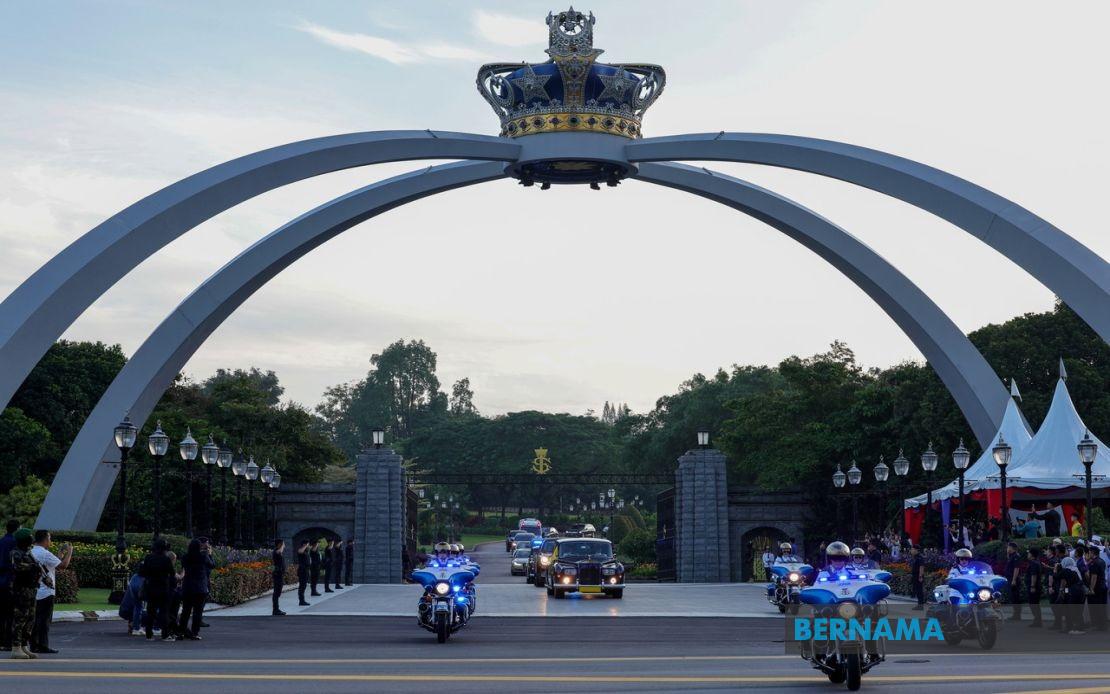
A ceremony to formally install Johor's next Menteri Besar is scheduled for 3 pm this afternoon at Istana Bukit Serene, the royal palace in Johor Bahru. The official invitation, distributed through WhatsApp by the Johor Palace, confirmed the timing and venue but withheld the name of the appointee, preserving tradition around such appointments until the formal moment arrives. Media representatives have been invited to cover proceedings from the Crown Arch, or Pintu Mahkota, of the palace complex, signalling the state administration's intention to conduct the affair with appropriate public visibility.
The swearing-in marks the culmination of a dramatic electoral shift in Johor, Malaysia's second-largest state by population and a traditional stronghold of Barisan Nasional power. In yesterday's state election, BN achieved what political analysts described as a landslide victory, capturing 48 of the 56 seats contested. This commanding mandate provides the incoming Menteri Besar with substantial parliamentary support and effectively forecloses any immediate challenges to the administration's stability or legislative agenda. The scale of BN's success—securing roughly 86 percent of available seats—underscores the electorate's endorsement and hands the coalition government considerable room for policymaking.
Activity around the leadership transition has intensified throughout the morning. Journalists and photographers assembled from noon onward at both the Menteri Besar's official residence in Saujana and at the gates of Istana Bukit Serene itself, tracking developments as the day progressed. This gathering reflects the media's anticipation of the formal announcement and the broader political significance the appointment carries. In Malaysian state politics, such ceremonies carry ceremonial weight but also signal continuity and legitimacy, particularly following an election in which the outgoing or incoming administration has received strong popular support.
Earlier on the day of the swearing-in, Sultan Ibrahim Iskandar received Datuk Seri Ahmad Zahid Hamidi, the national chairman of Barisan Nasional, at Istana Pasir Pelangi. The audience, which lasted approximately one hour, included Datuk Onn Hafiz Ghazi, who chairs the Johor branch of BN. While no detailed communiqué was released regarding the discussion, such formal meetings between the Sultan and the national coalition leadership typically involve consultations on governance, policy priorities, and occasionally, formal recommendations regarding appointments. The participation of both the national and state party chairs indicates that the appointment process has involved coordination across multiple levels of the BN machinery.
The swearing-in ceremony represents an important institutional moment for Johor at a time of significant political transition in Malaysia. Across the peninsula, state administrations led by different coalitions manage various policy portfolios—from education and public health to economic development and environmental regulation—that directly affect millions of Malaysians. Johor's selection of a new leader following such a decisive election outcome will shape the state's trajectory on infrastructure projects, foreign investment attraction, and social policies. For business communities and residents in Johor, the appointment signals both continuity under BN stewardship and the opportunity for the incoming administration to chart its own priorities.
The timing of the announcement and swearing-in, just one day after the election itself, reflects the constitutional processes governing state leadership transitions in Malaysia. The Sultan, as the constitutional monarch of Johor, holds the formal authority to appoint the Menteri Besar following consultations and in accordance with constitutional conventions. The rapid progression from election to swearing-in ceremony demonstrates how Malaysia's parliamentary system, despite its complexities, is designed to establish clear chains of authority and prevent prolonged vacuums in state administration. This efficiency, however, also means that the incoming leadership must be prepared to assume responsibility for ongoing government operations, budget implementation, and policy execution almost immediately.
For Southeast Asian observers of Malaysian politics, the Johor election and its aftermath illustrate broader patterns of electoral behaviour and coalition politics in the region. Johor has historically served as a testing ground for political strategies and a crucial swing state in federal elections. BN's performance here carries implications for the party's prospects in future national balloting and signals voter sentiment on matters ranging from economic management to corruption and governance. The composition of the incoming administration, once formally announced, will provide additional clarity on how BN intends to balance its various component parties' interests and how it plans to address voter concerns that may have emerged during the campaign.
The palace's decision to provide media access from designated areas of Istana Bukit Serene underscores a commitment to transparency while maintaining the ceremonial dignity of the occasion. In contemporary Malaysian governance, balancing accessibility with formality remains a delicate matter. By allowing journalists to observe and report on the proceedings, the state administration enables citizens across Johor and beyond to witness the constitutional moment and understand the identity and commitment of their new chief administrator. This openness also provides an opportunity for the incoming Menteri Besar to project confidence and establish a tone for their tenure.
Looking ahead, the swearing-in ceremony will formally initiate a new chapter in Johor's governance. The incoming Menteri Besar will inherit an administration overseeing an economy that has weathered regional challenges, significant infrastructure projects in various stages of completion, and a diverse population with competing policy priorities. Whether the administration leverages its substantial legislative majority to pursue transformative reforms or focuses on incremental improvements will become evident in the weeks and months following today's ceremony. For Malaysian policymakers and observers, the Johor transition exemplifies how electoral mandates translate into executive authority and how state-level leadership shapes the federation's overall trajectory.

