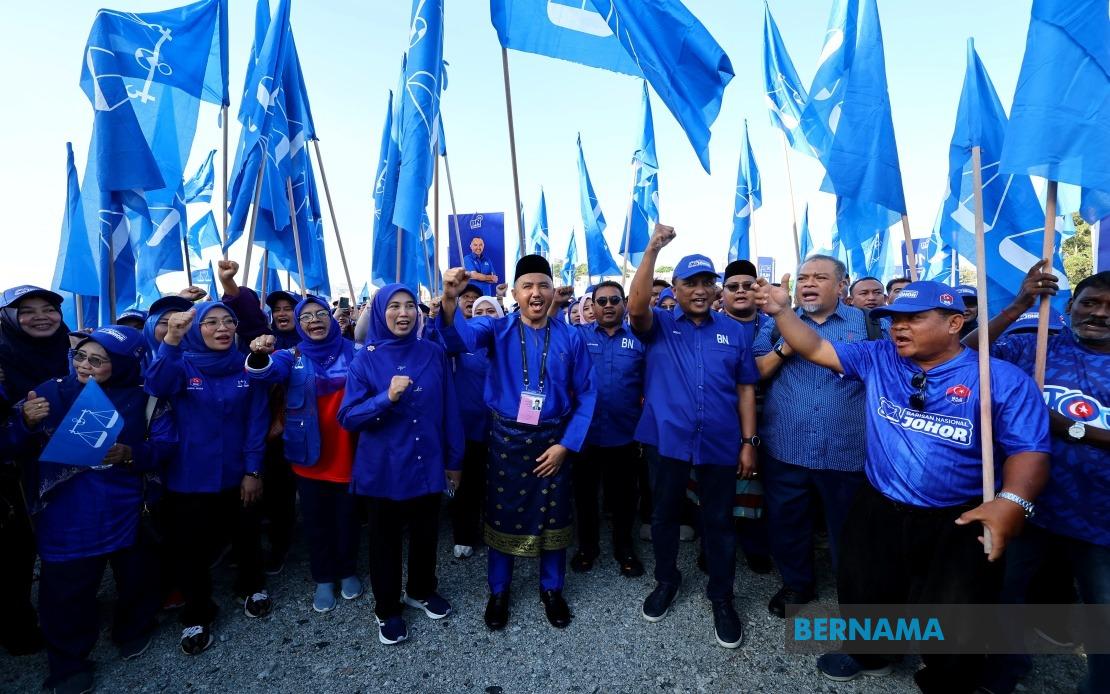
The 16th Johor State Election moved into its formal campaign phase today after all 56 nomination centres across the state shut their doors at 10am, having processed candidate submissions during a single-hour window that opened at 9am. Returning officers stationed at each centre announced the closure simultaneously, signalling the completion of the registration process and the transition to an intense fortnight of political activity ahead of the July 11 polling day.
This procedural milestone represents a critical juncture in the electoral cycle, as it locks in the field of contenders vying for 56 state assembly seats. The closing of nominations today triggers a chain of administrative steps that will determine which candidates officially contest each seat and how competitive individual constituencies will be. The Election Commission will now move to verify all submissions and issue the official list of eligible candidates, a document that will clarify how many three-cornered or multi-cornered contests voters will face in their respective constituencies.
Within the next several days, the focus will shift to campaign logistics as political parties and independent candidates mobilise their resources for the hard-fought period ahead. The Commission has fixed a 14-day campaign window stretching from today through 11.59pm on July 10, a relatively compressed timeframe in which parties must reach voters across the diverse constituencies of Malaysia's southernmost state. This period encompasses the high-intensity phase where candidates will hold ceramah events, distribute campaign materials, and attempt to sway undecided voters through direct engagement and media outreach.
Security arrangements and crowd management at the nomination centres reflected the importance of maintaining electoral integrity throughout the process. Throughout the morning, police and the People's Volunteer Corps positioned themselves at all 56 centres to ensure orderly proceedings and prevent disruptions. The steady flow of candidates accompanied by party supporters proceeded without recorded incidents of aggression or intimidation, demonstrating the professional administration of what remains a sensitive democratic exercise in Malaysia's multi-party environment.
The turnout of supporters who gathered at nomination venues underscored the considerable public interest in this election. Party operatives coordinated the movement of their respective nominees to ensure proper documentation of submissions, while observers from contesting organisations stood witness to the process. The orderly nature of proceedings across all centres reflected careful advance planning by election officials and implicit cooperation from competing parties intent on maintaining the election's credibility.
The voter roll that will determine the outcome comprises a substantial and diverse electorate spread across urban, suburban, and rural areas. Some 2,727,926 registered voters are entitled to cast ballots, encompassing 2,703,175 ordinary civilian voters alongside 12,041 military personnel and spouses and 12,710 police officers and spouses. This composition reflects Johor's character as a state combining significant urban centres like Johor Bahru with extensive rural constituencies, presenting distinct campaigning challenges for candidates attempting to build winning coalitions across disparate communities with varying economic interests and social concerns.
Johor's electoral significance extends beyond its own borders, as outcomes here frequently signal broader trends affecting national politics. The state has historically demonstrated sensitivity to economic conditions, property market dynamics, and migrant-related issues that resonate across Malaysia. The results from this election will offer valuable insights into voter sentiment on inflation, employment, and governance quality at the state level, messages that federal policymakers and opposition strategists will scrutinise carefully for implications at the national scale.
The compression of the campaign period into 14 days reflects contemporary electoral practices designed to reduce campaign spending and electoral fatigue while maintaining sufficient time for meaningful public engagement. Digital campaigning and social media outreach have become increasingly important components of modern Malaysian elections, allowing candidates to supplement traditional grassroots mobilisation with targeted messaging to younger, urbanised voters. The rapid pace of the campaign period means that parties must execute their strategies with precision, leaving little room for correcting messaging missteps or recovering from tactical errors.
Early voting has been scheduled for July 7, providing military and police personnel, as well as voters unable to vote on the main polling day, with an opportunity to exercise their franchise beforehand. This logistical arrangement acknowledges the practical constraints facing these voter categories while preserving the integrity of the electoral process through secure and monitored early voting procedures. The provision of this alternative voting mechanism reflects how election administration in Malaysia attempts to balance inclusivity with security and accuracy.
With nominations now closed and the official candidate list pending publication, the state enters uncharted territory regarding seat competitiveness and the likely distribution of three-way and multi-cornered contests. The coming days will reveal whether certain constituencies will see straight fights between two major contenders or whether fragmented opposition and independent candidates will complicate the battleground. This information will prove crucial for political analysts attempting to forecast outcomes and for voters seeking clarity about their local choices.
The Election Commission's management of the nomination process has established the procedural foundation for what promises to be a closely watched state election in one of Malaysia's most economically significant regions. As the calendar turns to July, all attention will focus on the intensity of campaigning and the strategies deployed by contending parties as they seek to convince Johor's millions of voters that they represent the best path forward for the state's development and governance during the next five-year term.

