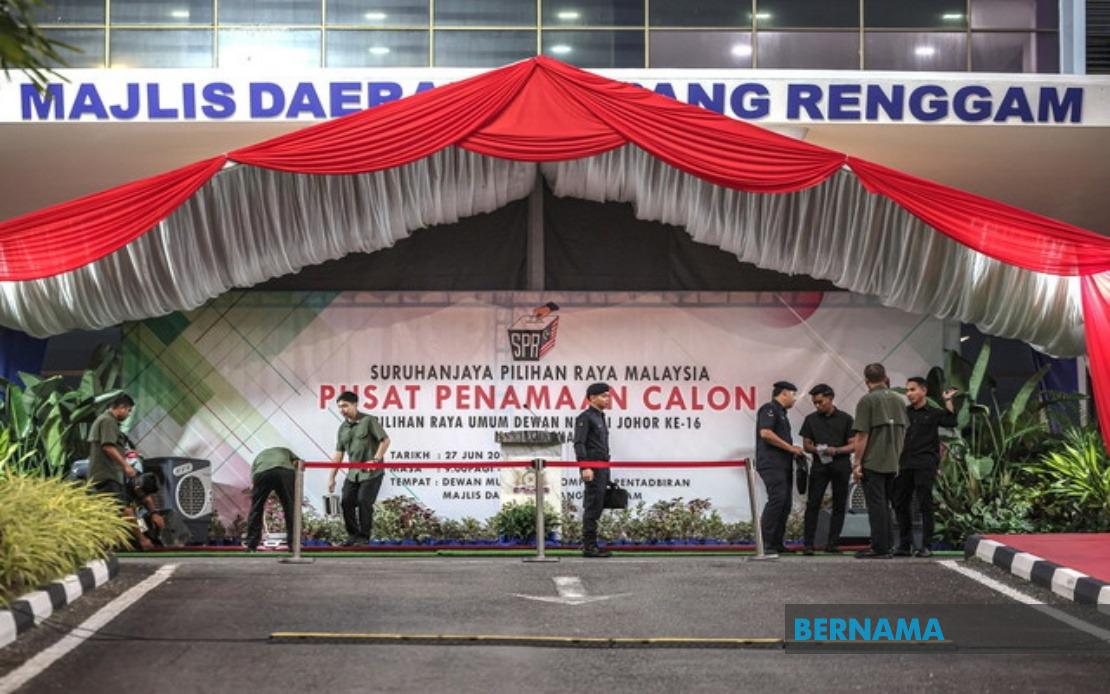
The 16th Johor State Election commenced its candidacy submission phase on June 27 when nomination centres across the state unlocked their doors at 9am sharp, marking the formal beginning of what will be a closely watched electoral contest in Malaysia's southernmost peninsula state. With 56 nomination centres operating simultaneously across Johor's districts, the Election Commission orchestrated a coordinated nationwide effort to process candidate registrations within a tightly controlled timeframe that would set the stage for the subsequent campaign and polling phases.
Candidates faced a compressed one-hour window, closing at 10am, to deliver their nomination documents to the returning officer at their designated centre. The brevity of this submission period underscored the Election Commission's emphasis on procedural efficiency and preventing last-minute complications. Nomination papers could be presented by the candidate alone, the candidate alongside a proposer and seconder, or various other permutations, providing flexibility in how formal nominations were executed. This procedural framework has become standard across Malaysian electoral contests, balancing accessibility with administrative clarity.
The atmosphere outside nomination centres reflected the competitive nature of the contest, with party supporters mobilising from as early as 6.30am to demonstrate backing for their preferred candidates. This early arrival pattern, observed across multiple centres, indicated genuine grassroots enthusiasm and signalled that parties had deployed considerable organisational resources to ensure visible presence during this symbolic opening stage. The gathering of supporters before the official opening hour created visual spectacles that would dominate local media coverage and set the tone for weeks of campaigning ahead.
Weather conditions presented a variable backdrop across the state on nomination day. The Malaysian Meteorological Department had forecasted morning rainfall for Johor Bahru, Muar, Batu Pahat, Kota Tinggi, Pontian, Tangkak and Kulai, while the northern districts of Segamat, Kluang and Mersing were predicted to remain dry. Afternoon thunderstorms loomed across most districts including Johor Bahru, Segamat, Kluang and Kota Tinggi, potentially affecting the movement of supporters and candidates between nomination centres. Despite these meteorological challenges, no reports emerged of weather-related disruptions to the nomination process itself.
Security preparations had been mounted extensively ahead of the nomination day. Police personnel worked alongside members of the People's Volunteer Corps (RELA) to establish cordons around each nomination centre, managing traffic flows and screening access points. These security measures reflected the Election Commission's determination to maintain order and prevent confrontations or disruptions that might taint the legitimacy of the process. Historical experience from previous Malaysian elections had demonstrated the importance of visible security presence during high-stakes nomination periods, particularly in competitive constituencies where tensions between rival camps could occasionally surface.
Once the nomination verification process concluded, the Election Commission would unleash a precisely calibrated 14-day campaign period, extending until 11.59pm on July 10. This fortnight would witness the full intensity of electioneering activity, with parties deploying advertisements, organising ceramah rallies, conducting door-to-door canvassing, and saturating social media channels with messaging designed to sway undecided voters. The fixed campaign duration ensured equal opportunity for all contenders and prevented the grinding, unregulated pre-campaign positioning that had characterised earlier eras of Malaysian politics.
The electoral framework encompassed two subsequent key dates. Early voting was scheduled for July 7, allowing designated voters including military and police personnel to cast ballots before polling day. The main polling day itself fell on July 11, when the electorate would choose representatives to form the next Johor state government. This staggered voting arrangement accommodated the needs of uniformed personnel while maintaining a compressed overall election cycle from nomination to final result.
The voter roll presented substantial numbers that would determine the scale of the electoral exercise. The Election Commission registered a total of 2,727,926 eligible voters across Johor, with the overwhelming majority comprising 2,703,175 ordinary civilians. An additional 12,041 military personnel and their spouses formed one special category, while 12,710 police personnel and their spouses constituted another. These figures underscored how electoral contests in Johor engaged not merely political activists or partisan voters, but encompassed the broader cross-section of Malaysian society including those serving in security forces. The inclusion of military and police personnel in the electoral process, albeit through early voting mechanisms, reflected Malaysia's commitment to inclusive democracy despite the security apparatus's separate institutional status.
For Malaysian observers and Southeast Asian analysts watching Johor's political trajectory, this state election carried significance beyond purely local implications. Johor remains Malaysia's most populous state and possesses considerable economic influence as a major investment and manufacturing hub. Electoral outcomes here typically reverberate through national political calculations, potentially reshaping coalition dynamics at federal level. The nomination day therefore represented not merely the administrative opening of a state-level contest, but the commencement of a process that would generate ripple effects throughout Malaysia's broader political landscape.
The synchronised operation of 56 nomination centres reflected sophisticated electoral administration and the maturity of Malaysia's democratic institutions. Returning officers across the state had received standardised instructions, nomination forms had been standardised, and procedural guidelines had been disseminated to all stakeholders. This uniformity, taken for granted by most observers, actually represented the outcome of decades of institutional development and refinement of electoral processes. As nomination papers accumulated in returning officer offices across Johor during that single compressed hour, Malaysia's democratic machinery moved inexorably toward the choice that voters would ultimately render on July 11.

