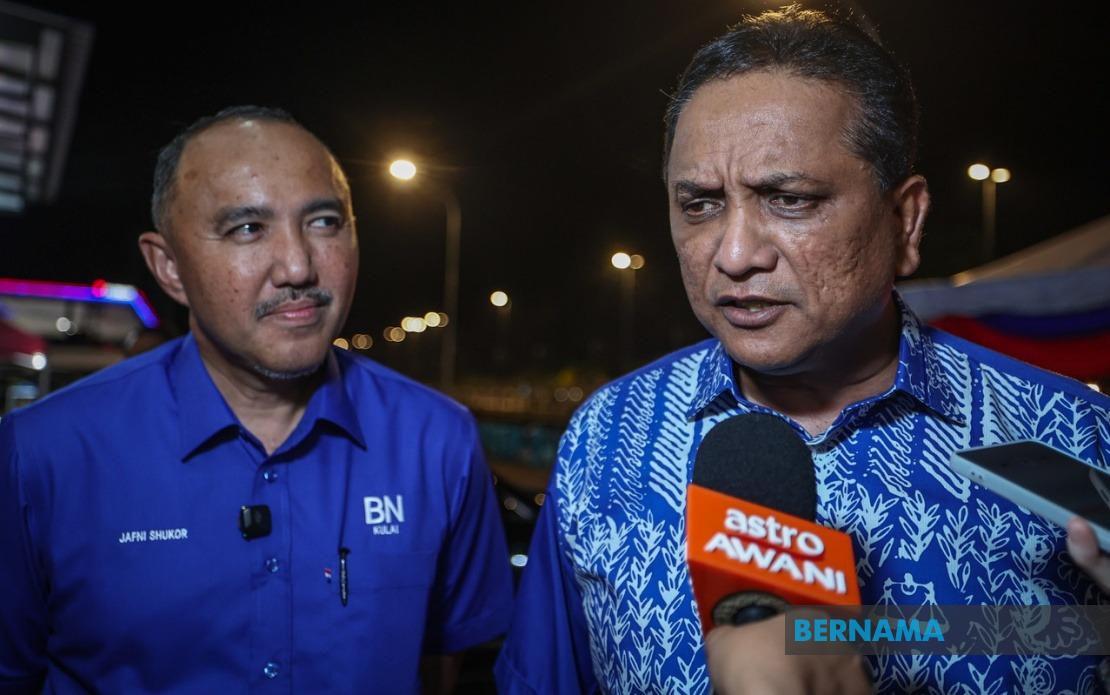
Senior UMNO politician Datuk Seri Reezal Merican Naina Merican has firmly rejected allegations that the Regent of Johor, Tunku Mahkota Ismail, has transformed the state government into a tool of palace interests, calling the narrative deeply flawed and divorced from political reality. Speaking in Johor Bahru on June 25, the UMNO Supreme Council member characterised such claims as significantly overstated, insisting they misrepresent the constitutional role of the Regent and his relationship with the state administration.
Reezal Merican's defence comes at a particularly sensitive moment in Johor's political calendar. The state is preparing for elections scheduled for July 11, with nomination day set for June 27. The timing of the controversy, involving the departure of a prominent politician, has raised questions about whether institutional tensions are being weaponised in electoral narratives. Rather than representing genuine constitutional concerns, observers suggest the claims may reflect factional anxieties within the ruling coalition.
The UMNO leader emphasised that the Regent's vocal engagement with state development matters should be understood within the proper constitutional framework rather than mischaracterised as undue interference. Reezal Merican stressed that Tunku Mahkota Ismail's pronouncements reflect his inherent rights and responsibilities toward Johor's citizens. As Regent, the royal figure carries specific constitutional duties that include oversight of governance structures, a function that distinguishes legitimate institutional guardianship from alleged puppet mastery.
A critical aspect of Reezal Merican's argument centres on the system of checks and balances that the Regent provides within Johor's governance architecture. He contended that the Regent's oversight role—monitoring the Menteri Besar's administration and the State Secretary's operations—serves essential accountability purposes rather than representing centralised palace control. This framework exists precisely to prevent executive overreach and ensure decisions align with broader public interest considerations. Positioning such oversight as problematic, Reezal Merican suggested, fundamentally misunderstands how constitutional monarchies function in Malaysia's federal system.
Reezal Merican underscored that within UMNO's Supreme Council, no credible discussion has emerged suggesting that Johor's UMNO machinery operates under palace control. The absence of such internal party concern, he implied, should carry weight in evaluating the legitimacy of external claims. Party leadership forums typically become platforms for raising institutional anxieties, particularly when power dynamics are genuinely distorted. The lack of substantive internal complaint suggests that allegations of improper palace influence lack the substantiation necessary to warrant serious consideration.
The controversy centres on recent actions by Datuk Dr Mohd Puad Zarkashi, a former Speaker of the Johor State Legislative Assembly, who exited UMNO and levelled accusations against Menteri Besar Datuk Onn Hafiz Ghazi. Reezal Merican questioned the underlying motivations of Mohd Puad's departure and his concurrent injection of royal institution concerns into state-level political discourse. By drawing the palace into electoral narratives, Reezal Merican suggested, such actors risk politicising traditionally apolitical institutional arrangements, potentially weakening the principled distance between monarchy and partisan competition.
The timing of these allegations warrants particular scrutiny. With Johor elections imminent, introducing claims about palace domination of governance could represent a strategic attempt to destabilise the incumbent administration by suggesting it lacks genuine authority or independence. Such narratives, if left unchallenged, could undermine confidence in state institutions among voters, affecting electoral dynamics independently of the actual merits of policy or administration. Reezal Merican's response appears designed to neutralise this narrative before it gains wider traction.
Malaysian constitutional practice establishes that State Rulers retain significant reserve powers, including consultation and advice rights regarding state administration. However, these powers operate within clearly defined boundaries, requiring exercise in accordance with ministerial advice and broader constitutional conventions. The Regent's role, whilst substantial, remains constitutionally circumscribed. Reezal Merican's insistence on this distinction matters because it prevents the conflation of legitimate constitutional oversight with improper political direction.
The broader context involves Johor's particularly complex constitutional position. The state possesses a Regent rather than a reigning Sultan, a configuration that sometimes generates questions about authority distribution and governance legitimacy. However, this circumstance does not alter the fundamental legal framework within which the Regent operates. Understanding these constitutional nuances becomes essential for evaluating claims about institutional balance and proper governance.
Reezal Merican's framing also implicitly addresses concerns about institutional stability in Southeast Asia's largest economy by state gross domestic product. When politicians strategically invoke palace concerns during electoral campaigns, they risk damaging public confidence in the institutional architecture that underpins Malaysia's constitutional monarchy. By robust defence of institutional norms, even in contested political contexts, senior figures help preserve the consensus that allows these systems to function effectively across political transitions.
The controversy ultimately reflects deeper questions about how Malaysian political actors engage with royal institutions during periods of electoral competition. The principled approach, Reezal Merican suggests, involves respecting constitutional boundaries whilst accepting that legitimate oversight mechanisms—however robustly exercised—do not constitute improper domination. As Johor approaches its electoral contest, maintaining this distinction becomes crucial for preserving institutional health and preventing the creeping politicisation of structures designed to transcend partisan divisions.

