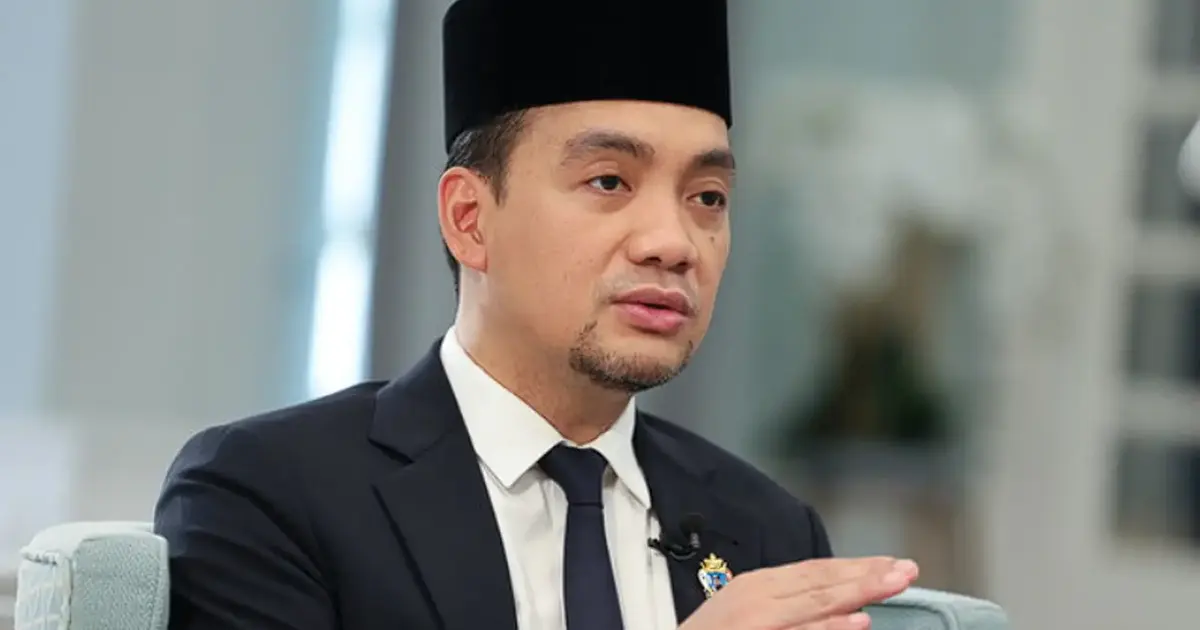
Onn Hafiz, the caretaker menteri besar of Johor, has moved to clarify the role of the palace in approving the dissolution of the state assembly, positioning the Sultan's involvement as a straightforward constitutional requirement rather than an instance of political intervention. His statement comes as observers continue to scrutinise the institutional relationship between the state's executive leadership and its traditional ruler, a dynamic that carries particular weight in Malaysia's federal structure where state constitutions delegate specific powers to reigning monarchs.
The distinction Onn Hafiz has drawn is fundamental to understanding Malaysia's Westminster-derived constitutional framework, particularly at the state level. Under the Johor state constitution, the menteri besar does not possess unilateral authority to dissolve the assembly; instead, this power technically rests with the Sultan, who acts on the advice of the chief minister. The approval process—what legally constitutes royal assent—is therefore procedurally separate from the political decision-making that precedes it. This separation mirrors the British constitutional principle that the monarch acts on ministerial advice, thereby legitimising executive actions through a formal, non-partisan seal of approval.
Onn Hafiz's clarification addresses a broader concern that has periodically surfaced in Malaysian political discourse: whether sultans should exercise discretion in accepting or rejecting requests from state executives, or whether they should operate primarily as ceremonial authorities bound to rubber-stamp decisions already made by elected representatives. The distinction matters significantly because it determines whether the palace retains genuine constitutional agency or functions as a procedural formality. In Johor, where the institution of the sultancy carries historical prominence and considerable public respect, this question resonates beyond constitutional scholars into the realm of public confidence in state governance.
The caretaker status of Onn Hafiz's position adds further context to his remarks. A caretaker menteri besar, appointed after an election or during an interregnum, holds executive authority but operates under constraints that distinguish their role from a fully elected chief minister. During such periods, major decisions—particularly those affecting the structure of government itself, such as assembly dissolution—require heightened legitimacy. The involvement of the Sultan in approving dissolution provides a constitutionally sanctioned imprimatur that transcends partisan politics and binds the decision to the state's fundamental law rather than to any single political actor or coalition.
For Malaysian observers and constitutional analysts, Onn Hafiz's statement serves as a reminder that the palace's institutional role extends beyond ceremony into areas of genuine constitutional substance. In monarchies that follow the Westminster model, including Malaysia, the crown often represents continuity and constitutional authority even as governments change. The Sultan of Johor, like other Malaysian sultans, is not merely a figurehead but a custodian of constitutional processes, expected to ensure that state governance adheres to established procedures and the supremacy of the constitution itself.
The timing of this clarification reflects an environment in which every action by state authorities—particularly those involving the palace—receives intense political scrutiny. Malaysia's multi-layered political system, in which federal, state, and local elections follow different cycles and produce varied results, creates situations where state governments must interact with the crown in ways that could be misinterpreted as partisan if not carefully explained. Onn Hafiz's intervention seeks to depoliticise a routine constitutional act, distinguishing between the Sultan acting as the repository of state sovereignty and the Sultan potentially acting as a participant in factional political disputes.
From the perspective of governance principles, Onn Hafiz's position upholds the doctrine of ministerial responsibility, which holds that the chief executive bears responsibility for decisions while the monarch provides constitutional validation. This arrangement theoretically protects the institution of the monarchy from being drawn into partisan conflict while maintaining its role as a check on executive overreach. When properly calibrated, the system allows the Sultan to ensure that assembly dissolution follows constitutional procedures without requiring the palace to take sides in political contests or to second-guess the elected government's strategic judgments.
The broader implications for Johor and other Malaysian states centre on the health of institutional relationships between elected governments and the crown. Public confidence in both institutions depends partly on their operating within clearly understood boundaries. By asserting that royal assent constitutes a constitutional process rather than political interference, Onn Hafiz has articulated a principle that protects both the government's right to govern and the Sultan's duty to uphold constitutional norms. The statement also implicitly defends the Sultan from any perception that the palace has overstepped into territory properly belonging to elected officials.
Moving forward, Onn Hafiz's clarification establishes an interpretive framework for understanding future interactions between the Johor state government and the Sultan's office. It signals that the government respects constitutional monarchy principles and recognises the Sultan's role as essential to the legitimacy of state governance. Simultaneously, it reinforces that the Sultan, while exercising real constitutional authority, does so within parameters defined by law rather than at the discretion of momentary political pressures. For Malaysia's federal system, where state constitutions vary slightly but follow broadly parallel structures, this articulation of constitutional roles contributes to ongoing public understanding of how power is distributed among elected officials, traditional rulers, and the framework of law that binds them together.

