The Johor state election campaign has been marked by fresh controversy after the opposition Democratic Action Party raised questions about the conduct of a technical education roadshow that allegedly blurred the lines between government programming and partisan campaigning. Johor DAP chairman Teo Nie Ching has demanded that Menteri Besar Datuk Onn Hafiz Ghazi provide a public explanation regarding claims that vocational training students were coerced into attending an event that was subsequently leveraged to solicit support for Barisan Nasional candidates.
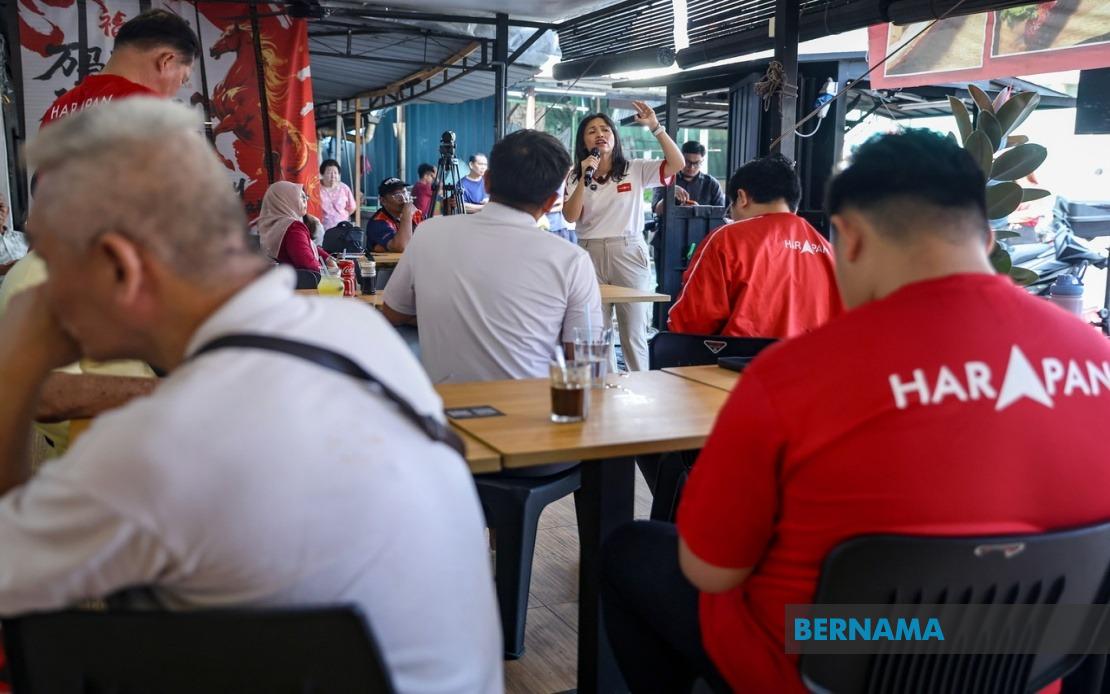
According to Teo, her party has fielded multiple grievances from both parents and students concerning the Johor MARA TVET Roadshow, which took place on July 4 at the Inland Revenue Board Hall in Kluang. The complainants allege they were instructed to participate in the programme under threat of being marked absent, establishing a degree of compulsion that raises serious questions about the appropriateness of the event's subsequent political use. Teo, who holds the position of Deputy Communications Minister at the federal level, articulated these concerns while addressing supporters at a grassroots forum in Kulai.
The specific allegation centres on whether government facilities and mandated educational events should serve as platforms for political messaging. Teo acknowledged that there is nothing inherently problematic with the Menteri Besar attending a government-organised programme related to technical and vocational training, which falls squarely within his ministerial purview. However, she emphasised that the character of the event fundamentally changed once political campaigning commenced. If Onn Hafiz utilised the gathering to explicitly encourage students to vote for specific Barisan Nasional candidates by naming their election numbers, this would constitute an improper use of a government event for party political purposes, she contended.
The controversy highlights a recurrent tension in Malaysian electoral politics between the legitimate use of government platforms to communicate with citizens and the deployment of those same platforms for partisan advantage. Teo framed the dilemma in constitutional terms: either the roadshow was primarily a government initiative, in which case political campaigning should have been entirely absent, or it was fundamentally a party event, necessitating transparent disclosure and raising questions about whether a government agency's facilities should have been made available for such purposes. This distinction carries legal and ethical weight, as the Elections Commission maintains strict guidelines governing campaign conduct during polling periods.
Teo underscored the personal dimensions of the issue by invoking her role as a parent, suggesting that many families would find it deeply troubling if their children were compelled to attend government programmes that subsequently incorporated political messaging. This emotional resonance aims to connect the technical electoral violation with the everyday experiences of ordinary Malaysians concerned about the integrity of public institutions. The party has assembled documentary evidence including the event's official itinerary, a directive mandating attendance, and video footage purporting to capture the campaign-related statements made during the programme.
Regarding potential remedies, Teo indicated that Pakatan Harapan candidates competing in the July 11 election would determine whether to lodge a formal complaint with the Election Commission. Such a complaint could trigger an official investigation into whether campaign finance rules were violated or whether government resources were improperly utilised for electoral purposes. The timing of this allegation, emerging as early voting commenced and with polling day approaching rapidly, injects additional tension into what was already shaping as a closely contested state election across 56 seats.
Teo additionally directed criticism toward the Menteri Besar's recent statements questioning federal government policies on the grounds that they impose excessive burdens on ordinary Malaysians. She characterised this political positioning as hypocritical, noting that state-level politicians frequently claim credit for popular federal initiatives while deflecting blame for unpopular ones onto the Prime Minister or federal coalition partners. She pointed out that major policy decisions must navigate the Cabinet approval process, making it inappropriate for the Johor administration to selectively distance itself from policies while claiming ownership of their benefits.
Tan Sri Lim Kit Siang, the veteran DAP statesman who co-founded the party and remains an influential figure within the opposition movement, appeared alongside Teo to reinforce the campaign's broader messaging. Lim urged Johor voters to reject what he characterised as divisive racial and communal politics in favour of consolidating support behind the opposition's vision of a Malaysian nation founded on equality, liberty, shared prosperity, and protection of fundamental human rights. He cautioned that realising this vision requires sustained voter commitment rather than fragmenting electoral support across multiple candidates or parties.
The Johor state election involves 172 candidates competing across 56 seats, representing one of Malaysia's most significant sub-national electoral contests. Early voting occurred on July 7, with the main polling day scheduled for July 11. The election assumes heightened importance given Johor's status as a major economic centre and population hub, and because state government control has direct implications for resource distribution and policy direction in the region. Recent years have witnessed intense competition between Barisan Nasional and Pakatan Harapan for dominance in Johor, with both coalitions viewing the state as strategically crucial for broader political positioning at the national level.
The TVET event allegation exemplifies a broader pattern of election-season accusations regarding the misuse of state apparatus and resources for partisan purposes. Both coalitions have levied such claims against their opponents in recent electoral cycles, though systematic documentation of violations and their scale remains contested among election observers. What distinguishes this particular incident is the involvement of students whose attendance was allegedly compulsory, raising concerns about power imbalances and the vulnerability of younger voters to political pressure in government-sponsored settings.
For Malaysian readers across the region, this controversy underscores enduring questions about institutional neutrality during electoral periods. The intersection of government employment, education delivery, and campaign activity generates recurring tensions in democracies where public resources and personnel inevitably participate in electoral environments. The alleged Johor incident offers a concrete case study in how these boundaries can become blurred, with significant implications for both immediate electoral fairness and longer-term public confidence in institutional impartiality.

