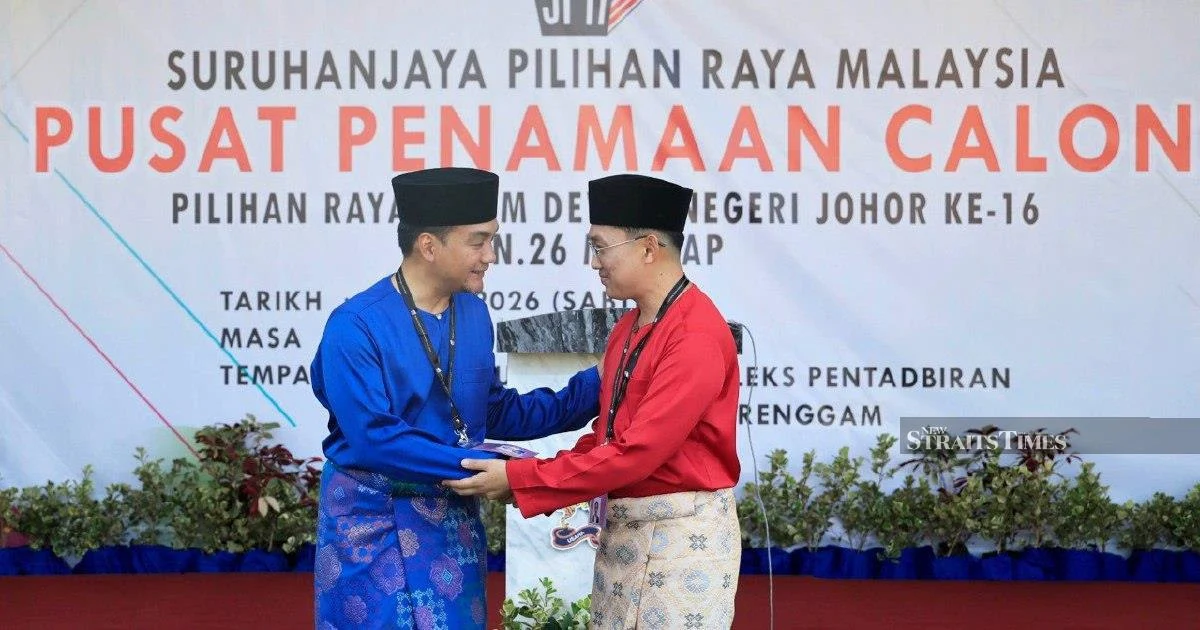
Caretaker Menteri Besar Datuk Onn Hafiz Ghazi is refusing to approach his re-election campaign with complacency, despite his bid to secure a second term in Johor's July 11 state election. Speaking in Simpang Renggam, the political veteran acknowledged that no race can be considered entirely secure in the unpredictable landscape of Malaysian electoral politics, particularly in the context of the Machap contest he is personally fighting. His measured tone reflects an understanding that voter sentiment can shift dramatically between campaign declaration and polling day, a reality underscored by recent electoral cycles across the peninsula.
The Machap seat has historically been a significant battleground within Johor's political ecosystem, and Onn Hafiz's emphasis on the race's competitive nature suggests internal assessments indicate tighter margins than his party may have publicly acknowledged. His caution stands in contrast to the typical bravado often displayed by candidates during campaign trails, signalling either strategic humility or genuine concern about opposition momentum in his constituency. This rhetorical shift matters because it sets expectations appropriately and acknowledges the growing sophistication of Malaysian voters, particularly in developed constituencies like those within Johor's corridor.
Onn Hafiz's second-term bid comes as Johor, Malaysia's second-largest state by economy, faces mounting pressures from economic restructuring, job creation demands, and infrastructure development expectations. The state has been instrumental in the nation's overall political stability, and the July 11 election will serve as a barometer for how state-level politics are evolving in an era of coalition fluidity and voter volatility. The Menteri Besar's acknowledgment of unpredictability reflects the broader reality that traditional strongholds no longer guarantee electoral success, and even long-serving incumbents must campaign with genuine conviction rather than entitlement.
The phrase "anything can happen" carries particular weight in the Malaysian context, where cross-defections, internal party upheaval, and last-minute campaign surprises have repeatedly altered projected electoral outcomes. Voters have demonstrated increasing willingness to reject familiar faces if dissatisfaction with governance or policy performance outweighs incumbency advantage. Onn Hafiz's pragmatic assessment suggests he is preparing his supporters and party machinery for a harder-fought campaign than routine state elections might demand, ensuring that complacency does not seep into party ranks.
Johor's political dynamics have been characterised by Umno dominance, though recent years have seen incremental shifts in the province of PAS, PKR, and DAP across various constituencies. The July 11 election will test whether Umno's traditional fortress remains intact or whether opposition parties have succeeded in consolidating voter discontent. For Onn Hafiz specifically, his personal performance as Menteri Besar will be directly under voter scrutiny, and his campaign messaging must therefore address both state-level achievements and any perceived governance shortcomings.
The reference to the Machap contest specifically is significant because it suggests that even the Menteri Besar's own seat is being treated as contested space rather than a coronation venue. This reflects the maturation of Malaysian electoral politics, where office does not automatically translate to re-election. Opposition parties have invested considerable resources in identifying and promoting credible candidates who can genuinely challenge incumbent strengths, and constituencies once considered safe are now subjected to intense campaign scrutiny from multiple angles.
Onn Hafiz's campaign approach will likely centre on tangible developmental achievements, socio-economic initiatives, and his administrative track record, alongside party machinery mobilisation and grassroots engagement. His acknowledgment of electoral unpredictability suggests he recognises that modern campaigns require sustained engagement rather than passive reliance on voter familiarity. The emphasis on vigilance and active campaign work indicates awareness that Malaysia's political landscape has fundamentally shifted, with voters now extracting performance accountability from incumbents before granting continued tenure.
The broader implications for Johor's governance trajectory hinge significantly on the July 11 results. A decisive Onn Hafiz victory would affirm Umno's continued dominance and the incumbent Menteri Besar's personal political capital. Conversely, narrow margins or upset results would signal that voter sentiment is moving against state government performance or that opposition campaigns have successfully mobilised communities around alternative visions. For Malaysian policymakers and observers tracking state-level political evolution, Johor remains instructive because it represents the type of economically developed, urbanising state where voter preferences have begun displaying greater sophistication and independence from traditional party affiliations.
Onn Hafiz's guarded optimism and acknowledgment of contest unpredictability therefore reflects not weakness but political maturity—a recognition that in contemporary Malaysian democracy, even successful incumbents must earn rather than assume electoral mandates. His campaign will ultimately be decided by how effectively he translates administrative credentials into voter confidence, and whether his party machinery can adequately mobilise its traditional support base while capturing persuadable swing voters. The Machap race, and the broader Johor election, will provide crucial indicators of whether state incumbency retains meaningful electoral advantage in Malaysia's increasingly volatile political environment.

