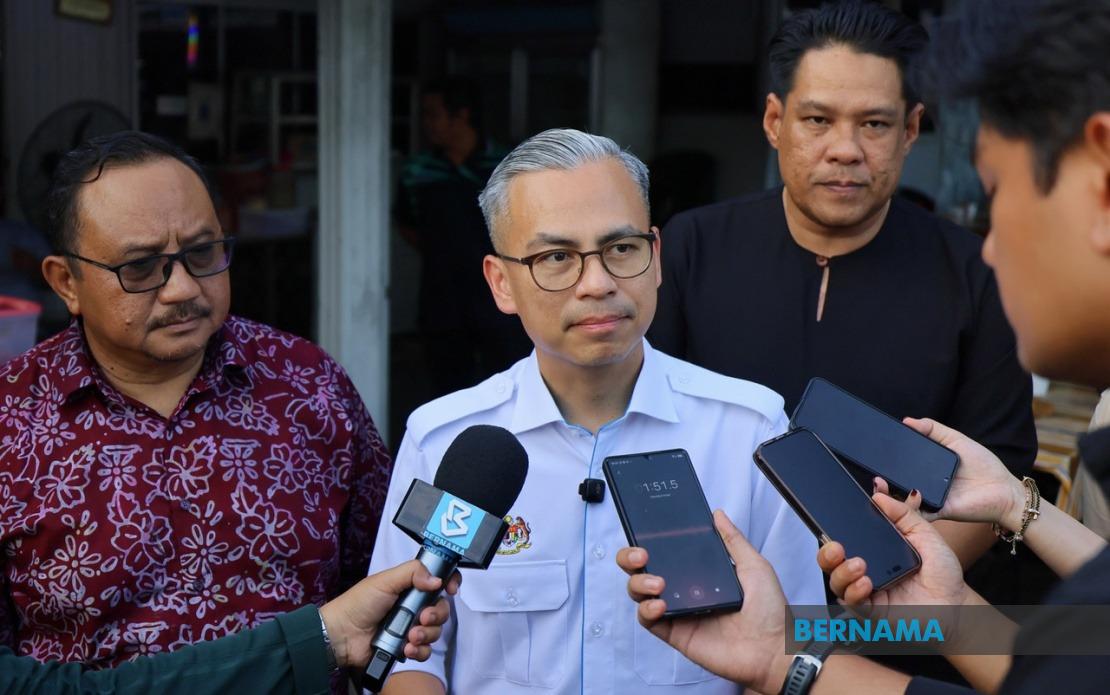
Communications Minister Datuk Fahmi Fadzil has urged all political parties, their machinery, and supporters to elevate campaign standards in the forthcoming Johor State Election, emphasising that political discourse must be grounded in verifiable facts rather than unsubstantiated claims and personal attacks. Speaking during a community engagement programme in Batu Pahat, Fahmi stressed that maintaining the integrity of Malaysia's democratic process requires all stakeholders to conduct themselves with decorum and strict adherence to electoral laws as the nomination period begins.
The minister's intervention reflects growing concerns about the quality of political communication during election periods. Fahmi explicitly cautioned that the Election Commission and Royal Malaysia Police stand ready to pursue legal action against any individual or organisation that commits electoral offences during the campaign period. This dual-enforcement approach signals that authorities will not tolerate violations, whether they occur during in-person campaigning or through digital channels where misinformation can spread rapidly across networks.
The timing of Fahmi's appeal is significant, coming as nominations are set to open and parties prepare their campaign strategies. In Malaysia's increasingly connected society, where social media platforms amplify political messaging, the distinction between factual reporting and slanderous claims has become a critical flashpoint. Fahmi's emphasis on "healthy" campaigning reflects government concerns that unsubstantiated attacks—particularly those targeting individuals' character or credibility—can undermine public confidence in democratic institutions and polarise communities.
Recognising that digital channels present particular challenges for electoral integrity, the Malaysian Communications and Multimedia Commission has coordinated with major social media platforms to strengthen surveillance mechanisms designed to identify and prevent the circulation of false information. The MCMC's expanded monitoring regime specifically targets sensitive content involving Royalty, Religion, and Race—issues that carry particular sensitivity in Malaysia's multicultural context and have historically sparked communal tensions. This proactive approach aims to contain potentially divisive material before it gains traction among voters.
Beyond enforcement mechanisms, Fahmi outlined infrastructure improvements intended to support legitimate campaign communications and journalistic coverage. A dedicated media centre has been established in Johor Bahru, serving as a central hub for accredited journalists. Additionally, the National Information Dissemination Centre network operates within each State Legislative Assembly constituency, providing working facilities and digital connectivity that enable reporters to file stories promptly and accurately. These facilities reflect recognition that quality journalism requires adequate resources and access to information.
The minister particularly encouraged media practitioners to utilise the NADI network distributed across all constituencies, positioning these centres as essential resources for journalists navigating the election period. By ensuring reporters have workspace and reliable internet connectivity throughout the state, authorities aim to reduce reliance on unofficial information sources and encourage professionally vetted reporting. This infrastructure investment acknowledges the media's role in shaping public understanding during electoral campaigns.
Fahmi also addressed practical concerns raised by local elected representatives. Batu Pahat's Member of Parliament Onn Abu Bakar used the occasion to escalate complaints regarding internet connectivity problems affecting the constituency, citing both disruptions and dead zones that impede communication services. The minister responded by instructing the MCMC to investigate these technical issues immediately, demonstrating responsiveness to localized infrastructure gaps that can disadvantage voters and campaigners alike.
Onn framed the minister's presence as an opportunity to channel constituent grievances directly to relevant ministries, underscoring how grassroots concerns often fail to reach decision-makers through normal bureaucratic channels. His comments suggest that election periods, despite their competitive nature, can create openings for addressing long-standing infrastructure deficiencies. The direct engagement between federal officials and state-level representatives during campaign periods offers a mechanism for escalating locally significant issues.
The Johor State Election represents a significant test of Malaysia's electoral processes amid broader global concerns about information integrity and political polarisation. The Election Commission established June 27 as nomination day, with voting scheduled for July 11, following the dissolution of the State Assembly on June 1. This timeline compresses the campaign period, making pre-election messaging intensity particularly acute and elevating the importance of enforcement mechanisms designed to maintain standards.
For Malaysian voters and regional observers, the Johor election will provide insights into how effectively authorities can balance protecting free political expression with preventing genuinely harmful misinformation. The combination of legal enforcement, platform monitoring, and infrastructure support represents a multi-layered approach to electoral integrity. Success will depend partly on voluntary compliance by political parties and their supporters—a factor ultimately determined by campaign culture and leadership commitment to principles that transcend partisan advantage.
The broader context reveals Malaysia's ongoing struggle to establish norms around digital-era campaigning. Unlike earlier election cycles conducted primarily through traditional media and ground presence, contemporary campaigns unfold simultaneously across multiple information ecosystems where verification becomes difficult and speed rewards sensationalism. Fahmi's appeals for fact-based discourse acknowledge this reality while maintaining that democratic legitimacy requires restraint and accountability from all participants.

