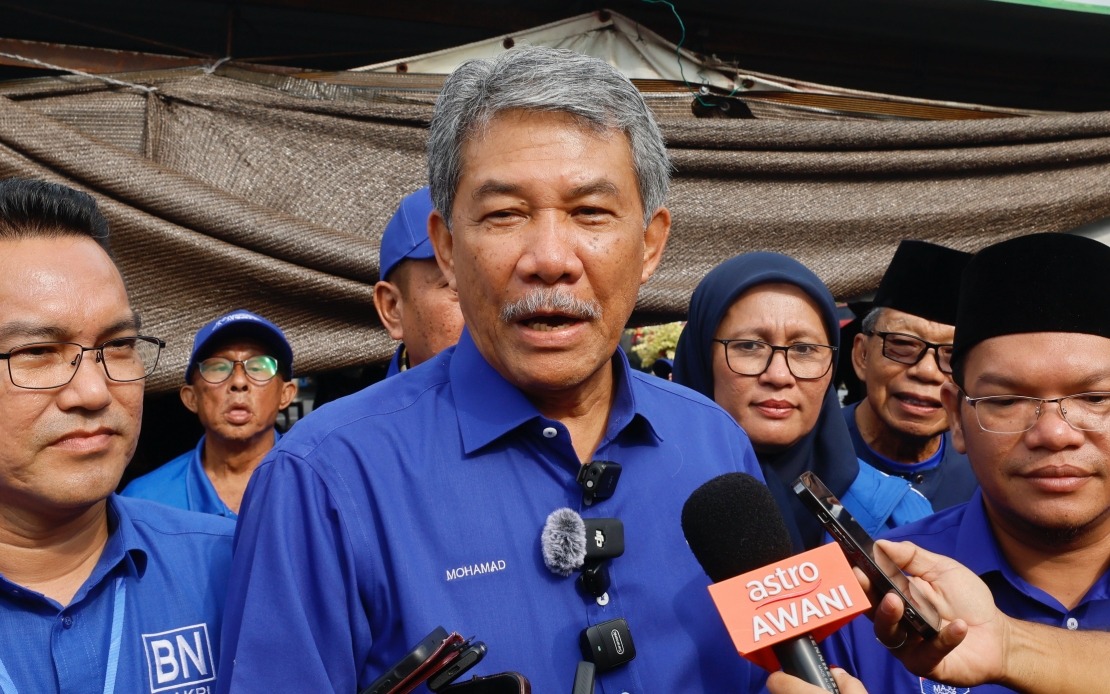
As Johor heads toward its state election on July 11, UMNO deputy president Datuk Seri Mohamad Hasan has issued a clear directive to all campaigning parties: maintain decorum and avoid personal animosity that could undermine the broader political stability Kuala Lumpur is seeking to preserve. Speaking during an engagement with constituents from the Tiram state seat in Johor Bahru, Mohamad outlined a vision of competitive politics that does not devolve into character assassination or acrimony at the Federal level, where UMNO and its coalition partners continue to govern the nation collaboratively.
The Foreign Minister's intervention comes at a delicate moment for Malaysian politics. While state elections are typically fought with vigour, the persistence of the Unity Government—the loose alliance of parties managing the Federal Government—depends on partners maintaining functional relationships beyond the campaign trail. Mohamad acknowledged that political parties naturally wish to present their platforms and policy offerings to voters, a fundamental right in any democracy. However, he drew a careful distinction between robust policy debate and destructive personal attacks that blur the lines between legitimate electoral competition and institutional sabotage.
Informally, Mohamad suggested that light-hearted political banter and criticism are acceptable features of campaign discourse. He used himself as an example, noting that he and his opponents regularly exchange remarks without ill will. Yet his central admonition was precise: parties must not allow their Johor ambitions to corrode the cooperative arrangements holding the Federal coalition together. This reflects a broader concern among UMNO leadership that fractious state-level contests could poison relations between coalition members at the national level, where a more fragile equilibrium exists than in previous electoral cycles.
A significant portion of Mohamad's remarks addressed speculation linking the Johor state election to moves that might facilitate the release of former Prime Minister Datuk Seri Najib Tun Razak from his legal troubles. He categorically rejected these allegations as baseless, emphasising Malaysia's commitment to the rule of law and UMNO's unwavering respect for constitutional principles. Such assertions have circulated in certain quarters, suggesting that securing state control in Johor might somehow influence Federal-level decisions affecting Najib's status. Mohamad's rebuttal was methodical and instructive about the separation of powers in Malaysia's system.
The Foreign Minister articulated the constitutional reality with clarity: a state election determines the composition of a state government, not the Federal Government, and state-level administrations possess no mechanism to intervene in Federal judicial or executive matters. The executive clemency that might alter Najib's position rests exclusively with the Yang di-Pertuan Agong, the constitutional monarch whose prerogatives in such matters are absolute and beyond the reach of state-level political manoeuvring. By extension, any attempt by political actors to imply a causal link between Johor's state election outcome and Najib's legal predicament misrepresents both the structure of Malaysian governance and the motivations underpinning the electoral contest.
Moreover, Mohamad cautioned against any effort to encroach upon or diminish the Agong's authority and constitutional role. This warning carries particular weight in Malaysia's context, where the Agong's position as guardian of the Federal Constitution and embodiment of national unity remains symbolically and institutionally paramount. Attempts by politicians to suggest they might influence or negotiate the exercise of the Agong's prerogative powers not only disrespect institutional boundaries but also undermine public confidence in the constitutional order itself. Mohamad's insistence on this point reflects UMNO's broader commitment to maintaining constitutional stability, even when party interests might seem to benefit from circumventing established procedures.
The logistical framework for the Johor election underscores the scale of this contest. One hundred seventy-two candidates are contending for fifty-six seats in the Johor State Legislative Assembly, a substantial field that mirrors the competitive intensity characteristic of state elections in Malaysia's most populous peninsula state. Early voting is scheduled to commence before the main polling day, an administrative arrangement that has become standard practice in recent Malaysian electoral cycles. This procedural detail matters because it extends the campaign window and increases opportunities for both productive dialogue and potential friction among political rivals.
The timing of Mohamad's remarks—delivered in the closing days before the election—signals that UMNO leadership recognises the risk of campaign dynamics spiralling beyond the bounds of institutional tolerance. State elections in Malaysia have historically served as proving grounds for party strength and leadership credentials, contests where internal rivalries within coalitions sometimes surface or where junior coalition partners attempt to establish independent political identities. The Johor election, given its scale and significance within UMNO's traditional heartland, carries heightened potential for generating such tensions.
For Malaysian observers, Mohamad's message embodies a tension inherent in contemporary Malaysian politics: how to maintain a functional multi-party coalition at the Federal level while allowing constituent parties to compete vigorously at state level. His framework suggests that the answer lies not in suppressing competition but in compartmentalising it—ensuring that electoral battles for state control do not become vehicles for challenging the fundamental arrangements of Federal governance. This compartmentalisation requires political maturity from all parties involved, a capacity to separate campaign rhetoric from institutional relationships, and a willingness to distinguish between legitimate opposition and delegitimising attacks.
The broader context matters here too. Malaysia's political system has experienced considerable turbulence over the past several years, with multiple government formations, shifting coalitions, and episodes of institutional strain. Against this backdrop, the successful execution of orderly state elections while maintaining Federal stability represents an achievement in itself. Mohamad's call for prudent campaigning should thus be understood not merely as tactical advice but as a reflection of genuine concern that Johor's electoral contest could become a flashpoint that unravels the delicate political arrangements upon which Malaysia's current governance depends.

