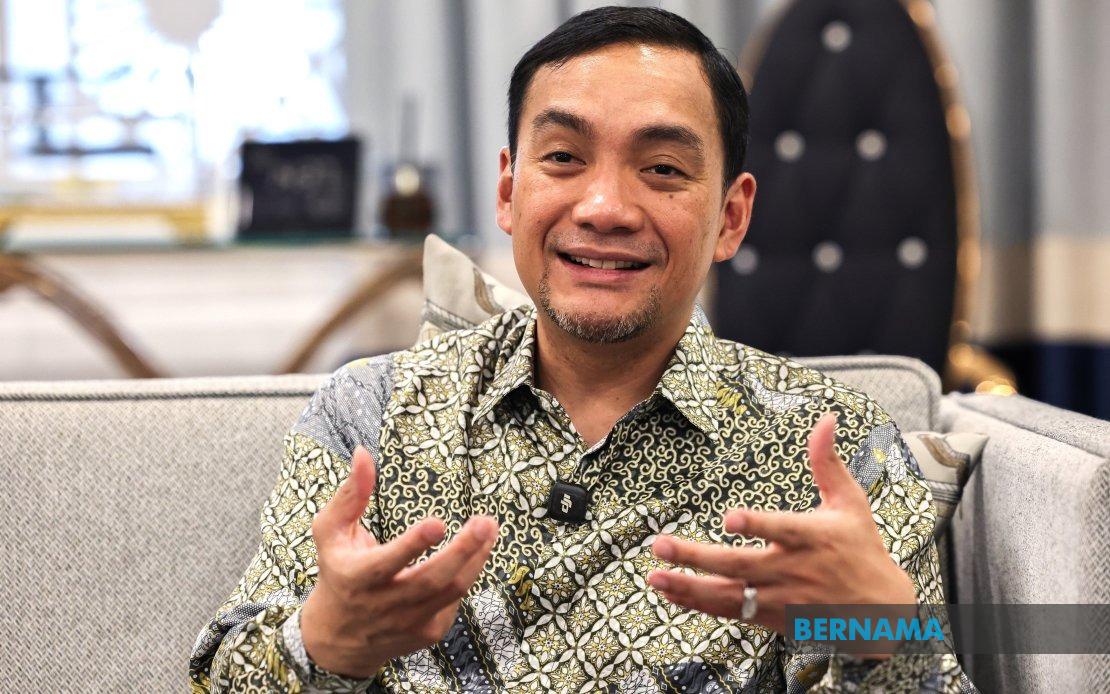
Johor Barisan Nasional has made strengthening community ties through expanded mosque and surau activities a centrepiece of its election platform, unveiling the Semarak Isya' programme as part of a broader manifesto pledging 63 distinct initiatives. The initiative represents the ruling coalition's attempt to deepen spiritual and social cohesion among Johorians by transforming religious venues into multipurpose hubs that serve congregants beyond prayer times, positioning itself as an answer to the electorate's desire for holistic development.
According to Johor BN chairman Datuk Onn Hafiz Ghazi, the Semarak Isya' programme builds upon the established success of the earlier Semarak Subuh initiative, which has already cultivated greater community participation in early-morning mosque gatherings. The new evening-focused counterpart seeks to capture similar momentum during the isyak prayer period, when many families and working adults can more readily participate in structured religious and communal activities. This scheduling strategy reflects an understanding that congregation patterns vary by demographic, with evening gatherings potentially attracting professionals, students, and nuclear families whose daytime commitments limit their mosque engagement.
The Machap assemblyman articulated a vision in which Johor's progress transcends conventional development metrics. Rather than measuring advancement solely through infrastructure construction or gross domestic product expansion, the manifesto emphasises the simultaneous cultivation of moral values, spiritual resilience, and societal harmony. This rhetorical pivot suggests a recognition that rapid urbanisation and economic transformation have created anxieties about social fragmentation, requiring political responses that address both material prosperity and communal wellbeing.
Structurally, the Semarak Isya' programme envisions a decentralised approach to implementation, with each state constituency tailoring activities to reflect local demographic and cultural characteristics. Programming would encompass religious scholarly talks, spiritually enriching content, and community-oriented initiatives, supplemented by provisions of complimentary meals for attendees. The inclusion of free dinners addresses a practical concern—removing financial barriers to participation—whilst also creating informal spaces where congregants can interact beyond formal prayer settings. This multi-element design suggests organisers recognise that religious institutions derive social strength not merely from devotional observance but from regular social interaction and mutual support structures.
For young people specifically, Onn Hafiz identified the programme as an avenue for religious participation that feels contemporary and relatable rather than obligatory or culturally distant. By positioning mosques and suraus as venues for family-oriented content and youth-focused activities occurring after daily responsibilities are discharged, the BN seeks to counter perceptions that religious spaces cater exclusively to older congregants or are disconnected from the concerns of younger generations. This generational dimension carries significance in Malaysian electoral contexts, where youth engagement and retention within faith communities affects long-term social stability.
The broader policy context reflects Johor BN's apparent determination to sustain electoral advantage by addressing what the coalition perceives as legitimate demand for faith-integrated governance. In Malaysia's federal system, state-level religious policy remains a significant factor in constituent satisfaction, and Johor—as the nation's second-largest state by population—represents crucial territory for the national coalition. The emphasis on grassroots religious programming positions BN as responsive to community aspirations that transcend party political competition, potentially fortifying support among rural and semi-urban voters for whom mosque participation remains central to social identity.
Implementation challenges remain implicit but significant. Recruiting qualified religious scholars, coordinating with state Islamic administrative bodies, securing funding for regular meal provision, and ensuring programming resonates across diverse constituencies within a single state demands logistical sophistication. The success of the precursor Semarak Subuh initiative suggests operational feasibility, yet scaling evening activities to match early-morning participation requires addressing distinct attendance patterns and volunteer availability constraints.
The timing of this announcement—positioned within a comprehensive 63-point manifesto released during the formal campaign period—reflects BN's strategy of presenting itself as a custodian of both material development and cultural-spiritual continuity. As Johor voters prepare to cast ballots on July 11, following nomination day on June 27, the Semarak Isya' pledge joins education, healthcare, and economic initiatives as evidence of the coalition's claimed capacity to govern holistically. For competing political forces, the programme represents BN's effort to preempt criticism that secular governance frameworks neglect religious concerns, embedding faith-based community engagement within mainstream political discourse.
Regionally, Johor's approach carries implications for how Malaysian states balance modernisation with faith institution vitality. As Southeast Asian societies navigate rapid social change, the integration of religious venues into state development narratives—rather than treating them as separable cultural matters—reflects a broader reassessment of religion's role in governance. Johor's model, should it gain electoral validation and successful implementation, could influence policy discussions across Malaysia and within other regional democracies wrestling with similar questions about secular governance and faith-community partnership.

