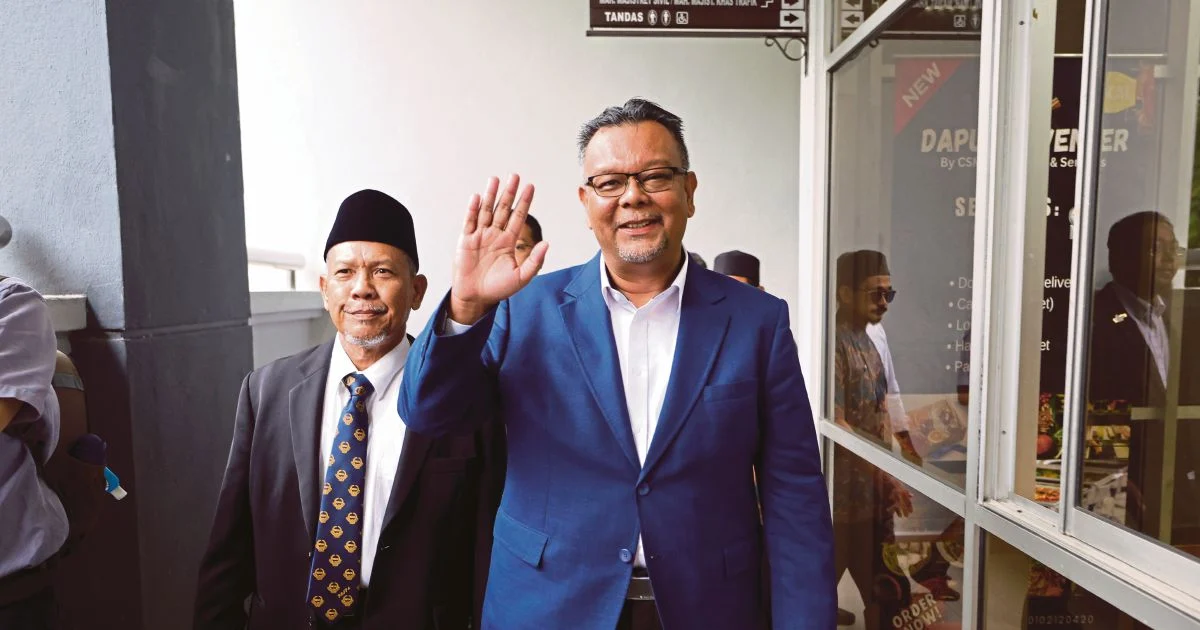
Seremban magistrate's court heard a not guilty plea today from Jitra assemblyman Dr Haim Hilman Abdullah, who faces allegations of issuing statements deemed capable of triggering public disturbance. The proceedings mark a significant moment in a case that touches on the boundaries of political speech and public order in Malaysia, raising questions about how authorities balance free expression with maintaining community stability.
The charge against the state legislator centres on remarks attributed to him that authorities contend could precipitate alarm or anxiety among the general public. Such charges under Malaysian law carry serious implications, as they address conduct deemed capable of disrupting social harmony—a threshold that has long proven contentious in cases involving politicians and public figures who operate in an environment of intense media scrutiny and widespread information dissemination.
Dr Haim Hilman represents Jitra in the Kedah state assembly, a constituency in the northern region that encompasses both urban and rural communities. His appearance in Seremban, rather than in a Kedah courthouse, suggests the matter has been escalated or classified in a manner warranting proceedings in a different jurisdiction. This jurisdictional choice may indicate the seriousness with which authorities view the allegations, or reflect procedural requirements specific to the investigation.
The not guilty plea signals that the defence team intends to challenge the prosecution's case substantively, rather than accepting the charges or arguing mitigating circumstances. This approach typically sets the stage for contested proceedings where the burden of proof remains firmly with the state to establish both the statements in question and their likely capacity to generate public concern. The magistrate's court will need to evaluate evidence regarding what was actually communicated and whether a reasonable interpretation supports the contention that alarm was a foreseeable outcome.
Charges related to statements capable of causing public alarm represent a category of offence that straddles criminal law and political regulation in Malaysia. Legislators and political activists have historically argued that such provisions can restrict legitimate political discourse, particularly when statements criticise government policy or highlight perceived governance failures. Conversely, authorities maintain these measures serve essential functions in preventing inflammatory rhetoric that could destabilise communities or incite disorder.
The timing of this case arrives amid a period when Malaysian politics continues to navigate complex questions around accountability, transparency, and the appropriate scope of public criticism. State assemblymen occupy a middle tier in the political hierarchy, wielding influence over local constituencies whilst remaining subject to both state and federal oversight. Their public statements carry weight within their communities, making scrutiny of such communications a matter of legitimate governance interest.
Seremban, as the state capital of Negeri Sembilan, hosts various high-profile legal proceedings, and the choice to hold this hearing there may relate to administrative or investigative considerations. The process ahead will likely involve examination of the specific statements, analysis of context in which they were made, assessment of media coverage and public reaction, and expert or witness testimony regarding the likely impact on community sentiment.
For Malaysian observers of political developments, this case exemplifies ongoing tensions between protecting democratic space for robust debate and maintaining mechanisms to prevent speech that genuinely endangers public order. Political figures across the spectrum face increasing scrutiny of their public communications, particularly as social media amplifies reach and speed of message dissemination. What once might have remained confined to a constituency rally can now cascade across multiple platforms within hours, reaching audiences far beyond the original intended recipients.
The court proceedings will unfold over coming weeks or months, with opportunities for both prosecution and defence to present evidence and arguments. The magistrate's eventual ruling will likely provide clarity on how courts interpret the threshold for determining that statements are likely to cause public alarm, a legal question that carries implications extending beyond this single case to broader questions about political expression in Malaysia.
Dr Haim Hilman's defence will need to establish either that the statements were misrepresented, taken out of context, or that reasonable interpretation of them would not necessarily generate significant public alarm. The prosecution must demonstrate a clear causal link between the specific language used and a demonstrable or highly probable public response involving concern or disturbance. This evidentiary burden shapes the entire trajectory of the legal contest.
The case reflects Malaysia's ongoing evolution in balancing competing interests: government responsibility to maintain order, individual freedom of expression, and the political necessity for public figures to communicate openly with constituents about matters of governance and policy. How courts navigate these tensions carries significance for the broader health of democratic discourse within the country.
Observers across Southeast Asia watch Malaysian legal proceedings involving political figures with interest, as they often illuminate how the region's democracies manage the perpetual challenge of preventing harmful speech whilst protecting legitimate political participation. The outcome here may influence similar cases and establish precedents affecting both elected officials and ordinary citizens navigating the complex terrain of Malaysian public communication.

