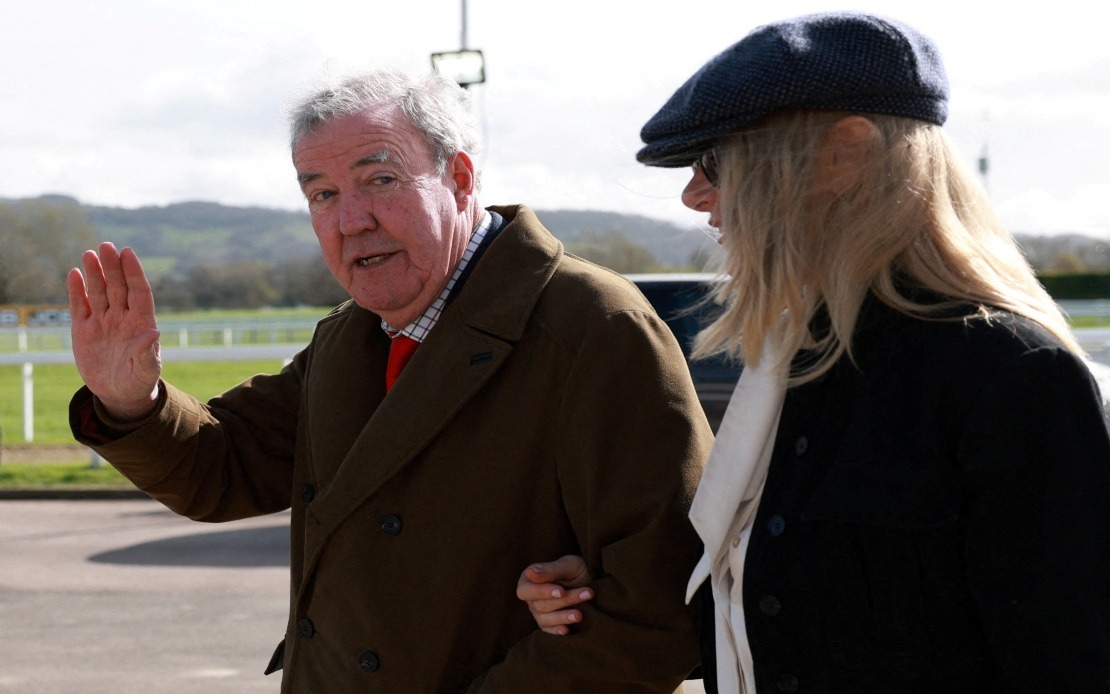
British television personality Jeremy Clarkson has revealed a prostate cancer diagnosis, disclosing the health condition publicly during his popular farming reality show. The 66-year-old made the announcement while discussing harvest planning matters with farm manager Kaleb Cooper and land agent Charlie Ireland, marking an unusually candid moment in what is typically an agricultural-focused programme. The revelation comes as part of ongoing conversations about his wellbeing following earlier health challenges that have punctuated his career over recent years.
Clarkson informed viewers that he had already undergone surgical intervention to address the condition, with the procedure targeting the cancerous section of his prostate gland. Speaking from his hospital bed during the season finale, he explained that approximately ten per cent of his prostate tissue was affected by the cancer and had been removed during the operation. His tone remained measured and pragmatic as he discussed the technical aspects of his treatment, maintaining the straightforward demeanour that has characterised much of his public communication style throughout his extended television career.
The television presenter acknowledged uncertainty regarding the long-term effectiveness of his treatment, noting that he would not receive definitive results until November. This timeline reflects the standard medical assessment period required following prostate cancer surgery, during which physicians monitor recovery progression and assess whether the intervention has successfully addressed the malignancy. Clarkson's willingness to share this uncertain prognosis publicly demonstrates an approach to health disclosure that prioritises honesty over reassurance, a characteristic that has distinguished his recent media presence.
Complications emerged during his treatment journey, as Clarkson revealed he found himself hospitalised once more by the series' conclusion. This development added unexpected complexity to what might otherwise have been presented as a straightforward medical procedure. The fact that he recorded his reflections from a hospital bed at the end of the season creates a poignant bookend to the production cycle, underscoring the genuine challenges he faced during filming and recovery. His willingness to document this difficult period demonstrates the increasingly personal nature of his television work since transitioning from automotive entertainment to agricultural reality programming.
Looking ahead, Clarkson issued a characteristically frank assessment of his future involvement with the series. He pledged to return for a sixth season should his treatment prove successful, whilst acknowledging the possibility that his condition might prevent future participation. This conditional commitment reflects both his commitment to the show and his realistic appraisal of what prostate cancer treatment outcomes might entail. The forthcoming sixth season is scheduled for release in 2027, providing substantial time for his recovery and medical reassessment before production requirements become pressing.
This health challenge represents the second significant medical episode Clarkson has experienced in relatively recent years. Nearly two years prior to his prostate cancer diagnosis, the television personality underwent cardiac intervention involving the placement of two stents to facilitate improved blood circulation to his heart. That earlier procedure necessitated substantial lifestyle modifications, with medical advisors recommending he step back from work commitments. Clarkson subsequently documented his recovery process, including his decision to redirect energy toward golf rather than maintaining his previous professional intensity, sharing these reflections through a newspaper column.
Clarkson's medical history also includes respiratory challenges that prompted him to abandon his long-standing smoking habit. Following a bout of pneumonia contracted during a Spanish holiday, he made the definitive decision to cease tobacco consumption. These interconnected health episodes paint a picture of a man navigating multiple age-related medical considerations whilst maintaining substantial professional obligations. For viewers across Southeast Asia and beyond, his openness about these vulnerabilities has humanised a figure previously known primarily for bombastic automotive entertainment and more recent agricultural advocacy.
The television personality's transition into farming and rural life has fundamentally reshaped both his public persona and his professional output. Since establishing his own farm operation in 2019 and subsequently launching his reality television series, Clarkson has evolved into an increasingly vocal advocate for agricultural interests and farming communities. This positioning has extended beyond entertainment into genuine political and social engagement, most visibly demonstrated through his participation in London protests against the British government's proposed inheritance tax modifications affecting agricultural land holdings in November 2024. This activism underscores how his farming venture has become integral to his identity rather than merely a television concept.
For Malaysian audiences, Clarkson's health disclosure carries particular resonance given the region's own ongoing conversations about healthcare accessibility, medical transparency, and the prevalence of prostate cancer among ageing male populations. The prevalence of prostate cancer across Southeast Asia has been increasing, making Clarkson's public discussion potentially valuable in raising awareness about screening and early detection. His approach to discussing treatment outcomes without artificial optimism models a form of health communication that acknowledges genuine uncertainty whilst maintaining composure. The intersection of his medical challenges and his farm-based television work also highlights how modern media increasingly blurs boundaries between entertainment and authentic life documentation.
Clarkson's situation also invites reflection on how prominent public figures navigate serious illness whilst maintaining professional commitments and public visibility. His decision to film and discuss his cancer diagnosis rather than retreating from public life entirely represents a contemporary approach to celebrity health challenges that differs markedly from historical patterns of privacy and silence. This openness, whether driven by personal philosophy or commercial considerations, has generated substantial discussion about masculinity, vulnerability, and the performance of authenticity in the television age. The reception of his disclosure will likely influence how other broadcasters and personalities approach similar health challenges in coming years.