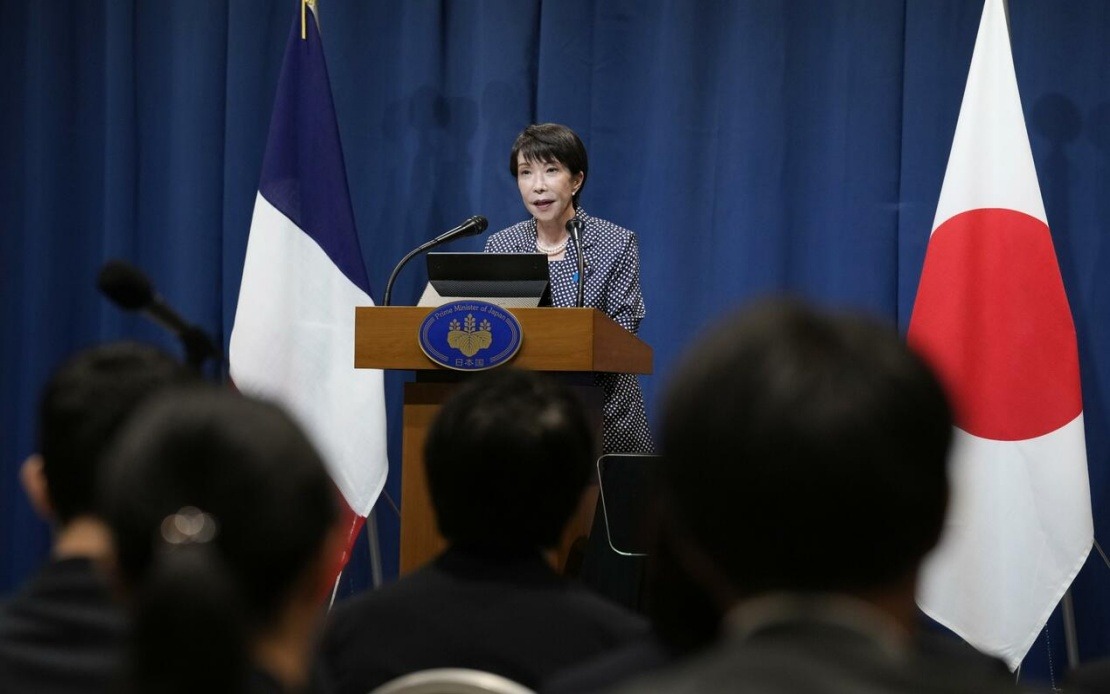
Japanese Prime Minister Sanae Takaichi's administration is experiencing a significant erosion of public confidence, with Cabinet approval slipping to 55.8 per cent according to a Kyodo News survey released Sunday. This marks the lowest point in satisfaction since Takaichi assumed office last October, signalling growing public discontent that could shape domestic political dynamics in the months ahead.
The decline arrives amid persistent economic headwinds that continue to challenge Japanese households. Elevated price levels remain a contentious issue, with consumers expressing frustration over the cost-of-living burden that shows little sign of abating. This deterioration in approval ratings reflects broader anxieties about whether the government's current policy framework is adequately addressing the purchasing power concerns facing ordinary Japanese families.
Regional security developments are also influencing public opinion. The survey, conducted over the weekend via telephone polling, revealed that 54.7 per cent of respondents oppose the deployment of Japan's Self-Defence Forces to key waterways to protect commercial shipping routes. In contrast, 36.6 per cent supported such a security measure, indicating a significant divide in public sentiment regarding Japan's military posture in strategically critical regions.
These security concerns stem directly from broader Middle Eastern tensions. The timing of the Kyodo survey followed preliminary peace negotiations between the United States and Iran, which included provisions for Tehran to reopen the Strait of Hormuz. For Japan, whose energy security depends substantially on reliable maritime passage through this vital corridor, the geopolitical uncertainties surrounding regional stability have created anxiety about potential disruptions to resource supplies.
Taxation and household welfare have emerged as the dominant domestic policy concern. When asked about consumption tax policy, 43.9 per cent of survey respondents indicated willingness to accept a reduction in the consumption tax rate on food and beverages from the current 8.0 per cent to 1.0 per cent, provided such a measure could be implemented expeditiously. A further 22.6 per cent advocated for a complete elimination of the tax on these essential items, aligning with pledges made by Japan's ruling coalition parties.
The significance of this polling data extends beyond immediate political implications. Japan's demographic challenges and aging society mean that consumption patterns and household spending power directly impact the broader economy. Public frustration with food prices resonates particularly among fixed-income retirees and younger families struggling with childcare and education costs alongside grocery expenses. For Southeast Asian observers, Japan's experience illustrates how developed economies face similar inflationary pressures affecting middle-class stability.
The Takaichi administration's response to these interconnected challenges—combining economic management with security considerations—will likely define its trajectory through the current political cycle. Regional neighbours including Malaysia monitor Japanese policy decisions closely, particularly regarding maritime security frameworks and energy partnerships that influence broader Asia-Pacific stability and economic interdependence.
Public opinion shifts in Japan often precede significant policy adjustments or electoral movements. The decline in Cabinet approval to its lowest point since Takaichi's appointment suggests momentum building behind demands for substantive action on cost-of-living relief. Whether the government implements the tax reduction measures respondents favour, and how effectively it communicates a coherent strategy addressing both economic and security concerns, will determine whether this approval trend reverses or continues deteriorating.
For countries throughout Southeast Asia navigating similar economic challenges and regional security dynamics, Japan's domestic political situation offers instructive parallels. Rising living costs, public pressure for tax relief on essential goods, and uncertainty about optimal military posture in contested waters represent shared concerns across the region. How Japan's leadership addresses these intersecting pressures may influence policy approaches elsewhere, particularly regarding the balance between supporting household consumption and maintaining adequate security commitments.

