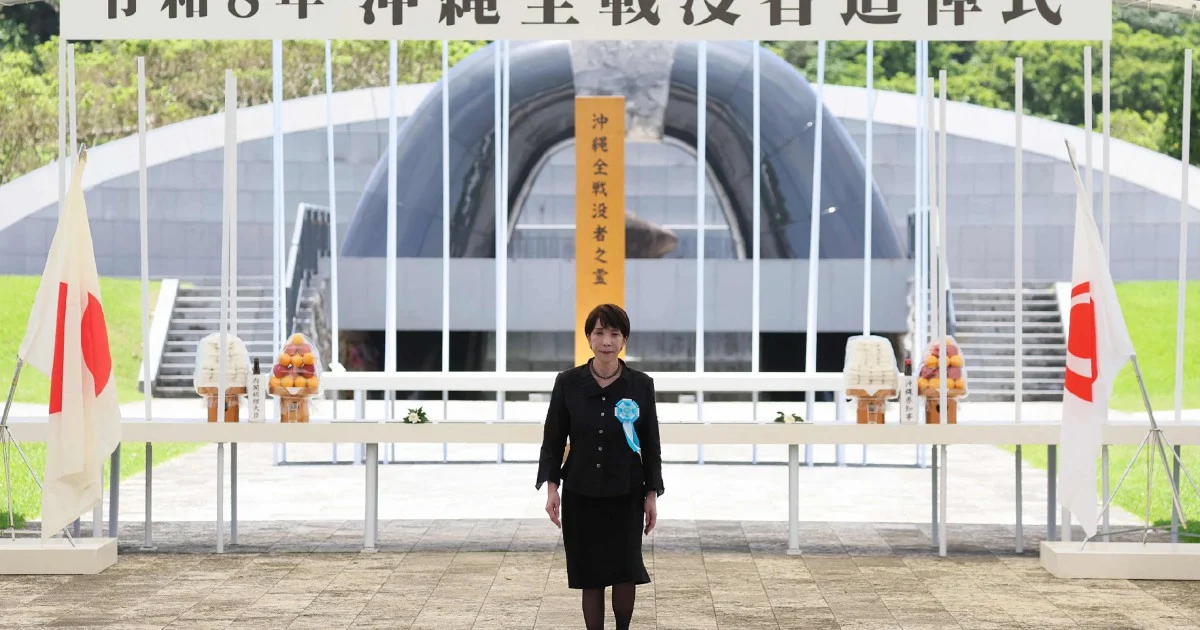
Japanese Prime Minister Sanae Takaichi faced vocal opposition from protesters at a World War II memorial ceremony, highlighting the deep domestic divisions surrounding Tokyo's evolving defence posture. Television coverage captured the confrontation as demonstrators expressed their displeasure with the administration's policies that signal a significant departure from Japan's historically restrained military approach. The incident underscores the ongoing tension between those advocating for stronger security capabilities and those who view expanded militarism as a betrayal of the nation's post-war identity.
Takaichi assumed office at a moment of considerable geopolitical tension in East Asia, where China's military modernisation and North Korea's weapons development have prompted Japanese policymakers to reconsider security assumptions that have guided the country for nearly eight decades. The timing of the disruption at the memorial ceremony carries particular weight, as these sites traditionally serve as spaces for solemn reflection rather than political conflict. The fact that protests erupted in such a setting suggests the intensity of public concern about the government's direction.
Japan's pacifist constitution, drafted under American occupation following World War II, has constrained military spending and offensive capabilities for generations. This framework has been foundational to Japan's identity as a peace-loving nation and has shaped its regional relationships. However, successive governments have gradually expanded the interpretation of what defensive measures are permissible, and Takaichi's administration appears committed to accelerating this reorientation. The government has announced plans to substantially increase defence spending and acquire advanced military systems, signalling a readiness to take a more active security role.
For many Japanese citizens, particularly those who came of age during the Cold War, this shift represents a troubling return to militarism. The memorial setting itself carries historical weight—World War II remains a sensitive topic in Japan, with competing narratives about responsibility, victimhood, and the lessons that should guide contemporary policy. Opponents of military expansion argue that the government risks repeating historical mistakes by embracing militaristic solutions to regional challenges. They contend that peaceful diplomacy and adherence to constitutional pacifism remain the most appropriate responses to security threats.
The confrontation also reflects generational divides within Japanese society. Younger voters, who have no living memory of the war's devastation, may view security concerns differently than older generations traumatised by the conflict. Takaichi and her allies argue that geopolitical realities have shifted fundamentally since Japan's pacifist stance was formalised, and that the country cannot reasonably maintain constraints that leave it vulnerable. This perspective resonates with those concerned about China's assertiveness in the East China Sea and Russia's regional ambitions.
Takaichi herself represents a particular political tendency within the ruling Liberal Democratic Party that has long pushed for constitutional revision and military normalisation. Her appointment as prime minister suggested that proponents of a more muscular defence policy had gained considerable influence. The hecklers at the memorial appeared determined to hold her accountable to principles they believe she threatens to undermine. The incident became a flashpoint for broader anxieties about Japan's trajectory.
Regionally, Japan's military decisions carry implications extending far beyond Tokyo. Southeast Asian nations maintain delicate balances between great powers and have interests in maintaining stability without being drawn into military competition. Some welcome a stronger Japanese security presence as a counterweight to Beijing's influence, while others fear escalating tensions. Malaysia and other countries in the region depend heavily on freedom of navigation in contested waters where Japan's military role remains contested and consequential.
The government is unlikely to be swayed by the protest, having already signalled its commitment to defence spending increases and military capability enhancements. However, the incident demonstrates that significant portions of the electorate remain unconvinced that these changes are necessary or wise. Takaichi will need to navigate the fundamental challenge of building broader public support for a security posture that many Japanese citizens view as incompatible with their nation's core identity.
This clash between security imperatives and constitutional pacifism will likely define Takaichi's tenure as prime minister. How she manages public opinion while pursuing defence objectives will influence not only Japan's internal politics but also the broader stability architecture of East Asia. The memorial confrontation serves as an early signal that the path towards military normalisation, while increasingly favoured by policymakers, remains contested at home and will continue to generate significant resistance from those committed to pacifist principles.

