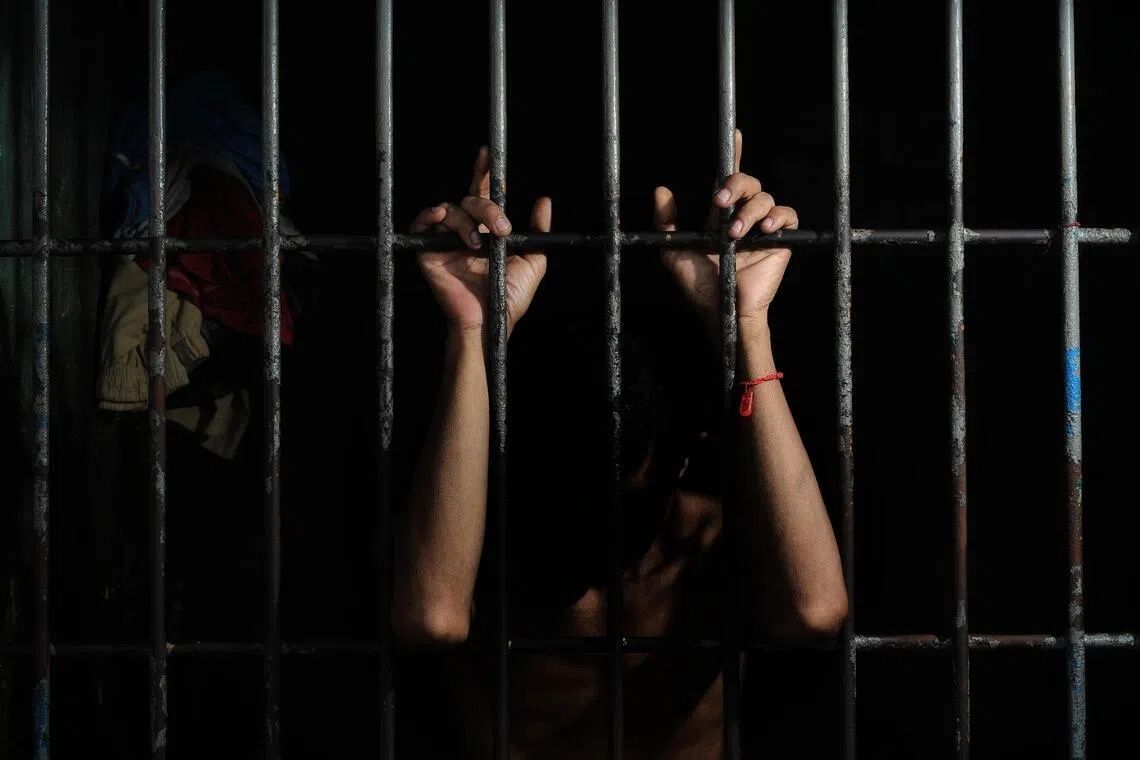
A grieving mother has filed a lawsuit against the Japanese state after her teenage daughter died from extreme malnutrition following a traumatic 18-day detention that authorities later determined was unjustified. The case, lodged with Kobe district court in western Japan on Wednesday, represents the latest high-profile challenge to what critics describe as "hostage justice" — a persistent problem within Japan's criminal justice system where suspects face intense pressure to confess rather than maintain their innocence.
The girl, referred to as Runa in legal documents to protect her identity, was arrested in June last year while working at a care facility for people with disabilities in Hyogo region. She faced allegations of assaulting a patient during a Valentine's Day party, though she consistently maintained her innocence, claiming she had only gently pressed the patient's chin to prevent them from biting another person. What followed was an ordeal that would ultimately cost her life. Authorities detained her for 18 days before deciding to abandon all charges against her entirely, acknowledging the accusations held no merit.
The physical and psychological devastation inflicted during those 18 days became catastrophically evident in the months after her release. Five months following her discharge from custody, Runa had wasted away to just 20 kilograms, a skeletal frame that shocked her mother when she finally saw her daughter again. In December, the girl died. Speaking at a press conference on Wednesday, her mother described the heartbreak of witnessing her child's unrecognizable final state, emphasising her determination to understand what transpired and why her daughter was arrested, detained, and ultimately lost her life.
The lawsuit seeks 100 million yen in compensation and shines an unflinching light on how Japan's criminal justice system routinely operates on assumptions fundamentally at odds with the principle of presumption of innocence. Within this framework, authorities have cultivated a system where confessions function as the primary currency of justice, with detention extended and pressure intensified until suspects capitulate and admit to crimes they may not have committed. The denial of liberty becomes a tool not to ensure trial preparation or prevent flight, but to coerce confession — a mechanism so endemic that campaigners have given it a specific name: hostage justice.
During her 18-day ordeal, Runa was isolated from her family while being permitted only limited communication with legal counsel. Police and prosecutors subjected her to repeated interrogations designed to break her resolve. According to her lawyer, Masahiro Sasaki, investigators employed manipulative tactics that explicitly challenged her denials. "You did it, didn't you? Just tell the truth," one interrogator allegedly told her, according to entries in a journal Runa kept while detained. More disturbingly, she was threatened with placement in a reformatory and told she would be separated from her mother indefinitely unless she confessed. These calculated psychological attacks, combined with isolation and uncertainty about her fate, triggered acute stress disorder, eating disorders, and post-traumatic stress that would plague her until her death.
Sasaki has highlighted the profound illegality underpinning Runa's detention from its inception. She was a 16-year-old with no history of delinquency, living under parental supervision, facing allegations so trivial in nature that arrest itself proved unjustifiable. Prosecutors twice sought extensions to her detention despite the absence of legitimate grounds — no evidence suggested she might flee, destroy evidence, or continue committing crimes. Japanese law explicitly requires that detention of minors be employed "only when absolutely necessary," a standard prosecutors flagrantly violated. The lawyer questioned why authorities pursued charges with such determination against a teenager accused of a minor physical contact incident.
The tragedy deepened when Runa's health catastrophically deteriorated while still in official custody. After vomiting and collapsing, she received emergency medical treatment at an outside hospital. Only a single day after this medical crisis did prosecutors finally agree to non-prosecution, ending her detention. Her release was not a vindication or acknowledgment of innocence, but rather a bureaucratic afterthought following clear evidence that the detention itself was destroying her life.
Japan's approach to criminal investigation and prosecution has long been critiqued by international human rights organisations. The system relies disproportionately on confession as the foundation for convictions, creating perverse incentives that reward coercive tactics and punish those who exercise their right to maintain innocence. This structural bias toward confession-seeking has produced multiple documented miscarriages of justice that took years or decades to correct.
A striking example is Iwao Hakamada, who held the grim distinction of being the world's longest-serving death-row inmate before his convictions were overturned in 2024. Japan's Supreme Court determined that confessions central to his conviction were extracted through interrogation methods the court explicitly characterised as "inhumane." Hakamada spent decades on death row before the justice system finally acknowledged the fundamental abuse embedded in how his case was handled. His ordeal underscores a systemic problem rather than an isolated aberration.
Runa's case encapsulates the intersection of multiple systemic failures: an investigative culture that treats denial as obstruction rather than fundamental right, a prosecutorial apparatus that weaponises detention as leverage for confession, and safeguards designed to protect minors that prove ineffectual in practice. Her death represents not merely individual tragedy but a stark indictment of criminal justice practices that Japan's international partners have repeatedly condemned. The lawsuit her mother has initiated seeks not only financial redress but broader accountability for how the state's coercive machinery operated against a vulnerable teenager.
The Kobe District Public Prosecutors Office declined to offer substantive comment when contacted, stating they had not yet formally received notice of the complaint. This procedural formality masks the larger institutional question: how much longer will Japan's criminal justice system continue prioritising confession extraction over genuine investigation, coercive pressure over due process, and interrogation intensity over consideration for the wellbeing of suspects, particularly vulnerable minors? Runa's mother now seeks answers that the state has no legitimate reason to withhold.