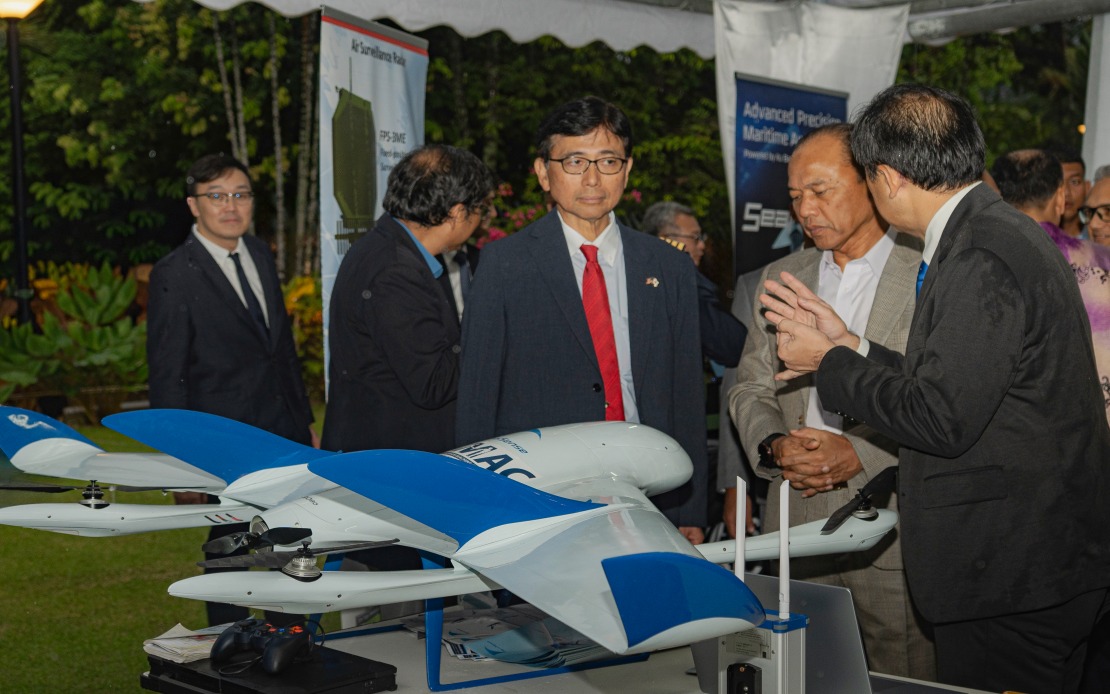
Japan is moving to substantially strengthen its defence and security relationship with Malaysia as strategic tensions across the Indo-Pacific region continue to escalate, according to Japan Ambassador to Malaysia Noriyuki Shikata. Speaking at the 72nd Japan Self-Defence Forces Day Reception in Kuala Lumpur on Wednesday, Shikata outlined an expanding framework of bilateral military cooperation that underscores Japan's commitment to deepening ties with Kuala Lumpur at a critical moment for regional stability.
The diplomatic push gains momentum following Prime Minister Anwar Ibrahim's recent visit to Japan, where he and Japanese Prime Minister Sanae Takaichi reaffirmed their mutual commitment to elevating strategic cooperation across defence and security dimensions. The bilateral relationship had already reached a significant milestone in 2023 when the two nations established a Comprehensive Strategic Partnership, representing one of Tokyo's closest defence relationships in Southeast Asia. Shikata signalled that this framework will serve as the foundation for even more intensive collaboration in the coming years, particularly as both nations navigate an increasingly unpredictable security environment.
Central to the renewed partnership is Japan's alignment of its Free and Open Indo-Pacific, or FOIP, vision with ASEAN's regional outlook on the same geographic concept. Both frameworks share fundamental objectives around maintaining freedom of navigation, upholding international law, and resisting the militarisation of disputed waters. By synchronising these two strategic visions, Japan and Malaysia are positioning themselves as anchors of stability in a region where great power competition has intensified markedly. This coordination represents a subtle but significant diplomatic signal, particularly given the stakes involved in preserving open sea lanes through which trillions of dollars in global trade transit annually.
Practical manifestations of this deepening partnership are already visible in regular joint military exercises. The bilateral MALPAN exercise, conducted routinely in the South China Sea and Strait of Malacca, expanded in April to include the Royal Malaysian Air Force alongside the Japan Maritime Self-Defence Force and Royal Malaysian Navy. These exercises serve multiple strategic purposes: they build operational familiarity between forces, test interoperability of systems and procedures, and collectively demonstrate resolve to maintain navigational freedom in contested waters. For Malaysia, such exercises with Japan's well-equipped and technologically advanced military strengthen regional deterrence without appearing overtly confrontational toward any particular power.
Beyond traditional military exercises, Japan has introduced a novel assistance mechanism called Official Security Assistance, launched in 2023, through which it provides defence equipment and technology transfer to regional partners including Malaysia. This framework represents a calibrated approach to burden-sharing in regional security, allowing Japan to contribute materially to regional stability while respecting constitutional constraints on its defence activities. In 2024, Japan supplied unmanned aerial vehicles and rescue boats to Malaysia, assets particularly valuable for maritime surveillance and humanitarian operations across the region's vast ocean areas. Under the 2025 OSA programme, Japan will provide diving support vessels to the Royal Malaysian Navy and contribute ceasefire monitoring equipment to ASEAN's observer missions.
The defence industry dimension of this partnership has gained particular prominence. Ten Japanese defence manufacturers are exhibiting at Defence Services Asia 2026 in Kuala Lumpur, signalling serious commercial and strategic interest in the Malaysian market. More significantly, Japan and Malaysia signed a Terms of Reference during the event to establish a dedicated bilateral defence industry dialogue, creating a structured channel for technology cooperation and potential acquisition discussions. This institutional framework could facilitate knowledge transfer and co-development initiatives that benefit both nations' defence industrial bases.
The timing of these announcements reflects broader regional dynamics that demand closer attention from Malaysia and its partners. Rising tensions in the Taiwan Strait, competing territorial claims in the South China Sea, and renewed great power competition over influence in Southeast Asia have created what diplomats frequently characterise as a rules-based order under pressure. Japan, as the region's most technologically advanced democracy and a key security partner of the United States, brings substantial capabilities to any coalition attempting to preserve stability. For Malaysia, Japan represents a technologically sophisticated ally that can provide advanced equipment and training without the political baggage sometimes associated with superpower alignments.
As the two nations approach the 70th anniversary of their diplomatic relationship next year, Ambassador Shikata indicated that Japan views this milestone as an opportunity to elevate cooperation across all domains. His language suggested that the current security architecture remains insufficient given evolving threats and that both nations see merit in accelerating the pace and scope of defence cooperation. This trajectory indicates that Malaysia should expect further proposals for military-to-military engagement, technology partnerships, and potentially more formalised defence arrangements.
The Malaysian Armed Forces, represented at the ambassador's speech by Armed Forces chief General Tan Sri Malek Razak Sulaiman, appear receptive to this expanded cooperation. Malaysia's geographic position astride critical sea lanes and its significant maritime interests make it a natural partner for Japan in regional security architecture. The provision of advanced equipment such as diving support vessels and surveillance systems addresses real Malaysian defence needs while integrating Malaysian capabilities more tightly into Japan's regional security network.
For Malaysian policymakers, this expanding relationship with Japan presents both opportunities and considerations. Japan offers technological sophistication and strategic alignment without the dominance concerns that might arise from overdependence on any single superpower. However, deepened defence ties with Japan also reflect implicit choices about regional alignment, particularly given Japan's own strengthening security posture and its deepening coordination with the United States and other like-minded democracies. Malaysia will need to balance these partnerships carefully while maintaining its traditional non-aligned and ASEAN-centric foreign policy orientation.

