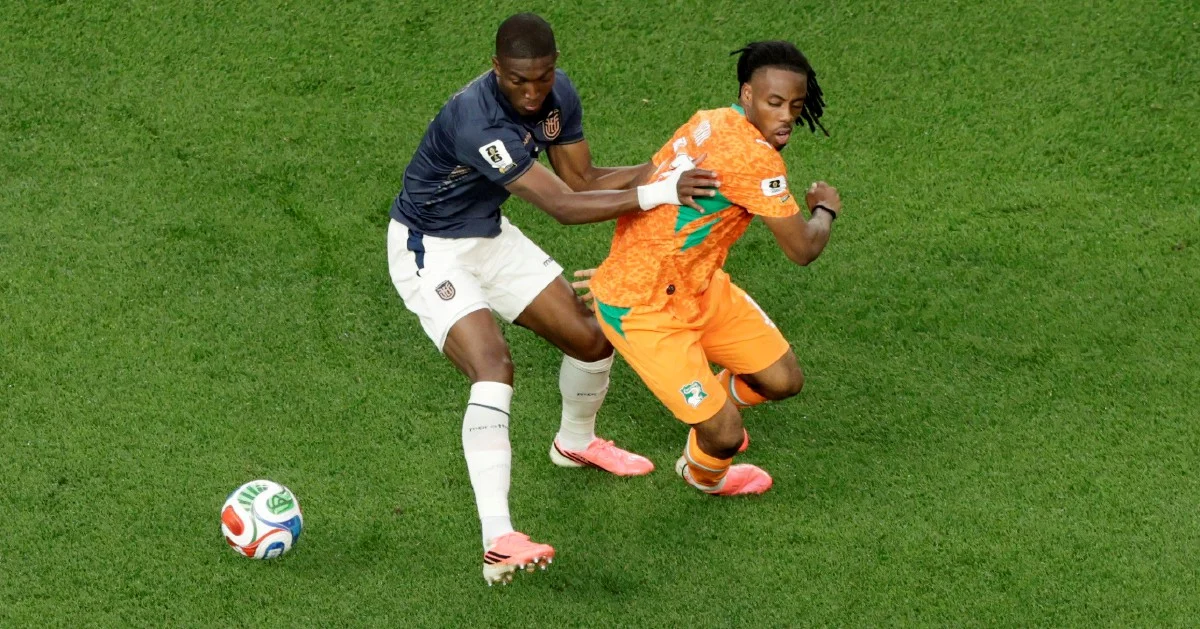
Ivory Coast forward Elye Wahi will not participate in this weekend's World Cup qualifier against Germany in Canada, the Ivorian Football Federation announced on Thursday, one day after the player's name surfaced in an investigation into suspected sports corruption linked to a French top-division match.
The decision to exclude the Ligue 1 player from the national team squad represents a significant blow to Ivory Coast's preparation for the high-stakes encounter. The timing of the federation's announcement underscores the seriousness with which governing bodies are treating allegations of match manipulation, a persistent concern across European football that has prompted increasingly stringent investigative protocols.
Match-fixing investigations have become more prevalent in recent years as authorities seek to protect the integrity of competitive sport. When players attract scrutiny during international fixtures, federations face mounting pressure to demonstrate transparency and uphold standards. Ivory Coast's swift action suggests the federation is prioritising institutional credibility over squad depth, a pragmatic calculation that many national bodies have adopted when their players face corruption allegations.
The exclusion comes at a delicate juncture in Ivory Coast's World Cup campaign. Germany represents formidable opposition, and the loss of a regular attacking outlet complicates tactical planning. However, the federation appears to have determined that fielding a player under investigation would expose the team to reputational damage and potential complications with international football governance bodies.
Ligue 1, as Europe's fifth major league, has experienced heightened scrutiny regarding match-fixing in recent seasons. The involvement of a prominent French division player in such allegations reflects concerns that undermine confidence in the sport's regulatory frameworks. For Malaysian and Southeast Asian football observers, such incidents underscore why domestic leagues must continuously strengthen compliance mechanisms and whistleblowing protections.
The investigation's precise scope and the specific match in question remain important context for understanding whether Wahi faced direct accusations or merely proximity to suspicious activity. This distinction matters considerably, as investigators distinguish between orchestrated manipulation and inadvertent entanglement in broader schemes. The federation's precautionary stance suggests officials felt the circumstances warranted removal pending clarification.
International football has mechanisms for addressing player misconduct during competitive windows, though applying them to corruption allegations presents legal and diplomatic complexities. Federations must balance protective measures against potential unfair treatment, particularly when investigations remain preliminary. Ivory Coast's approach demonstrates how national bodies navigate this tension by erring toward institutional protection.
For World Cup qualification campaigns, squad rotation and injury management typically dominate selection discussions. The introduction of corruption investigations into this space signals how thoroughly modern football governance has extended beyond traditional sporting considerations. Regional confederation protocols across Africa, Europe, and Asia increasingly require federation engagement with law enforcement and competition authorities.
The broader implications ripple through Ivory Coast's tournament ambitions. While individual player absences rarely determine campaign trajectories, the psychological and strategic disruption can accumulate across multiple matches. Teams facing investigations also contend with media scrutiny and internal morale challenges that extend beyond straightforward tactical adjustments.
From a Southeast Asian perspective, this situation underscores why transparency in player registration, transfer protocols, and financial dealings matters profoundly. As regional leagues invest in international recruitment and cross-border player movements expand, the need for sophisticated monitoring systems becomes pressing. Malaysian clubs and other Southeast Asian entities engaging European-based players should note how quickly reputational consequences cascade across competitive hierarchies.
The investigation itself reflects enforcement efforts that have intensified following high-profile match-fixing scandals across European competitions. Authorities increasingly employ data analytics, financial tracking, and international intelligence-sharing to identify suspicious betting patterns and player conduct. These investigative advances mean that players and match officials face unprecedented accountability for even tangential involvement in corruption schemes.
Ivory Coast's decision also signals to other African federations how to respond when players become embroiled in continental or international integrity investigations. The precedent established here—swift squad exclusion pending investigation clarification—may influence how peer nations handle similar situations, creating pressure for consistency across confederation governance.
Looking ahead, the investigation's outcome will likely influence whether Wahi returns to international contention and how his club career develops. Regulatory bodies coordinate across competitions, meaning findings in one jurisdiction can trigger evaluations elsewhere. For the player personally, the consequences extend beyond immediate squad selection to career trajectory and commercial value, highlighting the high stakes when corruption allegations arise.