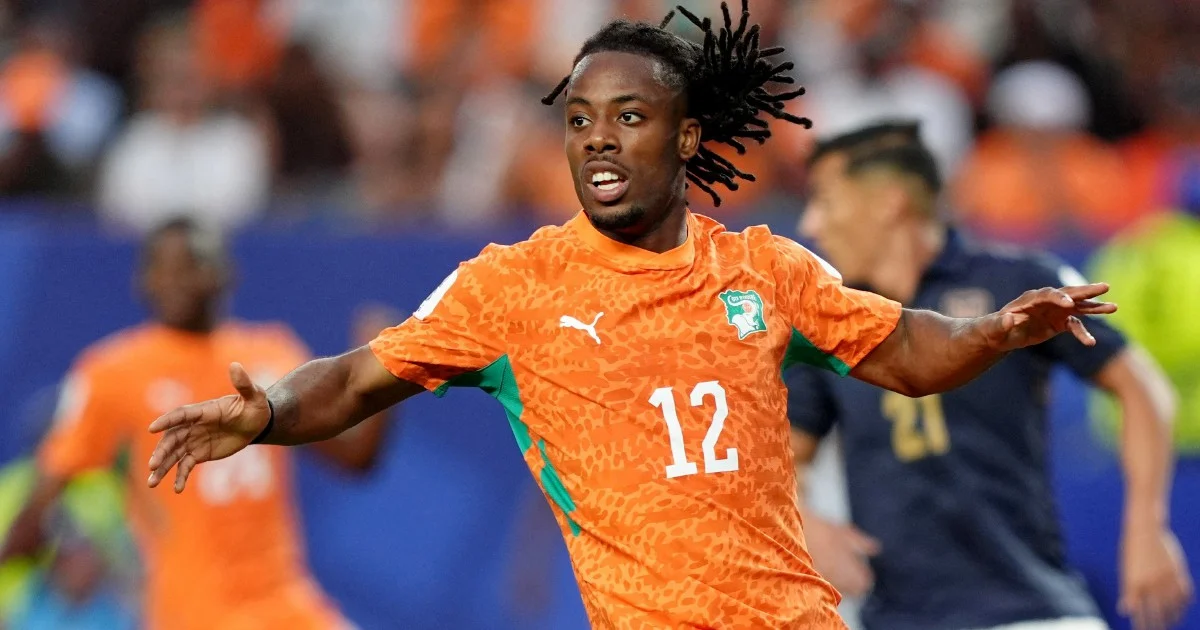
Ivorian forward Elye Wahi has been swept up in a French match-fixing investigation following his detention last month, raising fresh concerns about corruption in professional football. The striker, who led the line in Ivory Coast's World Cup encounter with Ecuador on Sunday, was taken into custody as authorities probed alleged manipulation of sporting outcomes in what has become an expanding inquiry.
The involvement of an international player competing at the highest level of global competition underscores the reach of match-fixing networks, which continue to pose a significant challenge across European and African football. Wahi's participation in his country's World Cup campaign despite the arrest highlights the complex intersection between legal investigations and professional sporting schedules, where clubs and national federations must navigate regulatory obligations while maintaining competitive operations.
Spot-fixing—the deliberate manipulation of specific moments within a match rather than the overall result—represents a particularly insidious form of corruption. Unlike traditional match-fixing that targets the final outcome, spot-fixing can involve predetermined outcomes of corner kicks, penalty decisions, or other discrete events, making detection considerably more difficult for governing bodies and law enforcement agencies. The French investigation's focus on this specific category of misconduct suggests authorities have identified patterns warranting detailed forensic scrutiny.
France has increasingly positioned itself as vigilant in combating sports-related corruption, with investigators working across domestic and international frameworks to identify networks engaged in illegal betting syndicates. The detention of Wahi reflects broader law enforcement efforts to dismantle organised schemes that exploit football's global reach and the substantial financial stakes surrounding international competitions. Such investigations typically involve collaboration between national authorities, Interpol, and sports governing bodies to trace financial flows and communication records.
The timing of Wahi's arrest during a World Cup qualification period creates complications for both his club and the Ivorian national team. Players detained in corruption probes face potential disciplinary sanctions from their leagues, national federations, and international football bodies including FIFA, which maintains stringent regulations against match-fixing and related offences. The uncertainty surrounding his status could affect tactical planning and roster decisions as international fixtures approach.
For Malaysian sports observers, the case serves as a sobering reminder that match-fixing and spot-fixing threats are not confined to Southeast Asian football. The involvement of West African talent in European investigations demonstrates the transnational nature of these networks, which often operate across multiple continents to exploit regulatory gaps and varied enforcement capabilities. Regional football bodies in Asia have intensified anti-corruption measures partly in response to evidence suggesting organised networks target matches across diverse leagues and competitions.
The investigation's scope extends beyond individual players to potentially implicate betting operators, match fixers, and financial intermediaries who facilitate corrupt transactions. French authorities have progressively expanded their probe to map entire networks rather than pursuing isolated violations, a methodology that has proven more effective at disrupting systematic corruption. Intelligence gathered from interviews and digital forensics can reveal patterns linking multiple suspicious incidents across different competitions and jurisdictions.
Wahi's detention raises important questions about player accountability versus organisational responsibility. While individual athletes can be directly complicit, betting syndicates typically approach players through intermediaries, sometimes employing coercion or financial incentives tied to gambling debts or family circumstances. Understanding these pressure mechanisms is crucial for developing targeted prevention programmes that address vulnerability factors rather than simply punishing suspected offenders.
The International Football Association Board and FIFA have continued strengthening protocols for reporting suspicious betting activity, requiring clubs and leagues to maintain integrity units and establish confidential whistleblower channels. However, implementation remains inconsistent across different nations and competitions, with resource constraints and jurisdictional complications limiting enforcement effectiveness. Wahi's case may prompt renewed calls for harmonised international standards and dedicated funding for corruption prevention infrastructure.
For Ivory Coast, the situation carries diplomatic and sporting implications. The national football programme's reputation and international standing can be affected by corruption allegations involving squad members, potentially influencing recruitment decisions by foreign clubs and sponsors' confidence in the federation's governance structures. The federation will need to demonstrate commitment to integrity while supporting due process as investigations unfold.
The broader football community faces ongoing pressure to acknowledge that match-fixing remains a persistent threat despite increased vigilance. High-profile arrests of established players demonstrate that corruption can penetrate elite levels previously assumed to be insulated from such schemes. Continued investment in detection technology, investigator training, and international cooperation remains essential for addressing this challenge comprehensively.