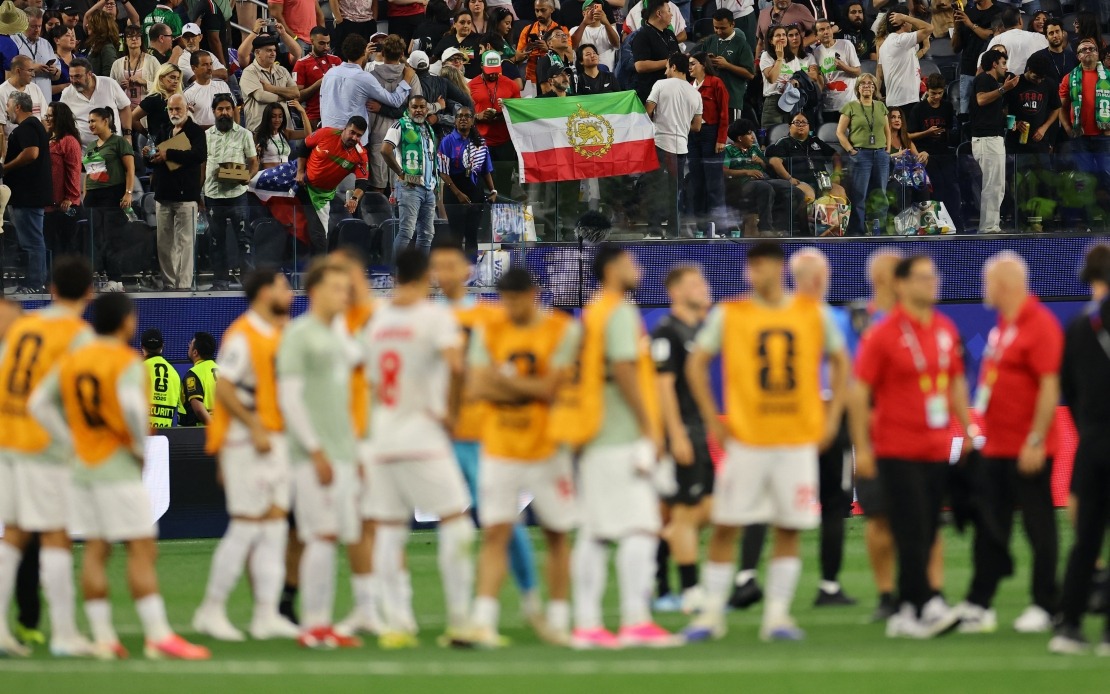
The Iranian national football team's World Cup experience took an unexpected turn when manager Amir Ghalenoei revealed that his squad was instructed to vacate Los Angeles immediately following their Monday night encounter with New Zealand, rather than remain overnight as originally scheduled. Speaking to international media in Istanbul, the Iranian coach characterised his team as the "most repressed team in the whole World Cup," drawing attention to what he perceived as unusually stringent restrictions placed upon the Iranian delegation during the tournament.
Ghalenoei outlined the logistical disruption that resulted from the sudden relocation directive. The team had anticipated spending the night in California to conduct recovery sessions and rest after their opening fixture, a standard protocol for international football squads during major competitions. Instead, the immediate instruction to depart meant the players faced additional hours of air travel without adequate recuperation time, a circumstance the coach viewed as detrimental to their World Cup campaign and player welfare.
The coach's complaint highlighted a practical concern facing any national team in competitive football: the importance of proper recovery between matches. Long-haul travel and consecutive fixture schedules can significantly impact athletic performance, making adequate rest periods crucial for maintaining player fitness and mental sharpness throughout tournament play. The unexpected relocation forced Iranian players to sacrifice these essential recovery protocols during a physically demanding period.
While Ghalenoei did not explicitly identify who had ordered the team's departure, Iranian captain Mehdi Taremi indicated that FIFA President Gianni Infantino had visited the team's locker room immediately after the New Zealand match. Taremi's subsequent comments appeared to reference broader geopolitical tensions between the United States and Iran, suggesting that factors beyond conventional sporting logistics may have influenced the treatment accorded to the Iranian delegation.
Taremi's cryptic remarks—"For sure, he wants to try to help us, but it's about other things, too. Everyone knows it"—hinted at underlying political dimensions that extended beyond football governance. The captain noted that stating these tensions explicitly would be unnecessary given widespread awareness of US-Iran relations. His comments reflected the complex intersection of international diplomacy and sport, where political considerations sometimes influence operational decisions at major tournaments.
The timing of these complaints proved particularly sensitive given concurrent diplomatic developments. The Iranian assertions emerged during a period when over 100 days of military conflict between the United States and Iran was reportedly approaching conclusion through an anticipated peace accord expected to materialise within the week. This diplomatic backdrop added weight to the Iranian team's perception that they faced unusual restrictions compared to other World Cup participants.
The Iranian squad's path to the World Cup itself had already encountered significant obstacles before reaching the tournament proper. Originally intending to establish their training base in Tucson, Arizona, the team relocated to Tijuana, Mexico, during late May following persistent logistical complications and visa-related challenges. These earlier difficulties had already necessitated substantial adjustments to their pre-tournament preparations, adding another layer of frustration to the sudden Los Angeles relocation.
The decision to shift from Arizona to Mexico reflected the practical complications that Iranian teams often navigate when competing internationally. Visa restrictions and travel limitations have historically affected Iranian athletes' mobility, requiring creative solutions to ensure participation in global sporting events. The Tijuana relocation represented a pragmatic response to these constraints, though it displaced the team further from their original location and added complexity to their logistical planning.
The Iranian team's experience during this World Cup reflected broader tensions between international sports governance and geopolitical realities. FIFA's ostensible neutrality as a global governing body sometimes encounters pressure from member nations' governments, and situations like the Iranian squad's treatment raise questions about whether sporting institutions can truly maintain political impartiality during international competitions involving countries with adversarial relationships.
For Southeast Asian observers, Iran's situation underscores how political circumstances can extend beyond direct participants and influence the environment within which international competitions operate. The case illustrates that major sporting events, while ostensibly platforms for athletic excellence and international cooperation, inevitably reflect and sometimes amplify existing geopolitical divisions. Teams from nations with complicated international relationships may face additional scrutiny, restrictions, or operational challenges that teams from other countries do not encounter.
The incident also highlighted the vulnerability of smaller or politically marginalised national teams at world tournaments. While major football nations possess greater resources and diplomatic influence to navigate bureaucratic obstacles, teams from countries experiencing international tensions may lack equivalent leverage. This structural inequality within global sports could affect competitive fairness if teams face varying operational conditions during tournament play.
Looking forward, Iran's complaints would likely prompt discussions within FIFA regarding consistency in how national delegations are treated during major competitions. Whether the restrictions placed on the Iranian team reflected legitimate security concerns, bureaucratic procedures applied uniformly, or geopolitically motivated discrimination remained unclear from publicly available information. Clarifying FIFA's decision-making processes in such matters would benefit the organisation's credibility and sporting integrity.
For Malaysian football observers and Southeast Asian nations more broadly, the Iranian situation served as a reminder that international sports exist within complex geopolitical ecosystems. Teams competing at world tournaments navigate not only athletic challenges but also diplomatic considerations that extend beyond the pitch, affecting everything from training schedules to logistical arrangements that ultimately influence competitive outcomes.