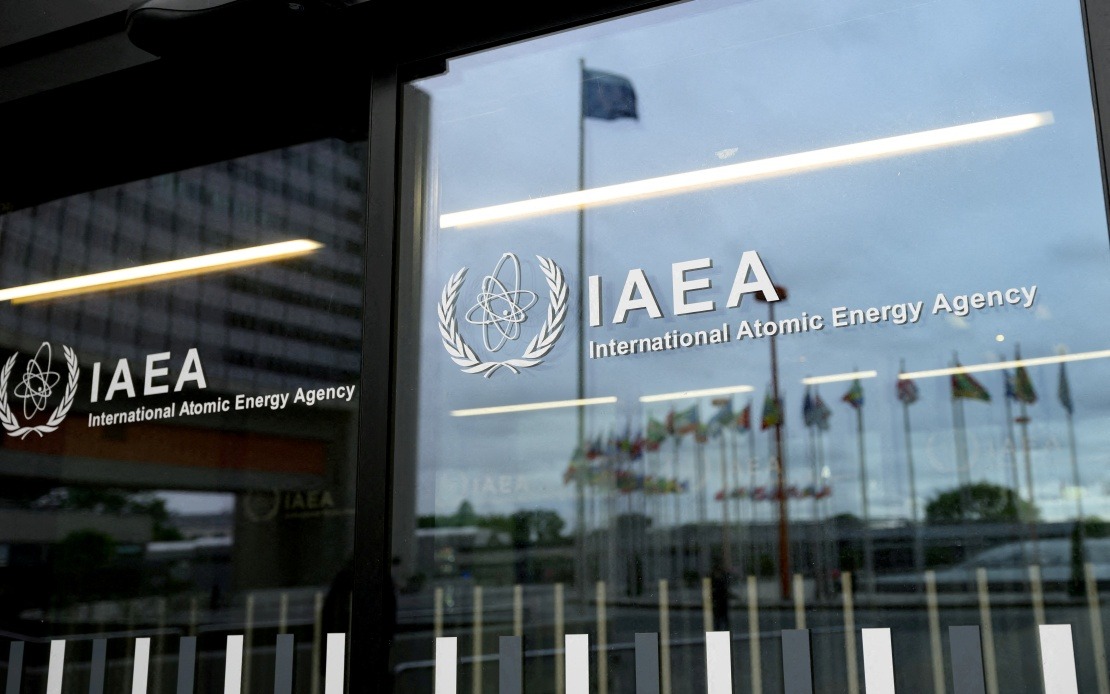
Iran has firmly shut the door on International Atomic Energy Agency inspections of its nuclear facilities, according to statements from senior Tehran officials on Wednesday, signalling a hardening stance as nuclear negotiations with the United States enter a critical phase. Deputy Foreign Minister for Legal and International Affairs Kazem Gharibabadi declared that questions regarding IAEA access to Iranian nuclear infrastructure and materials would not be negotiated separately but would only be resolved as part of a comprehensive final agreement contingent on Washington's commitment to lift all economic sanctions.
Gharibabadi's declaration comes barely a week after Iran and the United States signed a memorandum of understanding on June 18 that established a 60-day window for intensive negotiations aimed at producing a binding accord on Iran's nuclear programme and the removal of international sanctions. The first round of substantive talks between the two delegations took place in Switzerland over the weekend, yet the preliminary meeting has already revealed the depth of disagreement between negotiators on fundamental procedural and substantive matters.
The timing of Iran's rejection of IAEA inspections appears strategically linked to recent military developments that have significantly altered the negotiating environment. In a dramatic escalation, three of Iran's principal nuclear installations—the enrichment facilities at Fordow and Natanz, along with the Isfahan research reactor complex—were subjected to bombing campaigns by the United States during a 12-day military operation in June 2025. These same sites had previously been struck in February 2025 when American and Israeli forces launched coordinated attacks targeting Iranian nuclear and military infrastructure, raising international concerns about the stability of the Middle East and the future viability of diplomatic solutions.
The Iranian diplomat's refusal to meet with IAEA Director General Rafael Grossi, despite Grossi's explicit request for discussions in Switzerland, underscores Tehran's present unwillingness to engage with the agency on inspection protocols. This stance contradicts Grossi's own assessment earlier on Wednesday, when he stated that the IAEA intended to conduct inspections in Iran based on the recently agreed memorandum. The disconnect between the IAEA's expectations and Iran's actual position suggests that the language contained within the June 18 agreement may be subject to competing interpretations, a common feature of preliminary nuclear negotiations where ambiguity serves all parties' immediate interests.
For Malaysia and other Southeast Asian nations closely monitoring developments in the Middle East, Iran's hardening posture carries significant implications. The region's economic interdependence on uninterrupted energy supplies and freedom of navigation through critical waterways makes any escalation in Middle Eastern tensions a matter of direct concern. Malaysia, as a major trading partner with both Iran and the United States, finds itself navigating complex diplomatic waters as these nuclear negotiations progress, with potential consequences for regional stability, oil markets, and the broader international rules-based order.
Iran's conditional approach to inspection access reveals a negotiating strategy that prioritizes sequencing—attempting to secure international recognition of its sovereign rights and sanctions relief before submitting to enhanced monitoring of its nuclear activities. This approach suggests that Tehran views the inspection question not as a technical matter but as a fundamental element of state sovereignty that must be bargained for explicitly within the broader agreement framework. By refusing to grant IAEA access independent of the final accord, Iran seeks to avoid a situation where it grants transparency while sanctions remain in place, a scenario that would eliminate leverage at the concluding stages of negotiations.
The IAEA's traditional mandate as an impartial technical body tasked with verifying nuclear non-proliferation commitments faces genuine challenges when major powers instrumentalize nuclear inspections as elements of broader geopolitical competition. Grossi's statement that inspections would proceed under the new memorandum suggests the IAEA's understanding that the agreement provides sufficient legal foundation for agency access, yet Iranian officials' explicit rejection raises questions about whether the MoU's language was sufficiently precise to establish binding obligations regarding inspection protocols.
Within the broader context of nuclear diplomacy, Iran's stance reflects lessons learned from previous negotiation cycles. The 2015 Joint Comprehensive Plan of Action, to which Iran was a signatory alongside the United States and five other major powers, included intrusive inspection provisions that allowed the IAEA unprecedented access to Iranian nuclear facilities. However, the Trump administration's 2018 withdrawal from that agreement without securing additional concessions from Iran left many Iranian officials convinced that extraordinary cooperation with the IAEA yielded insufficient protection against sudden policy reversals by future American administrations.
The 60-day negotiating window established by the memorandum creates urgency, yet also provides little time for both sides to navigate the multiple substantive disagreements now evident. Beyond the inspection question, negotiators must address the scope and timing of sanctions removal, the allowable enrichment levels for Iranian uranium, the duration of any final accord, and verification mechanisms—all issues where fundamental positions currently diverge significantly. Iran's early assertion of red lines regarding IAEA access suggests that obtaining such concessions early may be an explicit negotiating objective designed to secure broader agreement later.
The destruction of Iran's major nuclear facilities by recent military strikes has paradoxically strengthened Tehran's negotiating position by eliminating production capacity temporarily and raising the potential costs of continued hostilities. Negotiators in both capitals will need to weigh whether continued military escalation or diplomatic resolution serves their respective national interests better, a calculation complicated by domestic political pressures and the involvement of multiple regional actors beyond Washington and Tehran. For observers in Southeast Asia and beyond, the trajectory of these negotiations will shape not only Iran's nuclear future but also broader regional security dynamics for years to come.

