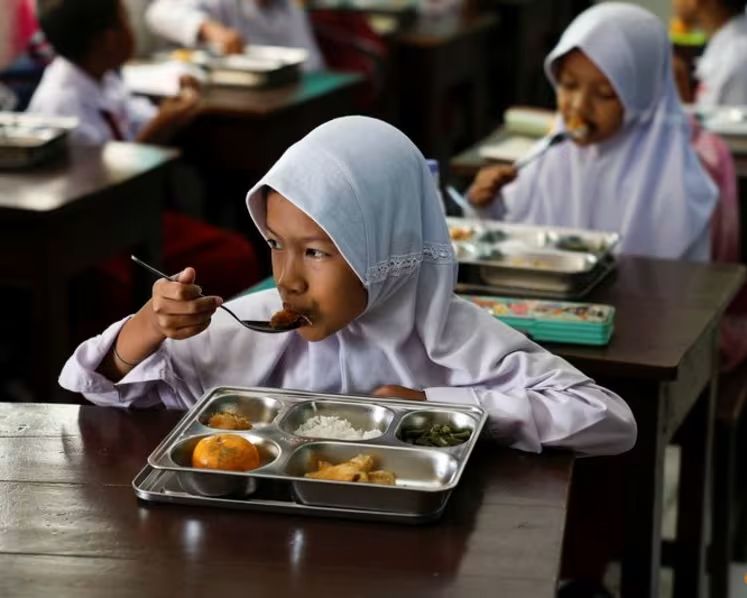
The Indonesian government's ambitious free meals initiative has suffered another significant setback with the resignation of the National Nutrition Agency chief, the second senior leadership departure to rock the programme in little more than a month. Nanik Sudaryati Deyang, who assumed leadership of the agency only in June, stepped down on Wednesday citing serious health complications, but her departure signals the deepening institutional instability plaguing one of President Prabowo Subianto's signature election promises.
The turmoil at the agency reflects mounting pressures from multiple directions. Beyond Nanik's immediate health concerns—she revealed that her doctor warned of severely clogged arteries caused by extreme stress—the organisation faces substantial budget reductions and an ongoing criminal investigation into programme operations. Her resignation comes just weeks after her predecessor was removed from office by the president and subsequently arrested on corruption allegations linked to the multibillion-dollar scheme, underscoring the political and legal jeopardy surrounding what was meant to be a transformative social initiative.
Since the programme's launch in January 2025, it has encountered persistent operational difficulties that have attracted unwelcome public scrutiny. Logistical challenges in distribution, persistent quality concerns about meal standards, and several documented incidents of mass food poisoning have all contributed to eroding public confidence. These practical failures have coincided with broader fiscal pressures on the Indonesian government, intensifying questions about whether the ambitious scope of the initiative can be sustained given the country's budgetary constraints.
The financial squeeze on the programme has become increasingly severe. The National Nutrition Agency announced on Tuesday that the 2026 budget allocation had been slashed for the second consecutive time, dropping from 268 trillion rupiah to 229 trillion rupiah, equivalent to approximately 12.79 billion US dollars. This reduction is particularly striking when compared to the original budgetary allocation of 335 trillion rupiah, leaving the programme more than 100 trillion rupiah short of its initial funding level. Agency officials have indicated that further budget cuts remain possible pending another scheduled review, adding another layer of uncertainty to programme planning.
These financial constraints directly threaten the programme's coverage targets. Originally designed to serve free meals to approximately 83 million people, encompassing children, pregnant women, and other vulnerable populations, the initiative had already reached 62.5 million beneficiaries before the latest budget review. The gap between the original ambition and current fiscal reality raises serious questions about whether the programme can maintain even its current coverage levels, let alone expand as originally envisioned.
In her resignation announcement via Facebook, Nanik emphasised that she was stepping down voluntarily to seek overseas medical treatment for her heart condition. She noted that President Prabowo had granted approval for her departure after understanding the severity of her health situation. Notably, Nanik indicated that the president was considering establishing a supervisory board to provide additional oversight for the agency, and that she had been invited to lead this new body, suggesting an attempt to maintain her involvement in the programme despite leaving the chief executive position.
Nanik sought to reframe the national conversation around the free meals programme, rejecting characterisations from some quarters that it represents a politically motivated initiative. Instead, she positioned it as a crucial nutritional intervention measure specifically designed to address childhood malnutrition and support pregnant women's health outcomes. This defensive posture reflects broader anxieties about the political dimensions of the scheme and attempts to establish its legitimacy as a technocratic public health measure rather than merely a populist campaign commitment.
The succession process remains clouded in uncertainty. Nanik indicated that her replacement would likely come from among her junior colleagues at the agency, but the National Nutrition Agency has provided no formal announcement about who would assume the leadership role. This lack of clarity about the incoming chief reinforces perceptions of organisational instability and raises concerns about continuity in programme management during a period of significant operational and financial stress.
For Malaysian observers, Indonesia's struggles with this large-scale nutritional programme offer relevant cautionary lessons. Similar ambitious food assistance initiatives have been mooted in Malaysian policy discussions, and Indonesia's experience demonstrates the operational complexity and institutional challenges that such programmes entail. The combination of logistical difficulties, quality control problems, and budget pressures that have hamstrung Indonesia's effort highlight the importance of robust planning, adequate resourcing, and strong institutional frameworks when launching expansive social programmes affecting tens of millions of people.
The resignation also raises questions about leadership resilience and the psychological toll of managing high-stakes public programmes in the Indonesian political context. That a senior government official felt compelled to resign due to stress-related health complications underscores the intense pressures surrounding flagship initiatives, particularly when they face multiple simultaneous challenges spanning operational, financial, and legal domains. This pattern may influence how potential candidates approach senior positions in future government programmes, potentially affecting the quality of available talent for such critical roles.
Regionally, the free meals programme's struggles reflect broader questions about fiscal sustainability and programme design in a post-pandemic economic environment where many Southeast Asian governments face competing budgetary demands. As countries across the region grapple with inflation, currency pressures, and debt management, the tension between ambitious social spending and fiscal constraints evident in Indonesia's experience will likely become increasingly familiar across the region.
The coming months will be critical for determining whether the free meals programme can stabilise under new leadership and potentially adjusted budgetary parameters, or whether it will face further deterioration. The political investment President Prabowo has made in this initiative suggests he remains committed to its continuation in some form, but the repeated crises and institutional instability suggest that fundamental questions about programme design, financing, and management require urgent attention from the incoming leadership.

