Indonesia's ambitious free nutritious meal programme has become unexpectedly divisive, sparking competing street demonstrations across multiple regions as the nation grapples with fundamental questions about fiscal responsibility, social welfare priorities, and government accountability. President Prabowo Subianto's signature initiative, which launched last year with the goal of tackling malnutrition and child stunting, is now facing intense scrutiny from student activists who view it as wasteful spending during a period of broader economic retrenchment, while simultaneously gaining passionate support from workers and agricultural producers who depend on it economically.
The programme's trajectory from flagship social policy to contested battleground reflects deeper tensions within Indonesian society. Launched in January of the previous year with an initial budget of at least Rp 335 trillion, the scheme was designed to serve approximately 83 million beneficiaries, encompassing schoolchildren, pregnant women, and breastfeeding mothers. Yet the sheer scale of the initiative, combined with emerging allegations of corruption and several food poisoning incidents, has transformed it into a lightning rod for broader frustrations about government priorities and competence.
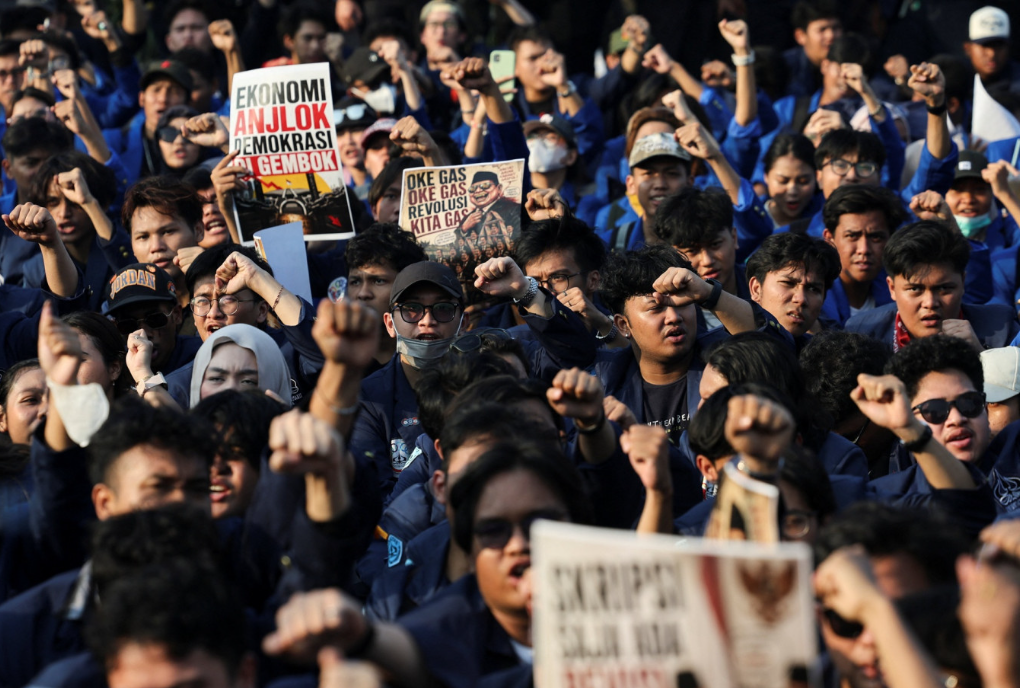
Students have mobilised extensively against the programme, viewing it as symptomatic of wasteful governance. In Denpasar, Bali, hundreds of university students gathered outside the Bali Regional Legislative Council on Monday to demand comprehensive auditing of the free meal scheme. Their grievances extended beyond the meals initiative itself; protesters sought broader economic reforms and expressed concerns about the state of Indonesian democracy. The demonstrators specifically called upon the government and the Supreme Audit Agency to conduct thorough investigations into the programme's administration, particularly regarding allegations of misappropriation and questions about whether such enormous expenditure represents prudent use of limited state resources during a period when many government agencies face austerity pressures.
The corruption dimension has intensified student activism considerably. In Jakarta, thousands of students affiliated with the Indonesian Islamic Student Movement staged a major demonstration outside the House of Representatives complex on June 22, demanding complete leadership overhaul at the National Nutrition Agency following the recent arrest of three senior officials on corruption charges. These arrests have provided tangible evidence to sceptics who questioned whether implementation mechanisms adequately safeguard public funds. Student groups, primarily from Trisakti University alongside participants from Mercu Buana University, Esa Unggul University, and the Islamic Students Association, chanted slogans characterising the meal programme as emblematic of excessive government spending that should be immediately suspended.
Student concerns about programme efficacy and targeting have gained traction among policy-conscious youth. In Batam, Riau Islands, university students organised demonstrations demanding comprehensive programme evaluation, with explicit calls for suspension if assessments reveal ineffectiveness, poor targeting, or failure to generate measurable public benefits. Muryadi Agus Priawan, who coordinated the Batam Student Movement Alliance, articulated the protesters' self-conception as representatives of broader civil society interests. He characterised student activism as essential social oversight, reminding government decision-makers that policies must genuinely serve public welfare rather than constitute political theatre or financial mismanagement.
Government responses have emphasised programme continuation with modifications rather than suspension. Muhammad Qodari, heading the Government Communications Agency, publicly rejected calls for programme abandonment, arguing instead that improvements to implementation would address legitimate concerns. The administration has already implemented cost-reduction measures, reducing the annual budget from Rp 335 trillion to Rp 228.4 trillion according to National Nutrition Agency Deputy Head Agustina Arumsari. Additional efficiency measures include suspending meal distribution during the late June through mid-July school holiday period and halting distributions at 76 schools in relatively affluent areas where families presumably possess adequate capacity to ensure proper nutrition independently.
Yet these retrenchment measures have provoked equally mobilised opposition from constituencies experiencing direct economic benefits. In Batam, hundreds of kitchen workers employed under the programme rallied outside the local regional legislative council building, protesting that efficiency measures would devastate their livelihoods. Kitchen worker coordinator Langga Husein emphasised that approximately 1,500 Batam residents depend on daily wages from meal programme employment to support their families. Reducing meal distribution from six to five days weekly, combined with holiday suspensions, translates directly into income loss for already economically precarious workers. Husein further highlighted that holiday suspensions would eliminate nutritional support for pregnant women, breastfeeding mothers, and toddlers whose developmental needs persist regardless of school calendars.
The programme's economic significance extends well beyond kitchen employment, creating complex interdependencies throughout supply chains and agricultural sectors. In Bandar Lampung, residents mobilised in support of programme continuation, with field coordinator Maradoni explaining that the scheme generates substantial benefits for local agricultural producers and commodity prices. The free meal programme absorbs significant volumes of locally-sourced commodities including corn, rice, cassava, fruits, and vegetables, thereby supporting agricultural incomes and stabilising food prices throughout rural areas. Farmers and agricultural communities, according to Maradoni, view continued programme operation as essential for maintaining commodity demand and thereby sustaining rural economic viability.
Support mobilisations have emerged across multiple regions including Jakarta, West Nusa Tenggara, and East Java, suggesting that enthusiasm for programme continuation extends well beyond Batam and Bandar Lampung. These diverse pro-programme demonstrations reveal that the meals initiative functions as more than a nutritional intervention; it represents a significant economic stabiliser for vulnerable employment sectors and agricultural producers dependent on state commodity purchases. The competing protest movements thus reflect genuine conflicts between different population segments regarding resource allocation priorities and governmental responsibilities.
For Malaysian observers, Indonesia's nutritious meal programme struggles offer instructive perspectives on social policy implementation challenges at scale. Malaysia's own food assistance programmes and school meal initiatives operate within comparatively smaller population bases and different administrative contexts, yet the Indonesian experience illuminates persistent tensions between ambitious welfare expansion, fiscal sustainability, corruption prevention, and effective targeting. The simultaneity of student-led demands for accountability alongside worker demands for continued support suggests that Indonesian policymakers face genuine trade-off dilemmas rather than obvious solutions.
The programme's future trajectory remains uncertain. The Prabowo administration has demonstrated commitment to continuation while implementing modifications, suggesting a middle-ground approach that neither capitulates to suspension demands nor maintains the original budgetary scope. Whether these efficiency measures adequately address student concerns regarding fiscal responsibility and corruption while preserving sufficient programme scale to satisfy worker and agricultural constituencies represents the fundamental challenge confronting Indonesian governance. The competing mobilisations suggest that no resolution will satisfy all parties, but rather that Indonesian society will continue debating the proper balance between nutritional welfare provision, fiscal discipline, employment preservation, and agricultural support.

