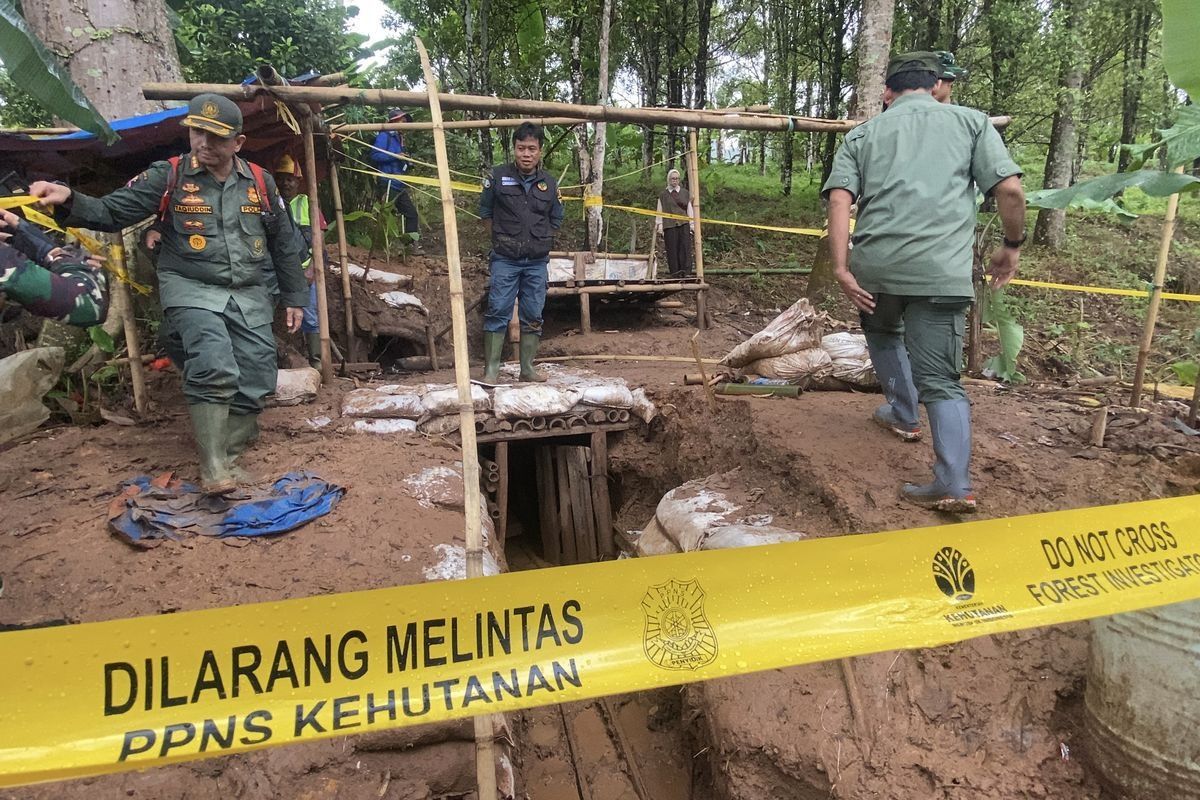
Indonesia's energy ministry has escalated its enforcement action against illegal precious metals extraction by formally charging 24 foreign nationals as criminal suspects in connection with an elaborate mining operation spanning the Maluku region. According to energy ministry official Jeffri Huwae, the suspects allegedly oversaw the construction of extensive infrastructure networks—including roads, processing plants, and ancillary facilities—in the Gunung Botak area, suggesting a sophisticated, long-established operation rather than opportunistic small-scale digging.
The case represents a significant enforcement milestone for Jakarta's efforts to combat the expanding problem of unauthorised mineral extraction, which has repeatedly involved international criminal networks exploiting Indonesia's vast natural resources and remote geography. While the ministry's statement stopped short of identifying the nationalities of the accused, reporting from state news agency Antara in May had pointed to 24 Chinese nationals operating in the same Gunung Botak location under the protection of a local sponsor entity, PT Harmoni Alam Manise. That revelation sparked questions about how such operations secure local partnerships and navigate regulatory frameworks designed to prevent precisely these activities.
The legal framework mobilised against the suspects carries serious weight. Under Indonesian law, individuals convicted of unlicensed mining face maximum prison sentences of five years, a penalty structure designed to deter both foreign operators and their domestic enablers. The ministry's decision to prosecute reflects mounting pressure to demonstrate meaningful consequences for industrial-scale illegal extraction, particularly when foreign actors are implicated in depleting national mineral wealth. However, the absence of public disclosure regarding the volume of gold illegally extracted raises questions about the operation's true economic impact and whether the charges reflect proportionate enforcement.
The case's structure highlights endemic challenges in Indonesia's fight against resource crime. Of the 24 foreigners charged, only half—12 individuals—remain in custody within Indonesian jurisdiction, while the other 12 have absconded and remain outside the country's reach. This split custody status underscores how international criminal networks exploit border proximity and lax enforcement in neighbouring jurisdictions to operate with relative impunity. The logistics of extraditing suspects from their home countries, assuming they have fled there, present formidable legal and diplomatic hurdles that frequently go unresolved.
The ministry's reference to two Indonesian nationals charged alongside the foreign suspects points to a critical dimension: complicity within Indonesia's own bureaucratic and business structures. Local enablers—whether corrupt officials, business licensees, or community leaders—play indispensable roles in facilitating large-scale foreign mining operations. These domestic actors often possess knowledge of regulatory procedures, local geography, and official vulnerabilities that international operators cannot access independently. Prosecuting both foreign actors and their local collaborators sends a necessary message about shared responsibility, yet enforcement against Indonesian nationals has historically been inconsistent.
This is not Indonesia's first confrontation with organised illegal mining involving foreigners. A year prior, police in Papua—Indonesia's easternmost province—apprehended four Chinese nationals in Senggi district, demonstrating that foreign involvement in unauthorised mineral extraction spans multiple regions and recurs with troubling regularity. The geographic spread from Papua to Maluku suggests coordinated networks operating across eastern Indonesia, possibly managed by the same criminal organisations or their franchisees. Each apprehension raises the uncomfortable possibility that many more operations remain undetected across Indonesia's sprawling archipelago.
Maluku's prominence in these cases merits consideration. The region sits at the intersection of major maritime routes and contains considerable underdeveloped mineral reserves, making it simultaneously attractive to illegal operators and difficult for authorities to monitor comprehensively. The state's enforcement capacity in remote eastern regions remains limited compared to more densely populated western Java, creating enforcement vacuums that international criminal syndicates exploit systematically. Infrastructure construction—roads and processing facilities mentioned in the ministry's statement—represents substantial capital investment suggesting long-term operational plans rather than transient criminal activity.
For Malaysian readers and regional observers, these enforcement actions carry implications beyond Indonesia's borders. Malaysia has confronted comparable challenges involving foreign nationals in illegal tin and gold mining operations, particularly in Perak and Selangor. Cross-border criminal networks frequently operate across Southeast Asia, adapting tactics when authorities intensify enforcement in one jurisdiction. Indonesian actions against foreign miners may displace operations rather than eliminate them, potentially redirecting pressure toward weaker enforcement environments elsewhere in the region. Regional cooperation and intelligence-sharing mechanisms remain underdeveloped despite the transnational nature of resource crime.
The charging decision also reflects Indonesia's broader commitment to resource nationalism and preventing the uncontrolled depletion of mineral wealth. As a signatory to international anti-corruption frameworks and facing persistent criticism over environmental degradation linked to mining, Jakarta has incentives to demonstrate serious prosecution of illegal extraction. However, the gap between formal charges and meaningful convictions remains vast in Indonesia's criminal justice system. Securing convictions against absent defendants and navigating the complexities of international witness testimony create substantial practical barriers.
The ministry's silence regarding prosecution timelines, evidence standards, and witness protection measures leaves fundamental questions unanswered. Whether these charges will proceed to trial, what evidentiary standards will apply, and how authorities will manage the prosecution of absconded suspects remain unclear. Such ambiguities are typical in high-profile Indonesian criminal cases involving political or economic sensitivity. The public commitment to charging suspects may generate headlines without culminating in convictions that meaningfully deter future operations.
Looking forward, sustaining enforcement pressure against illegal mining requires not only prosecutorial action but systematic investment in monitoring, intelligence gathering, and border control capabilities. Indonesia's energy ministry and national police must coordinate across institutional boundaries and geographic distance—a historically difficult undertaking. Without addressing the underlying vulnerabilities that enable such operations, prosecuting individual cases will provide only temporary disruption to persistent criminal networks seeking to monetise Indonesia's mineral wealth outside regulatory frameworks.

