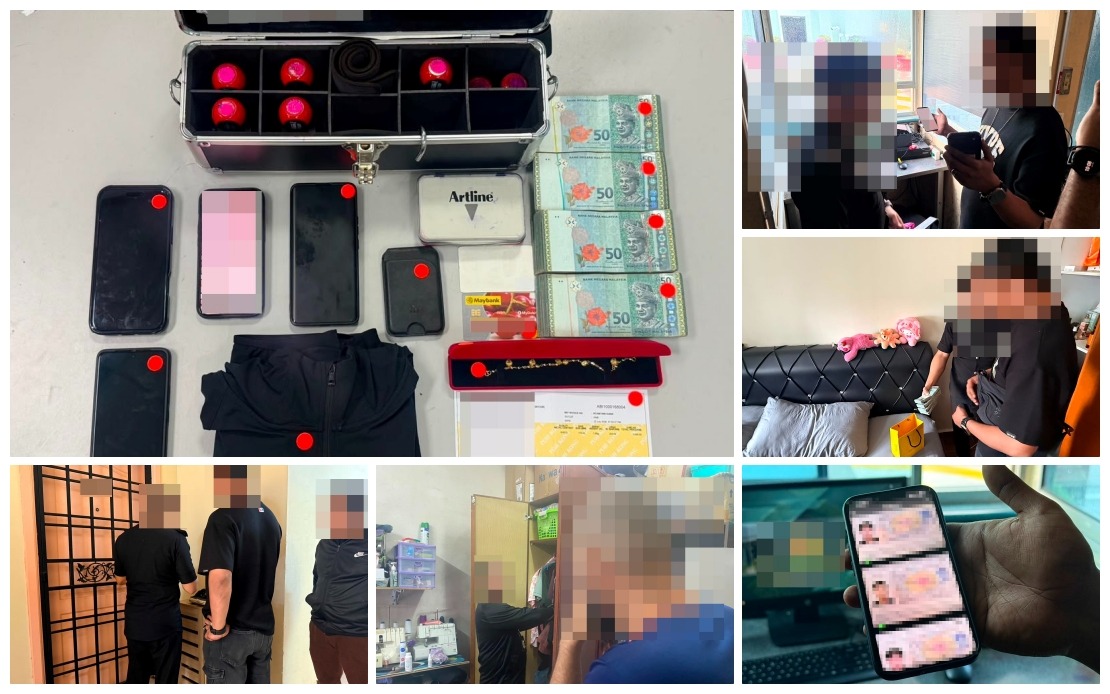
The Immigration Department of Malaysia (JIM) has successfully dismantled a document fraud network that exploited foreign nationals' travel records, with three individuals arrested during a coordinated operation at the Sultan Abu Bakar Complex in Gelang Patah, Johor. Immigration director-general Datuk Zakaria Shaaban revealed the breakthrough, which culminated from intelligence gathered under Operation Crack, a joint investigation conducted with the Malaysian Anti-Corruption Commission (MACC). The arrests represent a significant victory against organised immigration fraud at a time when document-related crimes pose increasing risks to national security and sovereignty.
The operation, mobilised at 10 am yesterday, drew personnel from the Putrajaya Immigration headquarters' Intelligence and Special Operations Division alongside teams from Johor's immigration office. Officers apprehended three suspects aged between 33 and 41 on suspicion of breaching Section 12(1)(h) of the Passport Act 1966, a provision governing illegal passport manipulation and misuse. The coordinated nature of the raid underscores JIM's capacity to execute intelligence-led enforcement and reflects a strategic pivot toward disrupting criminal networks rather than processing individual cases.
Searches conducted during the operation yielded substantial incriminating material and assets. Investigators recovered mobile phones, premises keys, jewellery, official Immigration security stamps, and approximately RM20,000 in cash—suspected proceeds from illicit activities. The seizure of Immigration stamps is particularly concerning, as it suggests the syndicate possessed or had access to authentic security features needed to fabricate credible documentation. These stamps represent a direct threat to the integrity of Malaysia's border and immigration databases, which depend on tamper-proof mechanisms to verify legitimacy.
The syndicate's operational model exploited vulnerabilities in Malaysia's immigration clearance system whilst operating with minimal detection for an extended period. Rather than requiring foreign nationals to present themselves physically at border entry points—a standard requirement under Malaysian immigration law—the network acquired their passports through intermediaries. Accomplices would photograph or photocopy the front pages of these documents and transmit digital images via WhatsApp to collaborators stationed within or near immigration facilities. These contacts then scanned the images into JIM's computer systems, fabricating false entry and exit records that made it appear as though the passport holders had legitimately crossed Malaysia's borders.
The syndicate imposed a standardised fee structure of RM700 for each fraudulent entry record inserted into the national immigration database. This pricing model indicates a well-organised operation rather than opportunistic, ad-hoc fraud. The systematic nature of the scheme—with specialised roles including document collection agents, digital image handlers, database manipulators, and likely logistics coordinators—suggests a hierarchical structure extending beyond the three individuals now in custody. Zakaria explicitly acknowledged that investigations would continue to map and identify other members of the network, signalling that authorities consider this initial arrest as the beginning of a larger dismantling process.
The implications of such fraud extend far beyond administrative irregularities. Falsified immigration records undermine the reliability of Malaysia's border control systems and complicate investigations into human trafficking, money laundering, and terrorist financing. When individuals can move through the country's borders with manufactured documentation, law enforcement loses visibility over population movements and loses critical investigative leads. For Malaysian authorities tasked with maintaining territorial integrity and preventing cross-border criminal activity, these falsified records represent genuine security blind spots that criminals and hostile actors could exploit.
For foreign nationals whose passports were misused by the syndicate, the consequences prove equally troubling. These individuals may face complications when renewing documents, applying for visas to third countries, or seeking to clear their immigration records with Malaysian authorities. Their travel history has been artificially altered without their knowledge, potentially affecting their trustworthiness profiles in international systems. Some may face questions from their home countries' immigration officials regarding unexplained entries into Malaysia, creating diplomatic friction and personal inconvenience.
The partnership between JIM and the Malaysian Anti-Corruption Commission during Operation Crack highlights the growing recognition that immigration fraud frequently intersects with corruption. Public servants positioned within immigration checkpoints may have abetted the syndicate by approving falsified records or providing advance warning of enforcement activities. By involving MACC from the investigation's outset, authorities have framed document fraud not merely as a border security issue but as a corruption matter warranting parallel probes into official misconduct. This approach may yield prosecutions against both syndicate members and any complicit immigration personnel.
Zakaria's commitment to intensifying enforcement reflects governmental awareness that these schemes proliferate when penalties appear inadequate or detection unlikely. Malaysia competes with other Southeast Asian economies for foreign investment, tourism, and business opportunities, all of which depend partly on maintaining efficient, trustworthy border systems. When syndicates can operate with impunity, Malaysia's immigration infrastructure loses credibility internationally. Airlines, freight companies, and other border-adjacent businesses operate with reduced confidence, and legitimate travellers may face enhanced scrutiny as authorities respond to heightened concerns about document integrity.
The seizure of communications devices—particularly mobile phones—offers investigators a pathway to identify syndicate members who remain at large. Digital forensics on WhatsApp records and call logs can reveal command structures, financial transactions, and connections to other criminal networks. Malaysian law enforcement possesses legal authority to access electronic communications in serious criminal investigations, and the Ministry of Communications has indicated willingness to assist immigration authorities in extracting data from seized devices. This technical capability may accelerate the identification of upstream organisers and downstream recipients of fraudulently created records.
For the regional perspective, Malaysia's disclosure of this operation carries significance beyond national borders. Foreign governments whose citizens were potentially victimised by the scheme may initiate diplomatic inquiries or demand enhanced credential verification for Malaysian travel documents. Singapore, Thailand, and other neighbouring countries maintain reciprocal information-sharing arrangements with JIM; the existence of this syndicate may prompt those jurisdictions to review the validity of Malaysian entry records processed during the network's operational period. Regional immigration forums will likely discuss Malaysia's experience as part of broader conversations about capacity-building and best practices in document security.
Authorities have indicated that further enforcement actions remain forthcoming as investigations broaden to capture the full network. JIM's intelligence division will pursue financial tracing to identify money flows, subscriber information requests to pinpoint intermediaries, and interviews with detainees designed to reveal upstream organisers and downstream users of fraudulent documentation. Zakaria's statement that firm action will be taken reaffirms governmental commitment to deterrence, though observers note that successful deterrence depends on swift prosecutions resulting in meaningful custodial sentences rather than minimal penalties.

