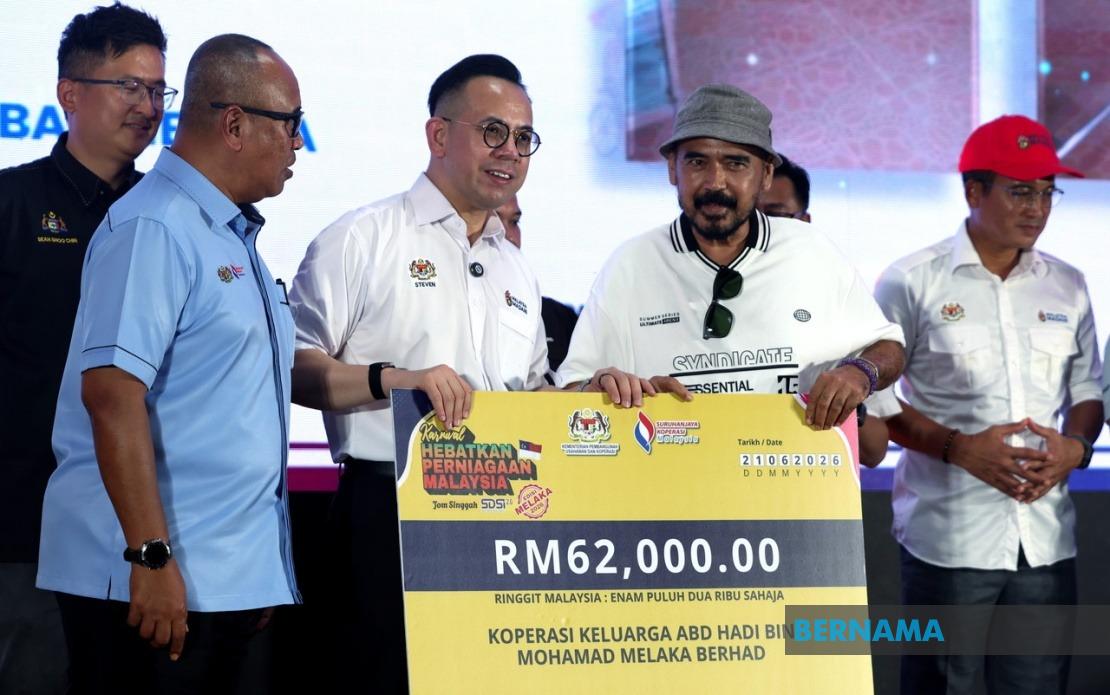
Malaysia's Empowering Malaysian Businesses Carnival 2026 (HPM 2026) wrapped up a three-day run in Melaka with substantial results for the nation's entrepreneurial ecosystem. The initiative, stewarded by the Ministry of Entrepreneur Development and Cooperatives (KUSKOP), demonstrated the growing appetite among business owners and aspiring entrepreneurs to connect, collaborate, and access funding opportunities. With RM8.45 million in combined business matching value and financing potential realised across the event, the carnival has established itself as a significant platform for catalysing commercial activity in Malaysia's small and medium-sized enterprise sector.
Held from June 19 to 21, the Melaka carnival served as a physical marketplace where entrepreneurs could engage directly with potential partners, investors, and service providers. The foot traffic tells an important story: 70,000 visitors navigated the venue, representing diverse interests across the Malaysian business spectrum. This substantial attendance underscores how such events fill a genuine need in the market, offering entrepreneurs concentrated access to resources and networks that might otherwise require months of individual outreach to secure. For a region like Melaka, hosting such an event also delivers secondary economic benefits through visitor spending and heightened business visibility.
The business matching component produced RM6.4 million in potential value across 72 structured sessions. These sessions functioned as controlled networking environments where 25 prospective entrepreneurs encountered established businesses, suppliers, and strategic partners. The session-based approach differs markedly from unstructured networking, as it ensures that participants engage with vetted counterparts aligned to their sector or growth stage. This structured methodology increases the likelihood that initial conversations translate into actual commercial relationships, rather than serving merely as a feel-good exercise in face-to-face interaction.
Simultaneously, the financial services component of the carnival addressed one of the most persistent challenges facing Malaysian SMEs: capital accessibility. Fifty-five micro, small and medium enterprises participated in dedicated financing interaction sessions, identifying RM2.05 million in potential funding opportunities. This figure is particularly meaningful given that access to affordable credit remains a significant bottleneck for small operators seeking to scale operations, purchase equipment, or enter new markets. By facilitating direct engagement between lenders and borrowers, the carnival short-circuits traditional bureaucratic pathways and allows financial institutions to assess lending opportunities in real time.
Direct sales activity at the carnival generated RM532,802.77, reflecting immediate commercial transactions among attending entrepreneurs and suppliers. While modest compared to the matching value, these direct sales represent tangible revenue for participating businesses and validate the carnival's efficacy as a sales channel. For entrepreneurs with physical or service-based offerings, such events provide cost-effective platforms to showcase products and convert curious visitors into paying customers without the ongoing expense of permanent retail or showroom space.
The HPM 2026 Carnival series itself represents a deliberate expansion of entrepreneurship support infrastructure. This Melaka iteration marked the third in the planned carnival series, with the momentum carrying forward to Penang. The fourth carnival is scheduled for July 17 to 19 at the Penang Waterfront Convention Centre, signalling KUSKOP's commitment to bringing these opportunities to different regional markets. Geographic rotation ensures that entrepreneurs outside Kuala Lumpur's capital concentration can participate without bearing excessive travel costs, democratising access to these high-value networking and financing platforms.
Underlying the carnival initiative is KUSKOP Minister Steven Sim Chee Keong's Hebatkan Perniagaan Malaysia (Empowering Malaysian Business) agenda, which explicitly targets strengthening local enterprises through the ABCD framework. ABCD prioritises Accelerating Productivity, Bureaucracy Reduction, Capital Accessibility, and Developing Market Access—four pillars that directly address systemic constraints on Malaysian SME growth. The carnival operates as a practical manifestation of this framework, addressing capital accessibility through financial sessions and market access through business matching.
Productivity acceleration emerges indirectly through the networking opportunities carnival participants gain. Entrepreneurs learn from peers, discover new suppliers or efficiency solutions, and identify collaboration possibilities that streamline operations. Bureaucracy reduction appears embedded in KUSKOP's broader mission to simplify entrepreneurship support. By creating a single venue where multiple support functions—financing, business matching, market exposure—occur simultaneously, the carnival reduces the administrative burden on entrepreneurs who might otherwise navigate disparate government schemes, bank programs, and industry associations separately.
For Malaysian readers, the implications extend beyond immediate participants. A strengthened SME sector translates to job creation, local economic resilience, and reduced dependence on large multinational corporations. Regional competition also intensifies, as Southeast Asian economies increasingly recognise that SME ecosystems drive innovation and export competitiveness. Thailand's support for small manufacturers, Singapore's emphasis on startups, and Vietnam's accelerating entrepreneurship sector all represent models that Malaysia must match through initiatives like HPM.
The carnival model also offers insights into effective public sector engagement with the private economy. Rather than dispersing support through distant government offices, KUSKOP has created experiential platforms where entrepreneurs directly access services. This approach builds institutional credibility and demonstrates tangible government commitment to enterprise development. Participants who secure financing or business partnerships at the carnival become advocates for KUSKOP's broader agenda, creating organic demand for ongoing support programs.
Looking ahead, the Penang carnival and subsequent iterations will test whether the Melaka success represents a replicable model or a one-off outcome. Key variables include whether the same calibre of business partners and financial institutions participate in regional iterations, and whether geographic markets generate comparable entrepreneurial demand. Success across multiple venues would validate the carnival series as a cornerstone entrepreneurship support mechanism, potentially justifying expansion to other states and increased frequency.
The RM8.45 million figure warrants perspective. While substantial, it represents potential value rather than realised transactions. The critical measure will emerge over subsequent months as business matching participants convert conversations into contracts, and MSME borrowers activate financing arrangements. A follow-up assessment tracking deal closure rates would provide valuable insight into whether the carnival's promise translates into lasting economic impact. Nevertheless, the immediate results suggest KUSKOP has identified a format that resonates with Malaysia's entrepreneurial community and deserves continued investment.

