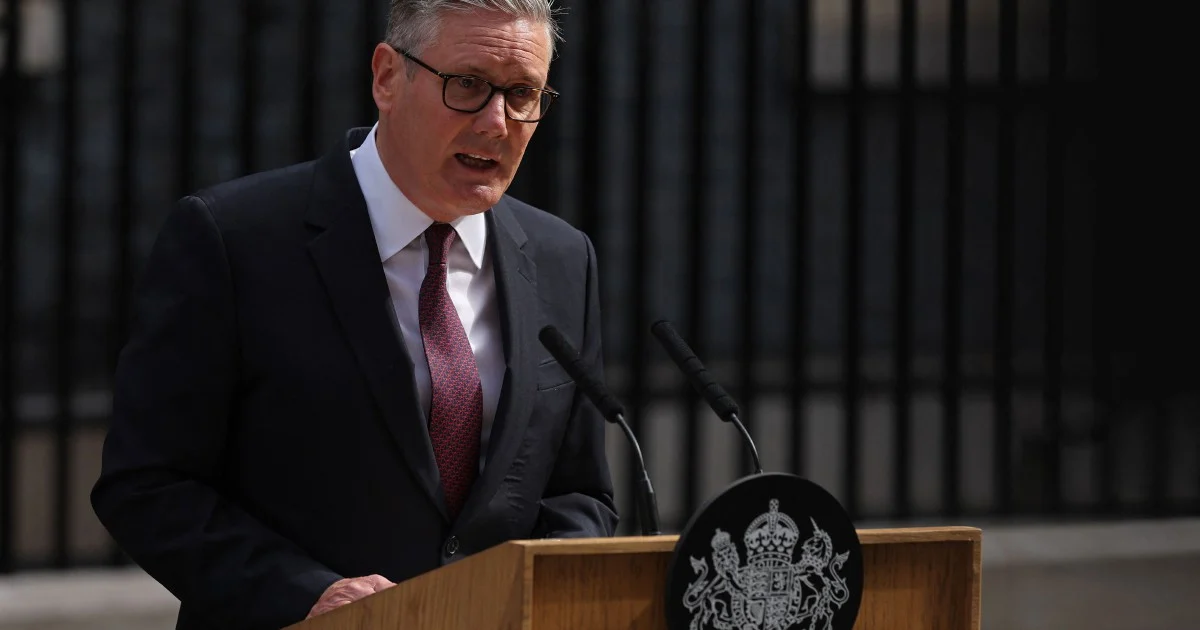
Britain is preparing for another transition at the top of government after Prime Minister Keir Starmer announced his departure on Monday. The nation, already accustomed to frequent changes in leadership, will see a new prime minister installed by the time parliament reconvenes in September. This marks the seventh change of leader within the past decade, reflecting the political turbulence that has characterised Westminster governance in recent years.
The process for selecting a new British prime minister differs from many other democracies. Unlike presidential systems where voters directly elect a head of state, Britain's constitutional arrangement means the prime minister emerges from parliament itself. The person who commands the confidence of the House of Commons becomes premier, typically the leader of the party holding the most seats. This fundamental distinction shapes how succession works when an existing prime minister steps down.
For the Labour Party, which currently governs with a parliamentary majority, the selection process focuses on choosing a new party leader. Party members and affiliated supporters vote in a ballot to determine who will lead Labour and, by extension, become the next prime minister. This internal democratic mechanism, refined over multiple leadership contests in recent years, allows the broader Labour movement to have a say in who steers the party forward.
The timeline matters significantly for Malaysia and other Commonwealth nations that maintain Westminster-style governance. Starmer's commitment to have a successor in place by September provides clarity during a period of political change. For neighbouring Indonesia, Vietnam, and Thailand, British political developments often signal trends in how established democracies handle leadership transitions, particularly when parties face internal pressure.
The frequency of British leadership changes in this past decade carries implications for governmental stability and policy continuity. From David Cameron through Theresa May, Boris Johnson, Liz Truss, Rishi Sunak, and now Starmer, the revolving door at Number 10 has meant inconsistent approaches to major policy areas including trade relationships with Commonwealth partners, climate commitments, and defence partnerships. Malaysian policymakers tracking British political decisions on matters like trade agreements or environmental standards have experienced significant shifts in negotiating positions.
Within the Labour Party, multiple figures may emerge as candidates to succeed Starmer. The party's nomination process requires candidates to meet threshold requirements set by the party leadership, ensuring that only serious contenders proceed to the membership ballot. This structure attempts to prevent fringe candidates while maintaining democratic accountability to the party base. Previous Labour contests have demonstrated how this process can reflect ideological divides within the party, with candidates positioning themselves across the political spectrum.
Once candidates declare their intention to run, the voting takes place among party members and registered supporters. This expanded electorate, introduced following the 2015 leadership election, broadened participation beyond just parliamentary MPs. The change reflected demands for greater internal democracy, though it has sometimes resulted in unexpected outcomes that surprised the Westminster establishment.
The September deadline creates urgency in the selection process. Unlike leisurely transitions in some other organisations, political parties facing a return to parliamentary business must finalise their choice quickly. This compressed timeframe affects campaign dynamics, limiting candidates' ability to conduct extensive tours or build grassroots support networks. For Malaysian observers, this contrast highlights how Westminster systems operate under different constraints compared to presidential elections elsewhere in Southeast Asia.
Starmer's departure comes amid significant political challenges facing the Labour government. Economic pressures, legislative demands, and internal party management issues have created a demanding environment for governance. The circumstances surrounding his resignation—whether driven by specific incidents, accumulated pressure, or strategic calculation—will influence the type of leader Labour members may prefer as his replacement. A party in turmoil may seek a stabilising figure, while one seeking renewal might favour a reformer.
The successful candidate will inherit not only the Labour Party leadership but also the substantial machinery of British government. Control of the Commons, departmental structures, civil service relationships, and established policy commitments all transfer to the incoming prime minister. This continuity, despite the change in personnel, means that many government directions remain unchanged even as individual leaders shift.
For Commonwealth nations including Malaysia, British government changes matter beyond mere procedural interest. Trade negotiations, defence relationships, educational exchanges, and diplomatic partnerships all depend on working with British counterparts. The frequent turnover in prime ministers can disrupt established relationships and require partner nations to repeatedly establish rapport and understanding with new administrations.
The Labour Party's selection process will unfold over the coming weeks, with various candidates positioning themselves for support. The membership will ultimately decide who emerges as the frontrunner. Once elected, that person will be invited by the King to form a government, completing the formal constitutional process. This final ceremonial step transforms a party leadership victory into prime ministerial authority.
Britain's recurring leadership changes reflect deeper questions about political stability, party cohesion, and voter confidence. For Malaysia and other nations observing Westminster systems, these frequent transitions offer both cautionary lessons about political volatility and insights into how established democracies navigate internal party challenges. The September resolution of this particular succession will be closely watched by regional observers keen to understand whether Britain can stabilise its government or whether this instability represents a new normal for Westminster politics.

