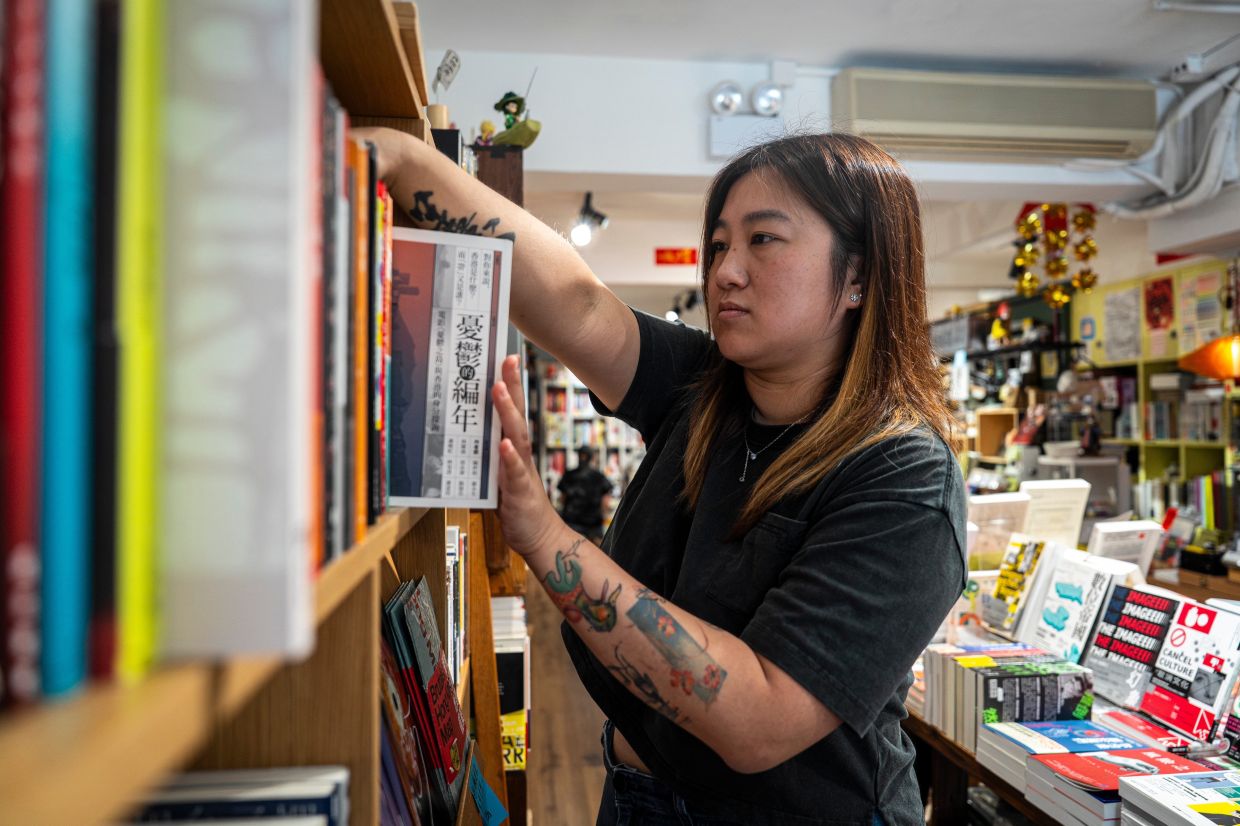
Hong Kong's police force moved against independent bookselling on Wednesday, detaining two individuals suspected of distributing seditious publications and accepting financial support from overseas political entities. The arrests were conducted under provisions of the 2024 national security law, marking an escalation in the city's crackdown on dissenting voices. Though the government statement released Thursday did not formally name those apprehended, multiple local news organisations, notably the Chinese-language Ming Pao, reported from unnamed sources that one of the detainees was Leticia Wong, proprietor of Hunter Bookstore located in Sham Shui Po district.
Wong's profile as a former district councilor with openly pro-democracy views has made her a visible figure in Hong Kong's resistance movement, particularly since the sweeping arrests that followed the 2019 protests. Her continued operation of an independent bookstore in an era of intensified political control has drawn significant attention from both civil liberties observers and government authorities. If her involvement in this case is confirmed, the action would represent another notable casualty among Hong Kong's remaining spaces for alternative political discourse and free intellectual exchange.
The timing of these arrests carries particular significance for Hong Kong's political calendar. Coming just seven days before the 29th anniversary of the territory's handover from British to Chinese rule in 1997, the move underscores the widening gap between the autonomy promised under the "one country, two systems" framework and the reality experienced by residents today. International observers and Hong Kong's remaining pro-democracy groups view such timing as deliberate messaging that coincides with sensitive commemorative dates.
According to the official police statement, the two detainees face accusations of displaying and selling publications bearing seditious content, specifically materials alleged to encourage hatred toward Hong Kong's government, judiciary, and law enforcement apparatus. The investigation reportedly identified items within the shop that police characterised as seditious in nature. Beyond the publication-related charges, authorities claim the pair received monetary transfers originating from foreign political organisations, though the statement provided no specification regarding which organisations or publications were involved in these transactions.
This arrest represents part of a broader pattern targeting independent bookstores in recent years. In March, police detained the owner and staff of another bookstore on similar sedition charges, including suspicion of selling a biography of jailed pro-democracy figure Jimmy Lai. Those individuals were later released on bail, though the cases against them remain active. The recurring focus on biographical works and independent publishing outlets suggests authorities view such materials as particular threats under the security framework.
Hunter Bookstore itself has become a focal point of government scrutiny. Wong disclosed in a 2024 interview that her shop faced 92 separate government actions between July 2022 and June 2025, ranging from unannounced inspections and visible police patrols outside the premises to official letters warning of alleged violations. The frequency and nature of these interventions created a chilling effect that extended beyond Wong's business. She reported that an anonymous letter targeting venues planning to host events at her location prompted at least one organisation to cancel their booking, indicating how regulatory pressure reverberates through civil society networks.
The bookstore became further entangled in official attention when a pro-Beijing newspaper published an article criticising an independent book fair held at the location, branding it as possessing "soft resistance" connotations. The report specifically noted the fair's intention to distribute a biography of Jimmy Lai, the detained media magnate and pro-democracy advocate whose imprisonment has become emblematic of Hong Kong's changing freedoms.
For regional observers, these developments carry implications extending beyond Hong Kong's borders. Southeast Asian countries, particularly Malaysia, maintain significant diaspora and business communities with Hong Kong connections. The erosion of publishing freedom and independent bookselling in what was once a regional hub for free expression affects cross-border cultural and intellectual exchange throughout the region. Malaysian civil society organisations and press freedom advocates have tracked Hong Kong's trajectory with concern, recognising parallels with pressures on independent media in their own contexts.
The Hong Kong government maintains that both the 2024 national security law and its predecessor legislation are indispensable for societal stability and prosperity. Official statements insist that freedoms of expression remain protected within the territory's legal framework. However, this assertion increasingly sits in tension with the experiences reported by booksellers, activists, and journalists who describe an environment of expanding constraints. The disconnect between official rhetoric about protected liberties and the documented experiences of those operating in spaces of political expression has become a defining feature of post-2019 Hong Kong governance.
Wong's previous statements reflected awareness of the precarious position occupied by independent booksellers and cultural venues. Despite the mounting pressure documented through government inspections and warnings, she has maintained her bookstore's operations, treating the business as both commercial enterprise and principled stand on intellectual freedom. Her arrest, if confirmed, would represent a qualitative shift from administrative harassment to criminal prosecution, marking a threshold moment in Hong Kong's handling of dissenting commercial spaces.
The broader trajectory evident across these arrests suggests an expanding definition of sedition within Hong Kong's security framework. Rather than targeting overtly political organising or protest coordination, authorities increasingly focus on cultural and commercial spaces—bookstores, book fairs, biographical publications—treating the distribution of ideas and historical narratives about political figures as security threats. This evolution in enforcement strategy indicates how security laws originally framed around terrorism and violent extremism have extended into realms of ordinary speech and cultural production.
For Hong Kong's remaining independent publishers, booksellers, and venues supporting alternative discourse, these developments create intensifying operational uncertainty. The accumulation of cases—the March arrests, the current detention, the pattern of regulatory pressure documented by Wong—suggests systematic targeting rather than isolated incidents. As the 29th anniversary of the handover approaches, these actions serve as a stark reminder of how dramatically the city's political ecology has shifted since 2019, with implications for Hong Kong's future as a regional centre for free expression and intellectual life.

