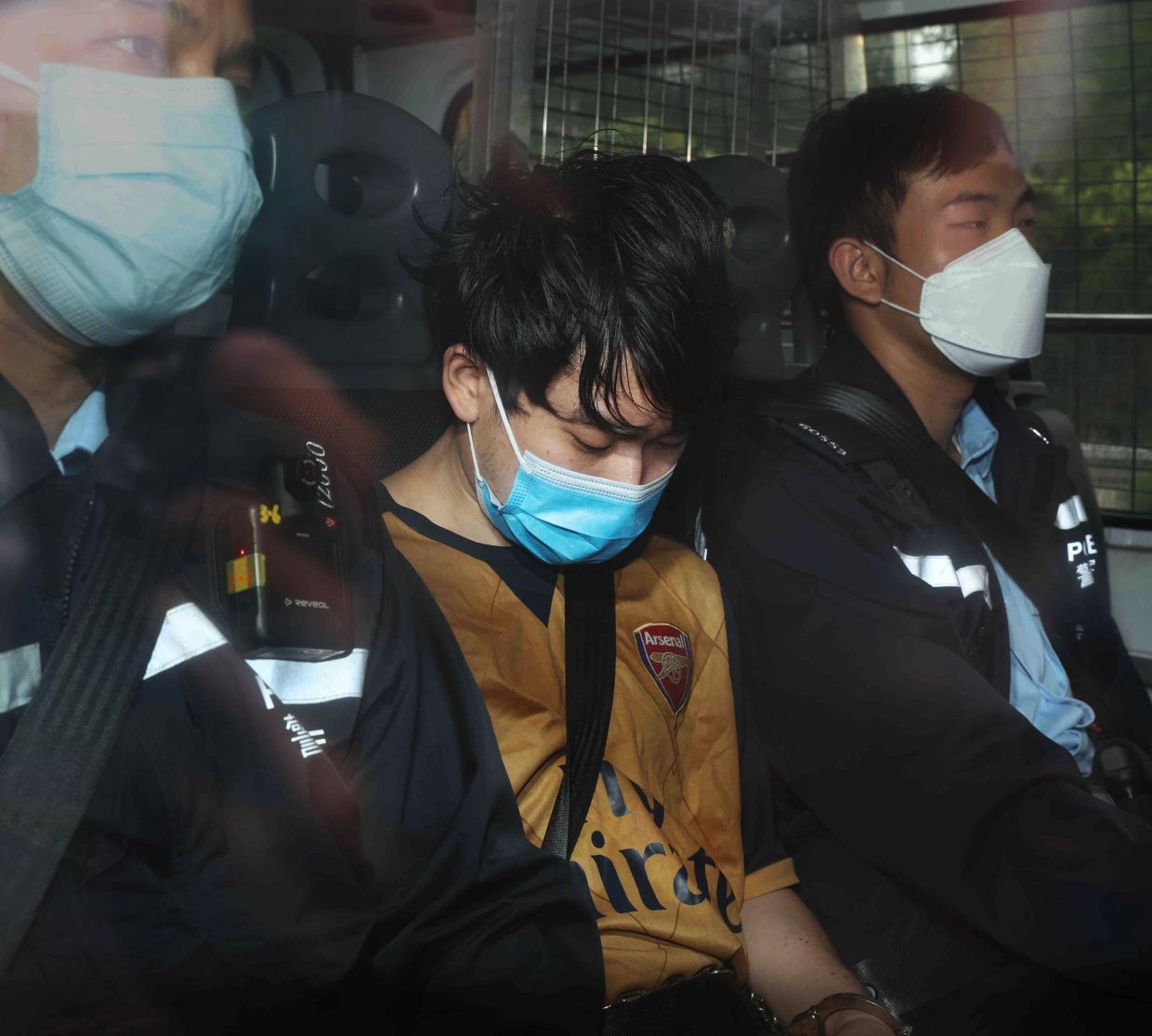
A 29-year-old unemployed man has taken the stand in Hong Kong's High Court to contest a murder charge stemming from the 2022 death of his girlfriend, presenting a startling defence that he was merely trying to assist her weight loss efforts when the fatal beating occurred. Ng Ka-sing stands accused of murdering 30-year-old Yip Tsz-ching at their modest 700-square-foot apartment in Galore Garden, Hung Shui Kiu, between April 28 and 29, 2022. The case has drawn public attention not only for its tragic circumstances but also for the extraordinary explanations offered in court regarding how a woman came to lose her life in what the defendant characterises as a misguided attempt at wellness intervention.
The prosecution's position, articulated by Senior Public Prosecutor Audrey Parwani during opening arguments on Tuesday, carries considerable scepticism toward the defendant's narrative. Parwani informed the seven-member jury that Ng provided multiple inconsistent explanations to police regarding the injuries sustained by Yip, whose body bore extensive corrosive burns covering approximately 55 per cent of its surface area. The varying accounts given to investigators form a critical element of the Crown's case, as the prosecution argues these inconsistencies undermine the credibility of Ng's claims that events transpired accidentally during a weight-loss intervention gone wrong.
According to Ng's own cautioned statement to police, the incident began on the night of April 27 when he allegedly began striking his girlfriend with a rod to prevent her from sleeping, believing this deprivation would contribute to fat loss. The defendant claimed he continued this beating intermittently across multiple time periods: from 10 pm on April 27 through 1:30 am on April 28, and again between 3 am and 5:30 am on April 28. During this ordeal, Ng asserted that when he questioned whether he should cease the violence, a sworn sister living in the shared flat allegedly encouraged him to persist. The defendant further explained that he continued the assault because Yip did not explicitly tell him to stop, a detail that raises troubling questions about consent and communication in relationships across the region where such domestic violence remains a persistent concern.
The account of events becomes increasingly complex and disturbing as additional details emerged during testimony. Ng claimed that Yip herself poured drain cleaner onto her body, while he splashed the corrosive liquid on the floor merely to "stimulate" her feet. He further asserted that his girlfriend deliberately struck herself against a wall seven to eight times after slipping on the contaminated flooring. These claims, presented without apparent acknowledgement of their implausibility, illustrate the defence strategy of attributing Yip's injuries to factors beyond his direct responsibility, though the medical evidence presented would eventually contradict such characterisations.
The tragedy's timeline reveals a critical moment of awareness when Yip reportedly informed Ng at approximately 5 am on April 28 that she was experiencing severe pain and believed she might not survive. Her final words came at 7:21 am that same morning, after which she lapsed into a coma from which she never emerged. The hours between the initial beating and her collapse, during which the defendant could have sought emergency medical assistance, form an important element in establishing liability. Rather than immediately alerting authorities to a medical emergency in their household, Ng proceeded to dispose of Yip's body using materials readily at hand within their residence.
The discovery of Yip's body exposed the extent of the concealment efforts undertaken by Ng. Joggers spotted a human leg protruding from a rolled-up quilt loaded onto a wheelboard at approximately 6 am on April 29, prompting them to alert authorities. Witness Lau Kwok-yan, who reported the discovery to police, testified that Ng remained on the street near the body and "did nothing" while awaiting officers, displaying no apparent panic or distress. Street cleaner Wong Ah-sum recounted that when he questioned Ng about the wrapped figure on the wheelboard, the defendant identified it matter-of-factly as a "corpse" and claimed his intention was to transport it to a police station. These witnesses paint a picture of a man apparently composed and deliberate in his actions rather than confused or distressed by an accidental killing.
Forensic evidence presented by specialist Lo Man-hung detailed the deliberate nature of the body's preparation for disposal. Yip's body had been secured to a toppled wooden chair using black rubbish bags and bound tightly with cord. Her head received particular attention during the wrapping process, with multiple layers of cling film and adhesive tape applied around it. Government pathologist Dr Foo Ka-chung estimated that Yip had been deceased for 12 to 24 hours when her body was discovered, placing the time of death within a narrow window. Dr Foo identified multiple bruises, abrasions and lacerations across Yip's head and other body parts consistent with blunt force trauma such as punching and kicking, though he noted such injuries could theoretically arise from various sources.
The official cause of death determined by Dr Foo was suffocation following head injuries and the extensive corrosive burns covering her chest, abdomen and limbs. This conclusion carries significant weight in the prosecution's case, as it suggests a prolonged process of deterioration rather than a single accidental blow. The combination of trauma, chemical burns, and ultimately asphyxiation paints a picture fundamentally at odds with the defendant's description of events as a misguided fitness intervention that spiralled unintentionally into tragedy. The pathological evidence suggests rather a cascade of serious injuries that accumulated over hours, each of which should have prompted emergency intervention had the defendant genuinely believed his girlfriend's life was in danger.
Ng's initial statement upon arrest at 6:36 am provided perhaps the most direct acknowledgement of responsibility, when he immediately told officers: "This was my girlfriend. I hit her to death with a rod by mistake." Yet this confession sits uneasily alongside his subsequent elaborations and explanations, which introduced alternative narratives regarding the drain cleaner, the self-inflicted wall strikes, and the weight-loss motivation. The prosecution's rejection of his guilty plea offer to the lesser charge of manslaughter suggests the Crown believes the evidence supports the more serious charge of deliberate murder, a position it will defend throughout the expected 18-day trial before Mrs Justice Judianna Barnes and the jury.
This case resonates beyond Hong Kong's borders as it touches on serious issues affecting Southeast Asian communities, including domestic violence, the misuse of wellness rhetoric to justify abuse, and the disposal of evidence suggesting consciousness of guilt. The trial proceedings serve as a reminder of the lethal potential when intimate relationships involve coercive control and violence, particularly when perpetrators attempt to justify harmful actions through pseudoscientific wellness claims. For Malaysian and regional observers, the case underscores the importance of robust prosecution of domestic violence and the critical need for public awareness regarding the danger signs that distinguish assistance from abuse.

