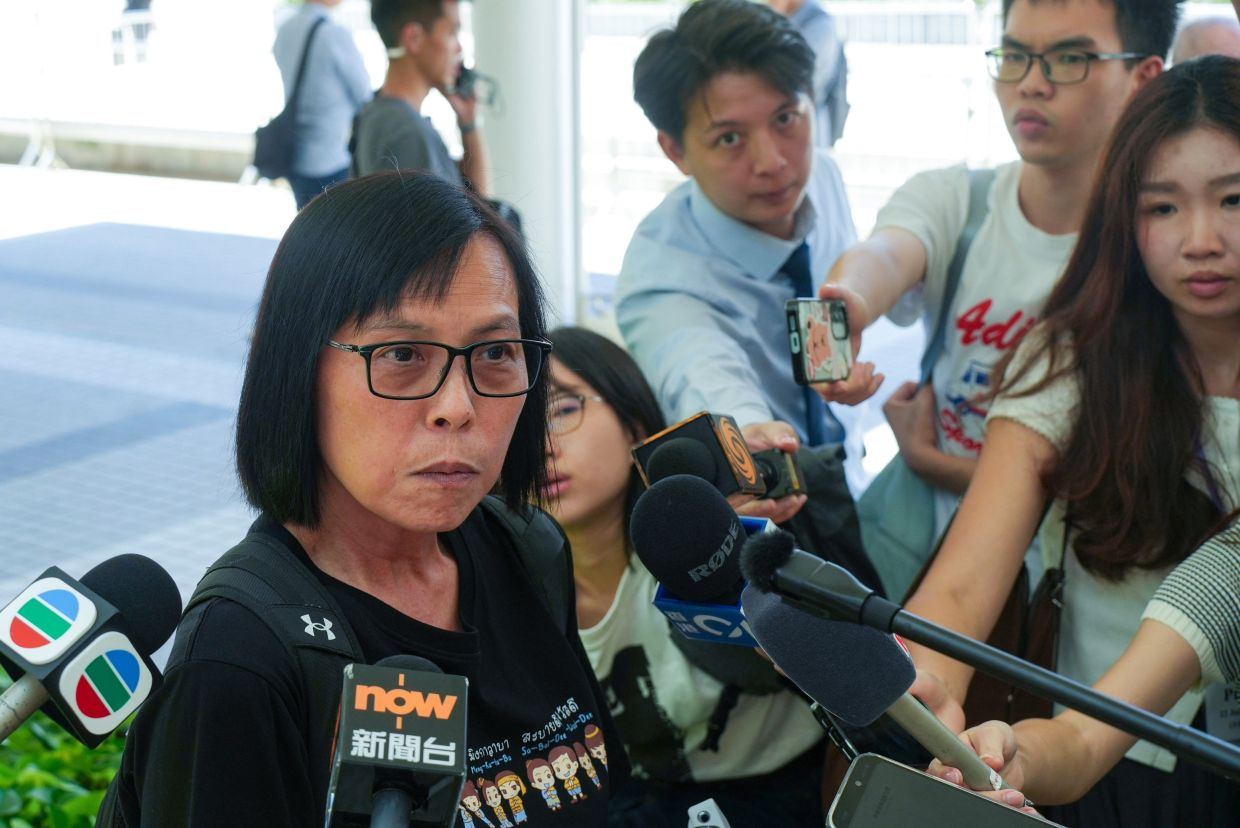
Hong Kong's independent committee probing last year's Wang Fuk Court fire has chosen not to pursue statutory commission status, a decision that has alarmed survivors and advocacy groups worried about gaps in investigative reach. Committee chairman Justice David Lok Kai-hong announced the panel would forgo requesting the chief executive convert it into a statutory commission of inquiry, even as the investigation resumed this week following a six-week hiatus. The announcement marks a critical juncture in how the disaster will be examined and what consequences officials and building operators might face.
The distinction between a non-statutory independent committee and a formal statutory commission of inquiry carries substantial practical implications. A statutory commission wields legally binding powers to compel testimony, seize documents, and impose penalties for non-cooperation. Without such authority, committees operate on a voluntary compliance basis, meaning relevant parties can decline to participate fully or withhold information without legal recourse. For survivors seeking accountability after a tragedy that claimed multiple lives, these constraints fundamentally shape what truths may emerge.
Justice Lok's decision to decline statutory powers reflects a perspective that the existing investigative structure possesses sufficient reach. This stance contrasts sharply with the expectations many survivors and their legal representatives held when the independent committee was established. They had anticipated the natural progression would be toward enhanced investigative machinery as the probe deepened and complexity mounted. Instead, they now face the prospect of a limited inquiry that depends on voluntary cooperation from building management, government departments, and contractors.
The Wang Fuk Court fire represents one of Hong Kong's most significant residential tragedies in recent years, making the investigation's scope particularly consequential. The disaster exposed questions about building safety standards, maintenance protocols, and emergency response procedures. Without statutory powers, the committee cannot force reluctant witnesses to testify under oath or compel the production of potentially damaging internal communications and maintenance records that might illuminate systemic failures. This asymmetry of information access troubles advocates who fear critical details may remain concealed.
Survivors have expressed growing frustration with what they perceive as institutional barriers to justice. Many lost family members or sustained injuries in the blaze, and they view a thorough, empowered investigation as the minimum accountability owed to them. The committee's decision suggests a more cautious, less confrontational approach to examining what occurred. Critics worry this reflects an institutional preference for avoiding high-profile confrontation rather than a principled assessment that statutory powers are genuinely unnecessary.
The investigation's resumption after six weeks of pause itself sparked questions about momentum and resource allocation. Extended breaks in intensive inquiries can allow relevant evidence to degrade, witness recollections to fade, and institutional pressure for accountability to dissipate. The timeline raises concerns about whether sufficient priority is being accorded to this matter within Hong Kong's investigative and administrative apparatus.
For Malaysia and other Southeast Asian nations, the Hong Kong situation offers instructive lessons about disaster investigation frameworks. Building fires remain a recurring hazard across the region, and how jurisdictions structure accountability mechanisms influences both safety culture and public confidence in governance. Hong Kong's approach—delegating core investigation to a non-statutory committee—contrasts with practices in other developed systems where statutory commissions of inquiry are routinely deployed for major incidents. The trade-offs between speed, informality, and investigative power merit careful consideration as regional authorities design their own protocols.
The decision also reflects broader questions about Hong Kong's institutional structure and how it balances victim rights against executive convenience. Formal statutory commissions are more time-consuming and politically fraught, requiring sustained commitment and acceptance of potentially unflattering findings. Non-statutory committees offer more discretion and flexibility. For survivors, however, flexibility often means vulnerability—the investigation can proceed at a gentler pace, with fewer uncomfortable revelations compelled into the public record.
Building safety advocates across Asia view Hong Kong's approach with particular interest because the territory sets regulatory trends that influence practice elsewhere. If Hong Kong's inquiry into a major fire proceeds without statutory powers and subsequently concludes that systemic reforms were limited or unnecessary, other jurisdictions may adopt similarly modest frameworks. Conversely, if the non-statutory inquiry uncovers significant failures despite its constraints, it might encourage broader acceptance of this lighter-touch model. Either way, the precedent carries weight throughout the region.
The committee's reasoning, as explained by Justice Lok, presumably centers on the view that voluntary cooperation has proven sufficient and that statutory powers would introduce unnecessary formality. However, this calculus depends entirely on parties choosing to cooperate fully. In Hong Kong's tightly interconnected property and government sectors, institutional incentives sometimes favor discretion over transparency. Without legal compulsion, determining the boundary between what is voluntarily disclosed and what remains protected by privilege or convenience becomes a constant point of tension.
Moving forward, the investigation faces pressure to demonstrate its effectiveness within its self-imposed constraints. Survivors and their representatives will scrutinize whether critical witnesses appear, whether contradictory accounts are rigorously probed, and whether institutional responsibility is fairly assigned. The committee's choice not to seek statutory powers will define the outer limits of what this inquiry can accomplish. Whether that proves sufficient to satisfy Hong Kong's citizens and establish a credible precedent for regional disaster investigations remains to be seen.

