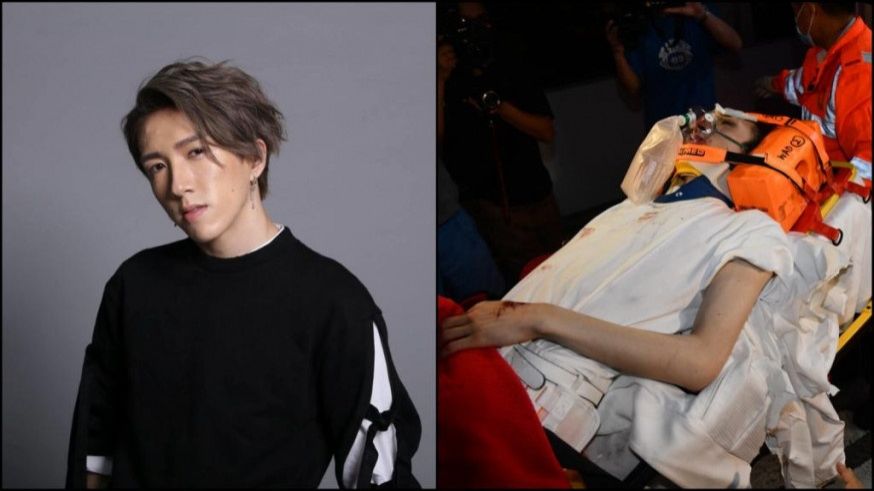
Mo Li Kai-yin, a 31-year-old Hong Kong dancer whose career was cut short by a devastating stage accident, has won a landmark compensation battle. On June 15, the District Court awarded him HK$6.29 million (approximately RM3.32 million) in damages after determining that his employer, Studiodanz, bore responsibility for the catastrophic injuries he sustained. The ruling represents one of Hong Kong's largest settlements for occupational injury and underscores mounting concerns about safety protocols in the entertainment industry across the region.
The incident occurred on July 28, 2022, during the fourth performance of Mirror's planned 12-concert residency at Hong Kong Coliseum. A four-by-four-meter LED panel, which formed part of the stage's visual infrastructure, detached from its mounting and fell directly onto Mo as he performed. The impact caused immediate and severe trauma to his cervical spine, resulting in complete paralysis from the neck downward. Emergency responders rushed him to Queen Elizabeth Hospital, where surgeons performed urgent procedures to stabilise his spinal column and prevent further deterioration.
The court's judgment emphasised the permanence and gravity of Mo's condition, describing his injuries as "catastrophic" and determining that he had suffered total incapacity. The ruling noted that Mo would require three full-time caregivers to manage every aspect of his daily existence, from personal hygiene to mobility assistance. Judges concluded that independent living—a fundamental aspect of adult autonomy—is now permanently beyond his reach. This assessment carries particular weight in Hong Kong's legal framework, where such categorical determinations trigger maximum compensation thresholds across multiple damage categories.
Mo's compensation package covered several critical dimensions of his ongoing needs. Beyond immediate injury damages, the court allocated substantial sums for lifetime caregiving, recognising that professional support will span decades. Medical expenses formed another significant component, acknowledging the extraordinary costs associated with his continuing treatment regimen. Periodic payments were structured to provide regular income for evolving healthcare requirements. Studiodanz was additionally ordered to cover Mo's extensive legal costs and accrued interest, while the company had separately faced regulatory penalties of HK$132,000 for breaching occupational safety standards prior to the main trial.
Notably, Studiodanz did not contest the proceedings or present a defence, suggesting either acceptance of liability or strategic legal positioning. This absence may reflect broader industry recognition of responsibility when infrastructure failures cause worker injury. The company's earlier fine for safety violations appears to have preceded rather than directly triggered the accident investigation, raising questions about compliance gaps that may have contributed to the catastrophe.
Mo's medical journey following the accident has been extensive and ongoing. After initial stabilisation at Queen Elizabeth Hospital, he transferred to private institutions within Hong Kong and subsequently travelled overseas for specialised treatment unavailable locally. His recovery protocol has incorporated cutting-edge therapeutic approaches, including regenerative medicine techniques and implantable microstimulation technology designed to stimulate neural pathways. These interventions have yielded modest but meaningful progress—he has regained partial mobility in his right arm and recovered some sensation in his lower body functions, achievements that underscore the slow, challenging nature of spinal cord rehabilitation.
Before the accident, Mo had built a promising career trajectory in Hong Kong's competitive dance sector. He first developed serious interest in dance during university studies between 2015 and 2019, transitioning to full-time professional status in 2019. His work encompassed live concert performances, television appearances, commercial productions and music video choreography. He simultaneously maintained teaching positions at four dance studios, including Studiodanz, balancing instruction with his own performance schedule. This multifaceted career path was not uncommon among Hong Kong's performing artists, many of whom augment concert income through educational roles.
Mo's family support system underwent profound transformation following his injury. His father, Reverend Derek Li Shing-lam, made the extraordinary decision to relocate from Canada and abandon his pastoral responsibilities to become his son's primary caregiver. This sacrifice exemplifies the personal and financial tolls that catastrophic accidents impose beyond the injured individual, reshaping entire family structures and life plans. Reverend Li remained Mo's dedicated carer until his death on April 25, underscoring the immense emotional and physical demands of long-term disability care within family units.
Recent rehabilitation progress, while incremental, has provided glimpses of Mo's determination to maximise functional capacity. A March video posted to his Instagram account documented him operating an electric wheelchair using his right hand—a practical skill that represents genuine independence within the constraints of his paralysis. This adaptation reflects modern assistive technology's potential to enhance quality of life for severely disabled individuals, though it simultaneously highlights the permanent limitations he faces.
The settlement carries implications extending beyond Mo's personal circumstances. For Hong Kong's entertainment industry, it establishes a significant precedent regarding venue safety infrastructure and employer liability. The accident prompted broader scrutiny of LED panel installation standards, weight-bearing capacity verification, and emergency protocols at concert venues throughout the region. Southeast Asian venues hosting similar productions have faced renewed pressure to audit their own systems, particularly as touring productions increasingly cross borders within ASEAN economies.
For Malaysian entertainment venues and event organisers, the case serves as a cautionary reminder of liability exposure and the critical importance of rigorous safety compliance. Insurance frameworks and regulatory standards governing touring productions warrant examination to ensure comparable protections exist locally. The compensation quantum also signals to regional employers that courts increasingly recognise the lifetime costs associated with catastrophic workplace injuries, potentially influencing corporate risk management approaches.
Mo's ongoing rehabilitation journey continues to evolve as medical science advances. His participation in experimental therapies and engagement with innovative technologies positions him as a case study in maximising recovery from severe spinal trauma. While his paralysis remains permanent, the possibility of further functional gains through emerging treatments offers cautious hope. His story resonates beyond entertainment circles as a testimony to human resilience and the profound impact that infrastructure failures can inflict on individuals, families, and industries.

