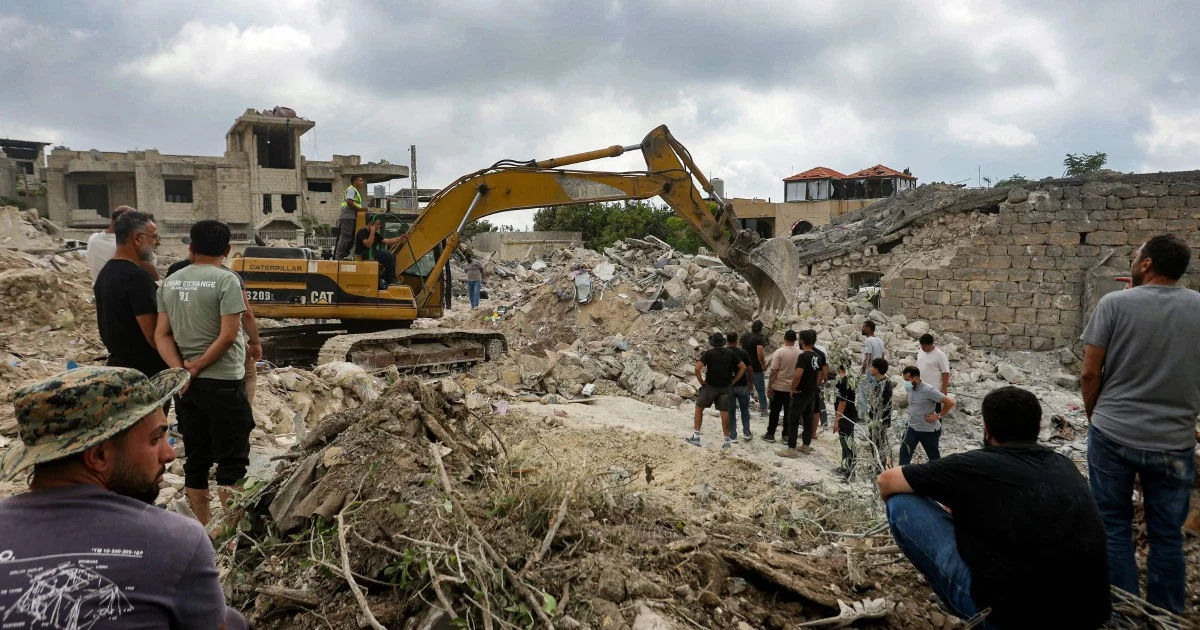
The Israeli-Lebanese border tension has intensified significantly following a high-profile statement from Hizbollah's political chief Naim Qassem, who on Sunday delivered an unequivocal rejection of any arrangement permitting Israeli military control over portions of Lebanese soil. This refusal emerges in the aftermath of Israeli Prime Minister Benjamin Netanyahu's recent public commitment that his nation's armed forces would maintain their presence in Lebanon's southern regions for whatever duration proves necessary to achieve Israel's security objectives. The competing declarations underscore the fragile state of regional stability and the persistent disagreements that threaten any durable resolution between the longtime adversaries.
The concept of a security buffer zone has historically served as a contentious element in Israeli-Lebanese relations. For decades, Israel maintained direct military occupation of southern Lebanese territory through what it termed a security zone, an arrangement that lasted until Israel's 2000 withdrawal. That occupation left deep scars on Lebanese society and remains a defining grievance for many Lebanese factions, particularly Hizbollah, which emerged partly as a resistance movement against Israeli military presence. The prospect of renewed territorial control, even if characterized differently by Israeli officials, triggers profound historical anxieties across Lebanese society that transcend simple military calculations.
Netanyahu's determination to keep forces deployed indefinitely reflects the Israeli government's assessment that unconditional withdrawal would undermine security guarantees against Hizbollah activities along the border. Israel has consistently framed such deployments as defensive mechanisms necessary to prevent cross-border attacks and weapons smuggling into Lebanon. However, this security logic, while comprehensible within Israeli strategic doctrine, directly contradicts Lebanese national sovereignty and territorial integrity principles that command overwhelming support across the Lebanese political spectrum, including moderate factions that might otherwise distance themselves from Hizbollah's militant activities.
Qassem's categorical rejection carries substantial weight within Lebanese political circles and reflects a position that likely enjoys consensus even among Lebanese groups that otherwise maintain critical distances from Hizbollah. The statement serves not merely as a rhetorical flourish but as a reaffirmation of red lines that any negotiated settlement must respect. For Lebanon's fractured political establishment, accepting permanent Israeli territorial control would represent an unacceptable capitulation that could trigger internal instability and potentially reignite broader conflicts that the nation has struggled to contain.
The timing of these competing declarations reveals underlying anxieties about the trajectory of recent ceasefire arrangements or diplomatic initiatives meant to stabilize the border. Any international framework addressing Israeli-Lebanese disputes must ultimately navigate this fundamental incompatibility: Israel's perceived security requirements versus Lebanese sovereignty demands. Regional actors, including the United States and various European powers that might facilitate negotiations, face the challenging task of reconciling these positions without imposing external solutions that lack local legitimacy.
For Malaysia and Southeast Asian observers, this standoff illustrates broader patterns of regional conflict persistence despite international pressure for resolution. Border disputes, particularly those intertwined with historical grievances and security anxieties, rarely yield to quick diplomatic fixes. The Israeli-Lebanese situation demonstrates how military occupation, even when justified through security frameworks, generates enduring resistance that subsequent generations transmit as national imperatives rather than negotiable positions. These dynamics resonate across Asia, where multiple territorial disputes and historical occupations continue shaping regional geopolitics and strategic calculations.
Hizbollah's uncompromising stance also reflects organizational imperatives beyond simple military positioning. The movement's political legitimacy among significant Lebanese constituencies rests substantially on its identity as a resistance force against external domination. Any acceptance of permanent Israeli military presence would fundamentally undermine this foundational narrative and potentially weaken Hizbollah's domestic political standing. This creates structural incentives for rhetorical intransigence regardless of actual military realities on the ground.
Netanyahu's commitment regarding force retention conversely appeals to Israeli domestic constituencies demanding maximum security assurances. Israeli military and political establishments view Lebanon's southern border as a critical frontier where Hizbollah maintains significant capabilities and infrastructure. From this perspective, maintaining troops provides leverage in any negotiations while physically preventing hostile activities. However, this strategy's sustainability depends on managing international pressure, regional stability, and the costs of extended military deployment in foreign territory.
The impasse suggests that meaningful progress toward Israeli-Lebanese peace requires frameworks extending beyond simple military arrangements. Addressing root causes—including historical grievances, weapon proliferation concerns, and broader regional power competitions—would demand sophisticated multilateral engagement involving regional states, international powers, and civil society elements. Without such comprehensive approaches, repeated cycles of escalation and tactical truces will likely persist, preventing genuine stabilization and leaving the border region perpetually volatile.
For Southeast Asian governments monitoring this situation, the Israeli-Lebanese dynamic offers cautionary lessons about conflict management in strategically sensitive border regions. Unilateral military solutions, even those framed as temporary security measures, tend to crystallize opposition and entrench resistance that subsequently becomes institutionalized across generations. Conversely, security anxieties merit serious consideration rather than dismissal as mere pretext for territorial aggression. Finding sustainable resolutions requires acknowledging legitimate concerns on all sides while creating frameworks that don't privilege one party's security at another's existential expense—a balance that remains elusive in the Middle East and increasingly relevant across Asian geopolitical landscapes.

