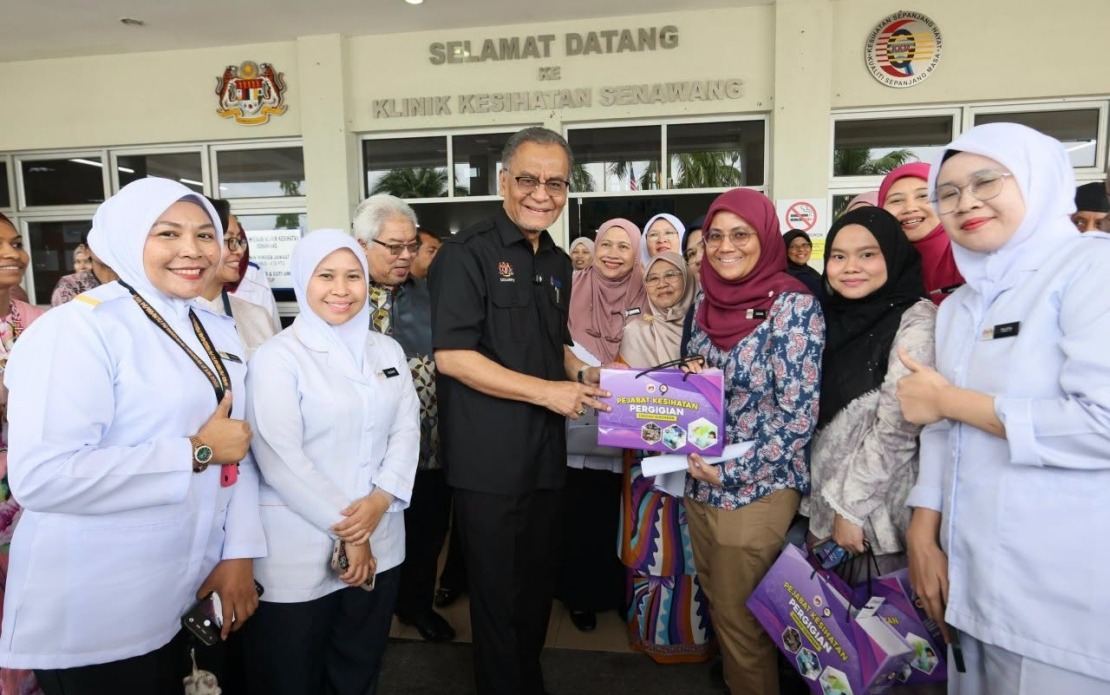
Seremban's Senawang Health Clinic is set to undergo significant operational enhancements following the Health Ministry's approval of RM805,700 in dedicated funding. Health Minister Datuk Seri Dr Dzulkefly Ahmad announced the decision, which splits the allocation between the main health clinic and its attached dental facility to drive improvements across both services.
The bulk of the investment, amounting to RM588,400, will be directed toward the primary health clinic's operations and infrastructure. The remainder, RM217,300, targets the dental clinic specifically, with both portions earmarked for structural repairs, facility upgrades, and the acquisition of essential medical and non-medical equipment. This dual-track approach reflects the ministry's recognition that modern healthcare delivery requires investment across multiple operational domains.
A centrepiece of the upgrade programme involves comprehensive renovations to the dental clinic building itself. The ministry emphasises that environmental quality directly influences patient experience and compliance with treatment recommendations. Enhanced comfort and modern amenities at the dental facility should encourage greater preventive care uptake among residents, particularly those who may have previously deferred appointments due to inadequate facility conditions.
Diagnostic capability represents another critical focus area. The funding will facilitate procurement of a new ultrasound machine, a technology essential for pregnancy monitoring, abdominal imaging, and cardiovascular assessment in primary care settings. In the Malaysian context, where rural and suburban clinics often operate with outdated or limited imaging capacity, this upgrade addresses a genuine service gap that currently forces non-emergency referrals to secondary facilities.
Clinical mobility receives strategic emphasis through the acquisition of two new vehicles. These assets enable healthcare personnel to conduct field duties, mobile clinics, and community health outreach programmes with greater operational efficiency. For a health clinic serving a dispersed population across surrounding areas, reliable transport directly translates into improved accessibility for vulnerable populations such as the elderly and those with mobility constraints.
Senawang Health Clinic operates as a primary healthcare anchor for the broader Seremban locality, bearing responsibility for serving a catchment population exceeding 220,000 residents. The facility processes approximately 1,000 patient visits daily, a workload that underscores its strategic importance within Negeri Sembilan's healthcare network. At this operational scale, facility degradation or equipment limitations create cascading pressures throughout the system, potentially delaying treatment and increasing unnecessary referrals to overburdened secondary care institutions.
The timing of this allocation carries particular significance given the post-pandemic emphasis on strengthening primary healthcare infrastructure across Malaysia. World Health Organization guidance consistently identifies robust primary care as foundational to health system resilience and equitable service delivery. By investing in a high-throughput suburban clinic, the ministry signals commitment to preventing primary care infrastructure erosion in areas that fall between well-resourced urban centres and deeply rural districts.
From a Malaysian healthcare policy perspective, this investment reflects evolving recognition that primary care facilities require regular capital renewal, not merely recurrent operational funding. Medical technology, buildings, and vehicles deteriorate at predictable rates; systematic replacement prevents the false economy of deferring maintenance until catastrophic failure forces emergency expenditure at significantly higher cost.
The upgrade should yield measurable service improvements across several dimensions. Enhanced diagnostic capacity enables earlier disease detection and reduces downstream complications. Improved facility conditions enhance patient satisfaction and clinical staff retention, both persistent challenges in Malaysian primary care. Increased transport capacity supports preventive health campaigns and management of chronic disease patients who benefit from regular monitoring.
For residents across the Senawang catchment area, these improvements translate into more reliable access to essential healthcare services without requiring distant travel to secondary facilities for routine diagnostics and minor procedures. The initiative demonstrates that the Health Ministry recognises primary care not as an afterthought in health system design, but as foundational infrastructure requiring sustained investment and modernisation.

