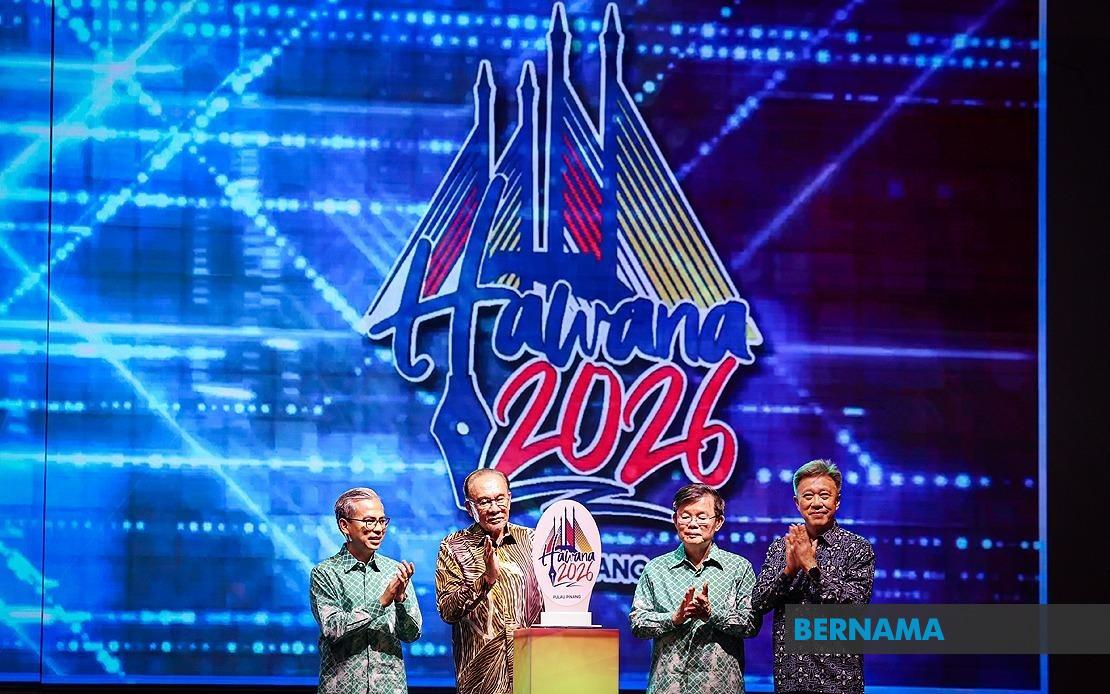
Prime Minister Datuk Seri Anwar Ibrahim brought the curtain down on National Journalists' Day (HAWANA) 2026 at the PICCA@Arena Butterworth Convention Centre, underscoring journalism's indispensable function in maintaining an informed and civically engaged populace. The three-day gathering, held under the banner 'Media Integrity Strengthens Credibility', drew nearly 1,000 media professionals from Malaysia and across Southeast Asia, including representatives from Indonesia, Cambodia and Timor-Leste, transforming Penang into a regional hub for reflection on the profession's future and challenges.
The presence of journalists from neighbouring ASEAN nations reflected a broader strategic objective to forge stronger networks and cooperative mechanisms across the region's media landscape. This cross-border participation took on particular significance given the increasingly interconnected nature of contemporary journalism, where stories often transcend national boundaries and require coordinated reporting standards. By convening practitioners from multiple countries under a single thematic umbrella, HAWANA 2026 facilitated dialogue on shared professional dilemmas—from digital disruption to editorial independence—that affect newsrooms throughout Southeast Asia.
Anwar's keynote address placed particular emphasis on the relationship between media integrity and public trust, a connection increasingly fraught in an era of misinformation and competing narratives. His announcement of an additional RM1 million injection into the Tabung Kasih@HAWANA welfare fund signalled tangible government commitment to supporting journalists' material wellbeing, a concern that extends beyond symbolic gestures to address real economic pressures facing practitioners. The fund, which has distributed RM2.26 million among 773 media workers since its 2023 establishment, addresses a critical gap in the profession's social safety net—particularly for freelancers and workers from smaller outlets who lack institutional pension schemes.
Beyond welfare provisions, Anwar reiterated the government's commitment to the Media Innovation Fund, a mechanism designed to accelerate digital transformation initiatives within local newsrooms. This commitment acknowledges that media sustainability in Malaysia—and throughout the region—hinges increasingly on newsrooms' ability to develop viable digital business models while maintaining editorial quality. The fund represents recognition that smaller and mid-sized media organisations often lack capital reserves to invest in technological infrastructure and talent required for successful digital journalism ventures.
Communications Minister Datuk Fahmi Fadzil bolstered these commitments by securing Telekom Malaysia as a strategic partner contributing RM500,000 to the Tabung Kasih fund. This private sector engagement illustrates the broadening coalition recognising media's societal value, though it also raises questions about whether industry dependency on corporate benefactors might introduce subtle pressures on editorial judgement. The Minister's intervention nonetheless demonstrates awareness that media sustainability requires multi-stakeholder collaboration extending beyond government coffers.
The recognition ceremonies held during the event honoured both living and deceased practitioners. Datuk Suhaimi Sulaiman received the HAWANA Award for his distinguished career in broadcasting, while a posthumous Special HAWANA Award went to Azlan Idris, the former head of Bernama Radio who passed away in January at age 57. The presentation to Azlan's widow, Wan Syahrina Wan Abdul Rahman, proved profoundly emotional, underscoring the personal dimensions often eclipsed by institutional narratives. Azlan's two-decade career spanning multiple major broadcasters and his instrumental role in launching Bernama Radio in 2007 exemplified the kind of institutional memory and professional dedication that shapes Malaysia's media ecosystem across generations.
Beyond ceremonial recognition, HAWANA 2026 functioned as a working conference addressing substantive professional concerns. The Malaysia Media Retreat 2.0, organised by the Malaysian Federation of Media Clubs, the Malaysian Press Institute's town hall examining journalism's future relevance, and dialogues with communications ministry officials created spaces for practitioners to grapple with existential questions facing their profession. These sessions reflected anxieties rippling through newsrooms globally—questions about whether traditional journalism models remain viable, how artificial intelligence reshapes reporting workflows, and whether audiences still value professionally-gathered news sufficiently to sustain business models.
A significant diplomatic achievement emerged through the formalisation of a memorandum of understanding between Malaysia's Bernama and Timor-Leste's national news agency, TATOLI. Signed by Bernama's Nur-ul Afida and TATOLI president Noémio Mateus Soares Falcão, with formal witnessing by both Communications ministers, the agreement reflects efforts to institutionalise bilateral media cooperation. For Timor-Leste, a nation with nascent media infrastructure, such partnerships with larger regional agencies can facilitate capacity-building and technical knowledge transfer. For Malaysia, the arrangement extends Bernama's regional footprint while demonstrating commitment to supporting media development throughout Southeast Asia.
The event's cultural components, including the RIUH Pi HAWANA Carnival featuring performances by local artists and showcasing 24 creative businesses, served broader objectives of linking journalism to wider creative and cultural industries. This integration reflects contemporary understandings of media ecosystems as embedded within broader creative economies rather than isolated from them. The carnival's three-day run, with workshops and vendor activations, transformed the celebration from an insular industry gathering into a public-facing demonstration of media's role within community life.
Penang's role as host venue carried strategic significance beyond logistical convenience. The state government, through Penang Chief Minister Chow Kon Yeow and Governor Tun Ramli Ngah Talib, clearly viewed HAWANA as an opportunity to showcase the state's infrastructure and event management capabilities while generating economic activity through visitor spending and media attention. The pre-event dinner honouring media practitioners reflected broader recognition that media practitioners constitute an influential constituency worth cultivating at highest political levels.
Bernama's conduct of the event, particularly the decision to broadcast it live on television for the first time in HAWANA's history, demonstrated the national news agency's evolving approach to institutional communication and stakeholder engagement. The choice to provide transparent, public access to proceedings rather than confining them to industry insiders signals confidence in the messaging and recognition that media organisations themselves now occupy scrutinised positions requiring visible accountability.
As Malaysia's media landscape navigates the dual pressures of technological disruption and erosion of advertising-dependent business models, HAWANA 2026 offered reassurance that institutional and governmental stakeholders remain invested in the profession's vitality. Yet the celebration's emphases on welfare, digital innovation and regional cooperation cannot obscure more vexing challenges—the sustainability of investigative journalism, the impact of political pressures on editorial independence, and whether newsrooms can compete effectively with social media platforms for audience attention and advertising resources. HAWANA 2026 demonstrated commitment to supporting Malaysian journalism, but the durability of that commitment will be measured through sustained action beyond celebratory gatherings.

