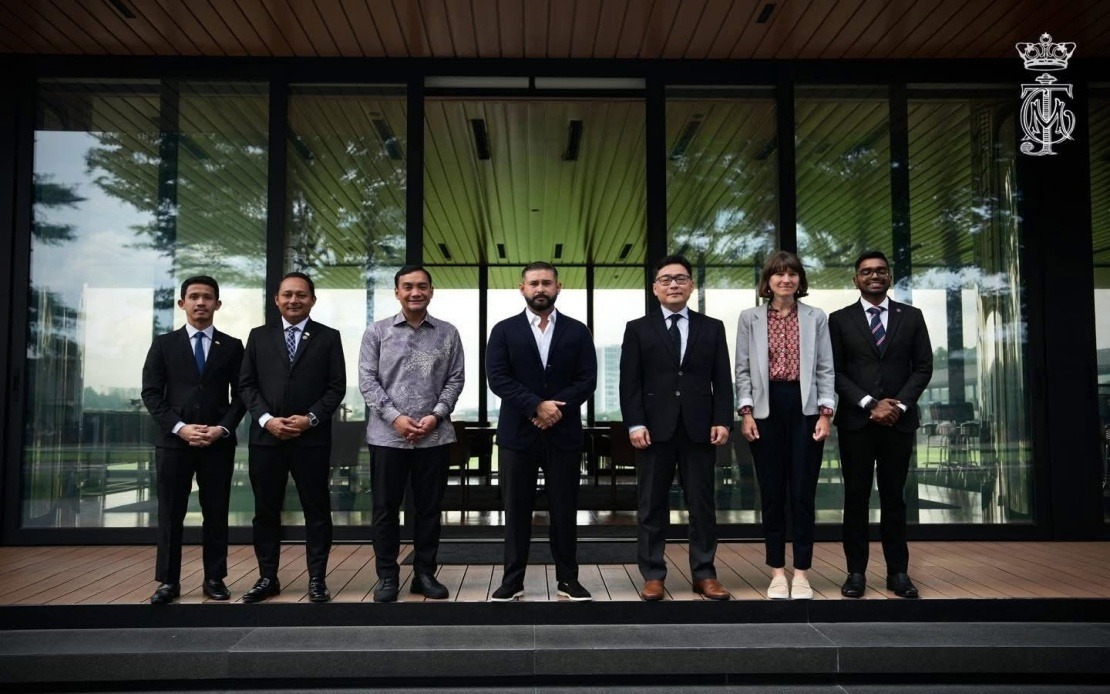
The Johor State Government has entered into an exploratory collaboration with Harvard University to bring the Program for Scientifically-Inspired Leadership (PSIL) to the state's education system, with an anticipated launch in January 2027. Sekolah Rintis Bangsa Johor (SRBJ), a pioneering institution, will spearhead the initiative, enlisting 100 carefully selected students from Sekolah Menengah Kebangsaan Tasek Utara and Sekolah Menengah Kebangsaan Seri Kota Puteri 2. The arrangement underscores Johor's commitment to internationalising its education offerings and exposing students to world-class pedagogical frameworks.
According to Aznan Tamin, chairman of the Johor State Education and Information Committee, PSIL represents a comprehensive approach to student development that extends beyond conventional academic metrics. The Harvard-designed programme, which debuted in 2019, prioritises active learning methodologies that encourage students to engage directly with subject matter rather than passively receive instruction. Critical thinking skills form another cornerstone, enabling participants to analyse information, evaluate arguments and construct reasoned conclusions. The curriculum simultaneously cultivates effective communication abilities, recognising that the capacity to articulate ideas clearly constitutes an essential professional competency in an increasingly interconnected world. Leadership development rounds out the framework, preparing participants to assume responsibility, make sound decisions and inspire their peers.
The initiative extends its reach beyond student beneficiaries to encompass the broader teaching workforce. Forty SRBJ educators will participate in intensive workshops centred on active learning pedagogy, equipping instructors with contemporary methodological frameworks that transform classroom dynamics. These professional development opportunities aim to foster more interactive and creative instructional approaches, establishing learning environments where curiosity flourishes and students assume greater agency in their educational journeys. By enhancing teaching quality at the source, the programme multiplies its positive impact across multiple cohorts of learners.
The partnership gained institutional momentum when the Regent of Johor, Tunku Mahkota Ismail, received a Harvard delegation earlier this month. The visiting team, led by Dr Dominic Mao, assistant director of Undergraduate Studies and Lecturer in Molecular and Cellular Biology, alongside Dr Andrea Wright, assistant dean of Harvard College, engaged in substantive discussions regarding programme implementation and institutional alignment. This high-level engagement signals genuine commitment from Johor's leadership to forge meaningful international educational connections rather than pursue superficial collaborations.
Aznan characterised the meeting as a demonstration of the Tunku Mahkota's forward-thinking approach to strengthening Johor's education ecosystem through strategic international partnerships. Such networking with globally recognised institutions creates tangible exposure to advanced learning cultures, affording Johor students opportunities that extend far beyond what domestic institutions alone could provide. The collaborative framework positions Johor competitively within the regional education landscape, particularly as other Malaysian states increasingly compete for talented students and institutional prestige.
SRBJ itself represents an interesting educational model within Malaysia's school system. The institution maintains a deliberate linguistic balance, emphasising English proficiency while maintaining the integrity of Malay language instruction rather than marginalising it. This bilingual approach reflects Malaysia's multilingual reality and labour market demands, where competence in both languages remains professionally advantageous. Simultaneously, SRBJ prioritises science, technology, engineering and mathematics (STEM) disciplines, recognising their criticality in 21st-century economies where technological literacy increasingly determines career prospects and earning potential.
Beyond STEM fundamentals, SRBJ integrates personality development into its educational philosophy, acknowledging that character formation and interpersonal capabilities significantly influence individual success and social cohesion. The school emphasises student marketability, a pragmatic orientation that recognises education's ultimate economic function whilst maintaining commitment to holistic human development. This multidimensional approach aligns naturally with PSIL's emphasis on leadership and communication skills, creating natural synergies between the school's existing ethos and Harvard's programme objectives.
Assessment methodologies deserve particular attention within the partnership framework. SRBJ implements competency-based evaluations calibrated to international standards, moving beyond traditional examination formats that often prioritise rote memorisation. This alignment with global assessment practices ensures that credentials earned through PSIL carry recognition beyond Malaysia's borders, enhancing graduate mobility within regional and international education and employment markets. Such standardisation particularly benefits students from less advantaged backgrounds who might otherwise lack access to internationally recognised qualifications.
The timing of this initiative reflects broader regional trends in education. Southeast Asian nations increasingly recognise that domestic innovation alone proves insufficient for preparing students to compete globally. Partnerships with institutions of Harvard's calibre provide access to pedagogical expertise, research insights and institutional networks that would take decades for individual schools to develop independently. For Johor specifically, the collaboration positions the state as an education hub within Malaysia, potentially attracting talented educators and ambitious students seeking exposure to international-quality learning environments.
The January 2027 launch date provides approximately eighteen months for comprehensive preparation, allowing SRBJ to establish infrastructural foundations, refine recruitment criteria and conduct preliminary teacher training. This measured timeline suggests serious institutional intent rather than hasty implementation driven by superficial prestige-seeking. The phased approach creates opportunities for systematic evaluation and iterative improvement before potential expansion to additional schools or student cohorts.
For Malaysian educators and policymakers, the PSIL initiative offers valuable lessons regarding internationalisation strategies. Rather than wholesale adoption of foreign models, the partnership preserves distinctly Malaysian educational values whilst incorporating Harvard's pedagogical innovations. This hybrid approach respects local context whilst embracing global best practices, a balance that successful international collaborations require. As other Malaysian states observe Johor's experience, successful execution could inspire similar partnerships tailored to different institutional contexts and regional priorities.
The broader significance extends to Malaysia's position within Southeast Asian education hierarchies. When premier global universities invest in educational partnerships within a specific jurisdiction, that engagement implicitly validates the region's institutional capacity and student potential. Success with PSIL could catalyse additional international collaborations, positioning Johor and Malaysia more favourably within global education markets increasingly characterised by institutional partnerships, student mobility and transnational knowledge transfer.